Review: Passage: Path of Betrayal
|
Passage: Path of Betrayal Developer/Publisher: Dragon Works Interactive
|
There are three types of adventure gamers. There are those who, like you, may read a few reviews or scan the advertisements before purchasing a game from the old brick-and-mortar or via the Internet and then settle back for what you hope will be a few weeks of entertainment. Then there are those who, like me, sit on their ever-widening posteriors and leisurely criticize the hard work of teams of developers. Many of us are aware that our opinions may influence sales, yet we will publicly dismiss such suggestions as balderdash while privately gloating to each other as regards our superiority in chronicling the positive and negative features of a game. Finally, there are those who devote their every waking hour to creating the adventure game. Sometimes they are part of a larger development team and have a specific duty such as game designer, script-writer, graphic artist, or music composer. Occasionally, one brave–and some would say foolish–person will take on all of these roles, not because he believes that he is the only one who has the talent necessary to do so but because he is young and usually has no financial backing.. What he does have, though, is a burning desire to bring to life his dream. These people are the backbone of the industry. They are the doers, not the dreamers. They are people like Darris Hupp.
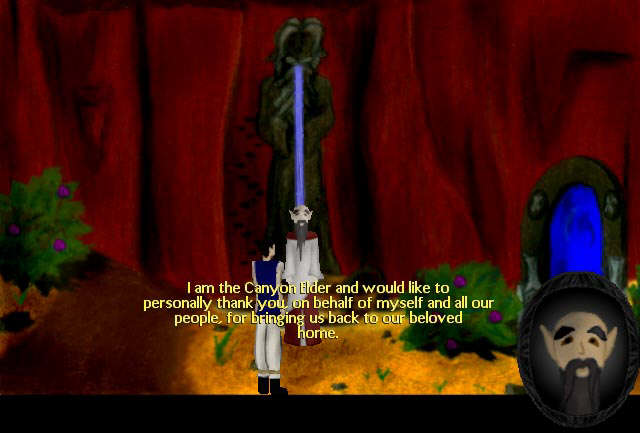
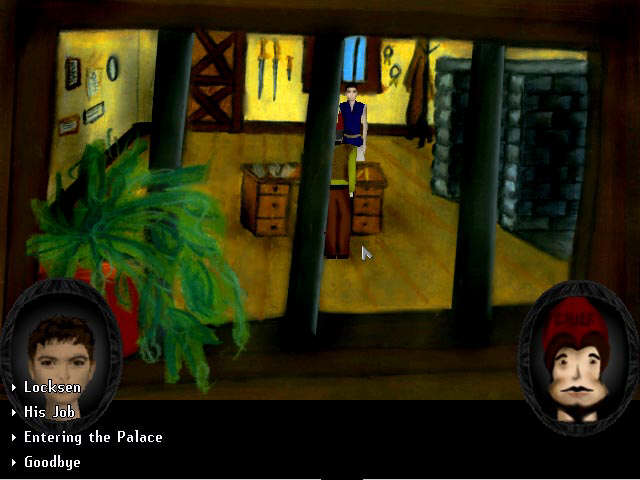
Darris has spent the past two years creating Passage: Path of Betrayal. He is responsible for the game design, script, graphics, dialogue, and animation. Now before you begin to think that Darris is a one-man team, he did have help with the music, game engine, and play testing, but more on that later. Passage is an epic fantasy adventure game in the tradition of the Sierra classics and more specifically the King’s Quest series. It is a mouse-controlled (are you reading this, LucasArts?), point-and-click, inventory-based adventure game. If you have played and have fond memories of the Sierra adventure games, then Passage is definitely up your alley. If you have never solved the puzzles or traveled the imaginative worlds of Roberta Williams, then maybe Passage will serve as your invitation to research more about the rich history of adventure games.
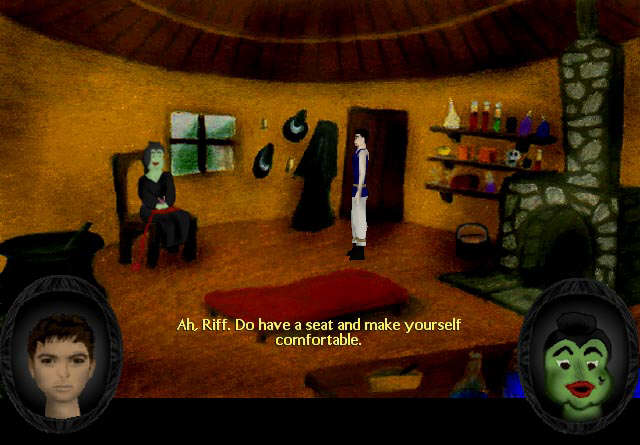
This journey begins with a nightmare and the realization that the land of Arkane is in danger and you, Riff, are the only one who can save your homeland. As a result of a visit to your mentor and the village magic-keeper, Windar, you realize your worst fears as you learn the history of the Passages–an ancient ritual involving the transportation of all who are evil–and the emergence of the Shifters and their plan to kill the royal family. The plot to save Arkane unfolds over six very long chapters and is rich in plot twists and memorable characters. From witches to talking bees and crickets, to creatures that thrive in the dark (and will ring a bell with Zork fans), there is an entire universe of eccentric personalities. As with all epic storylines, it also proves to be a journey of self-discovery for Riff and a roller-coaster ride for the gamer as we are carried along to new lands that we secretly hope exist somewhere in this world.
Darris has a flair for believable dialogue and, unlike some more experienced developers, knows when to cut a joke short without going into overkill. On the other hand, there are scenes when Riff overexplains to a newly introduced character what we already know, and while this extraneous dialogue is at times boring, it is also forgivable for a first-time developer. What is not so easily forgivable, though, are some of the misspellings and grammatical errors in the final product, though to be fair, at least there are no show-stopper bugs in Passage like there have been in some recent adventure games that were beta-tested by “professionals.” One thing you won’t be subjected to is poor voice-acting, as all dialogue must be read on screen. This actually serves to enhance the game’s inherent charm as amateur-voiced characters would have detracted from the carefully crafted illusion of a fantasy world.
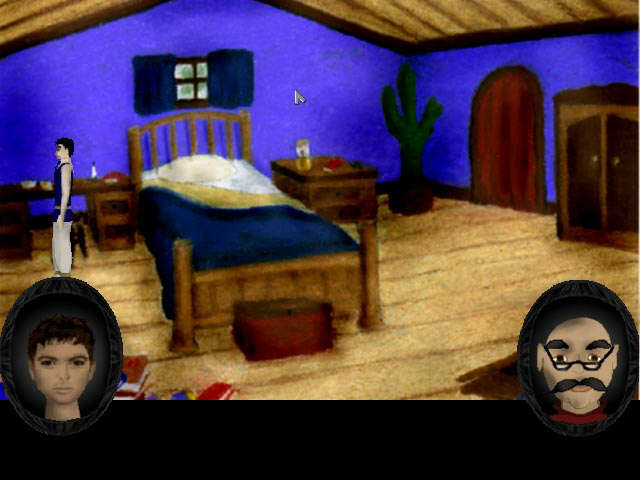
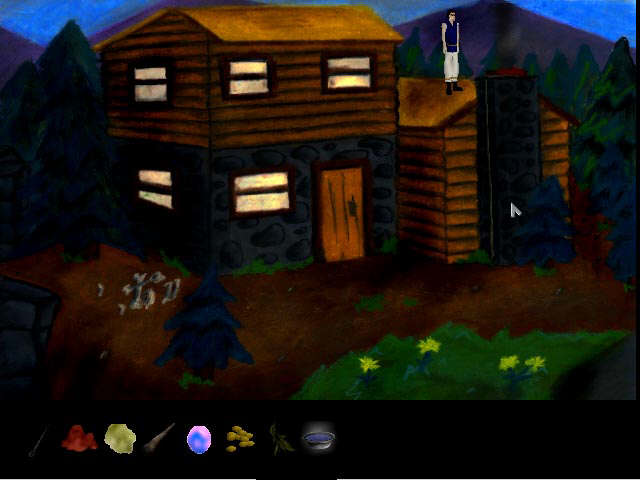
The graphics are beautiful and very colorful hand-painted pastel chalk over pencil sketches. While this complements the game’s allure, there is also an occasional slight blurriness to some of the background locations that in turn causes the intermittent problem of spotting a much-needed inventory item: a problem that can be frustrating considering the abundance of inventory items and puzzles. There are a few instances in which there is not a clear delineation between an item you have clicked on and another, separate item in the immediate area. But regardless of this minor obstacle, if you are a true adventure gamer, then Passage is worth playing for the puzzles alone.
The puzzles are masterfully constructed and follow rules of logic that are too often broken. Many of them are multi-layered, such as constructing a disguise, and some involve combining two or more inventory items. While most items will disappear from your inventory once used–some will not–a sure clue that such an item will again be valuable. Overall, while most of the puzzles would not be considered too difficult (and in fact most of the difficulty arises from not spotting inventory items), the game always plays fair by providing clues either through dialogue or even by having recipe ingredients written on the back of inventory items. A few puzzles can only be solved by returning to locations visited in previous chapters, so obvious answers were sometimes overlooked not only because of laziness on my part but because many developers will not incorporate this ability into their games because of the extra programming involved. To provide an extra blast from the past, there are 999 points needed to complete the game so that your progress can be tracked every time you complete a puzzle.
Probably what most caught my attention though was the music. It never intruded on the game, but it always seemed perfectly fitted to the situation. It does a wonderful job of setting the mood and atmosphere, but it never once grated, like some looping scores. According to the manual, nearly twenty musical pieces were composed for Passage, and kudos should go to Michael Brewer, David Rubenstein, and Daniel Signer for a job well done.
Is it worth purchasing Passage: Path of Betrayal for $20, especially since Dreamcatcher has flooded the market with professionally produced games for the same price and other products like Gathering of Developers’ Blair Witch games can now be had for $15? After all, it is a “garage game,” and while it was done by an amateur, it is not amateurish. Unequivocally and without a doubt–yes. For if we–you–do not support the small adventure game developers now, then there may not be a future for the genre. Passage can only be ordered online or by sending a check or money order, and it ships on one CD with a 16-page manual. As for Darris Hupp, remember when I told you earlier that he has been working on Passage: Path of Betrayal for the past two years? Well, he was only fifteen years old when he began the project. You do the math.
Final Grade: B
System Requirements:Windows 95/98/00
200 MHz Pentium
32 MB RAM
680 MB hard disk space
CD-ROM drive
Sound card
Mouse