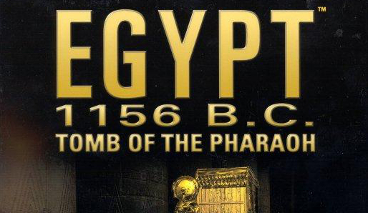
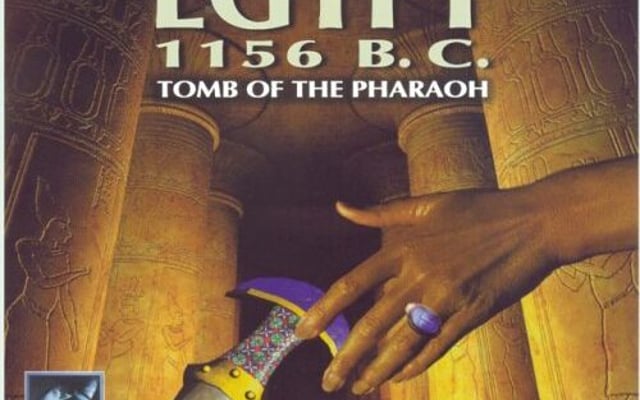
Review: Egypt 1156 BC
|
Egypt 1156 BC Developer/Publisher: Cryo By Ray Ivey 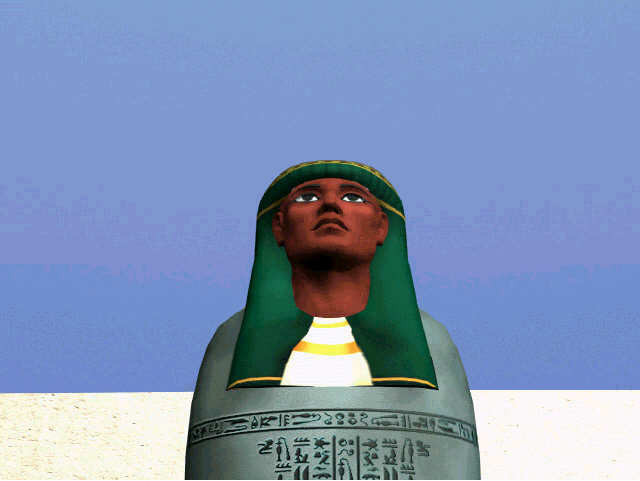 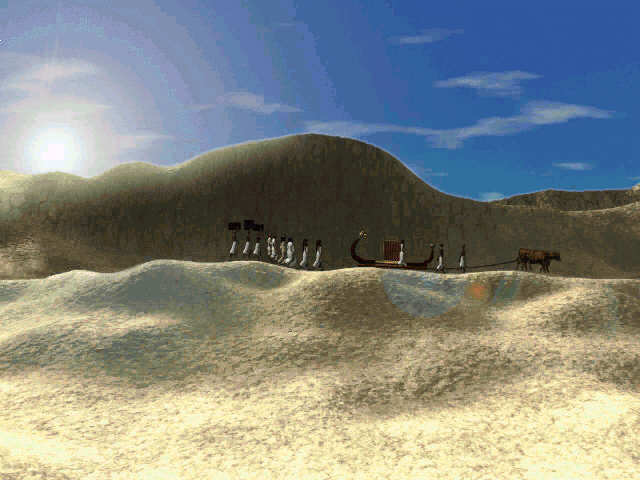 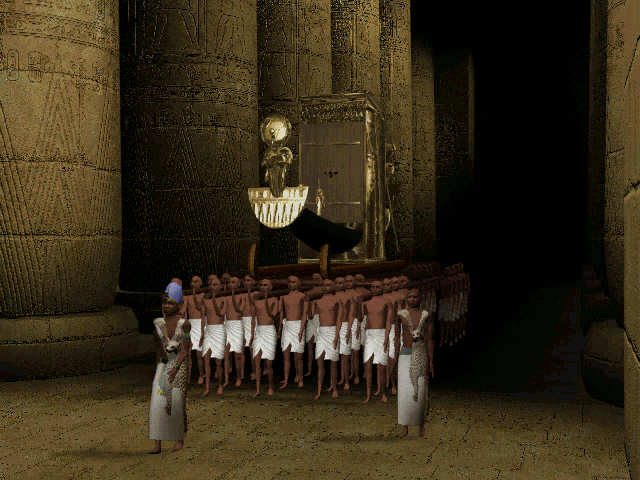 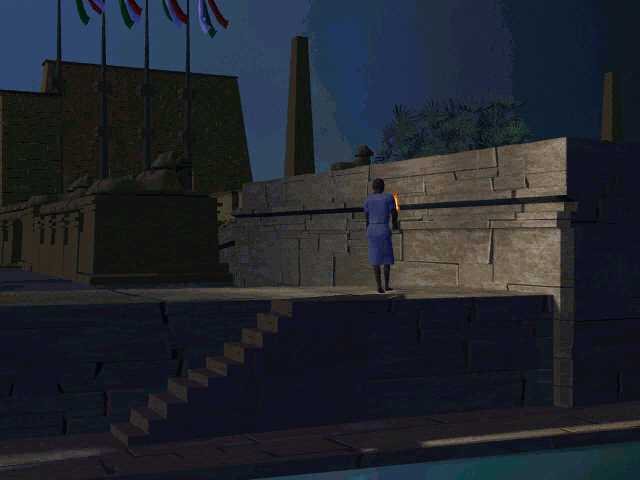 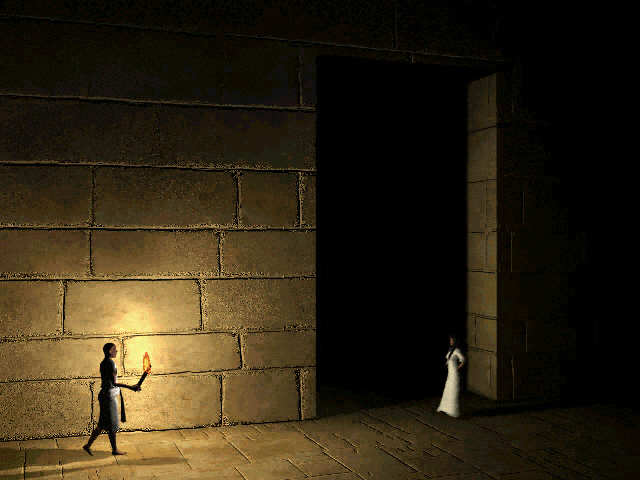 |
Okay, okay, I’ll admit it. I’m a sucker for a good edutainment game. I’m a voracious reader with a particular interest in history, so I guess it’s no surprise how much I enjoy the Cryo historical titles. I’ve played China and Aztec, and I’ve just finished Egypt 1156 B.C.: Tomb of the Pharaoh.
A large part of the appeal of these games is that Cryo goes to excruciating trouble to make the backgrounds, art, story, and cultural references historically accurate. Made with the collaboration of the Reunion des Musées Nationaux, the games are like textbooks come to life.
Of course, I realize this is exactly why many people run in fear from such games. But not me. There’s a very appealing “you are there” quality to these games, enhanced by the lovely (but not showy) graphic design and meticulous attention to detail.
Egypt’s plot is pretty much the same as the plot for China. You play a young investigator trying to track down the guilty parties in a recent tomb robbery. Raising the stakes a bit is the fact that your character’s own father has been falsely accused of the crime. You have only three days, before a major religious festival commences, to solve the mystery.
The gameplay is first-person point-and-click, with 3D animated characters. The game fits neatly on one CD, and it’s a short and sweet affair that takes place in six episodes. Each episode takes place in a different location: the tomb where the robbery occurred, the workers’ village, the embalming shop, a new tomb under construction, a noble’s estate, and finally the Temple of Luxor.
The puzzles are of easy to medium difficulty, but they require careful exploration and examination of the environments. You can die in the game as well, which adds further consequences to the choices you make.
The voice acting is adequate. The biggest drawback in Egypt is the music. It was so annoying I had to turn it off, which is something I very rarely do. It’s not that it wasn’t good, or Egyptian-sounding. It just wasn’t appropriate for the story. The storyline is quiet and contemplative and needed a score that reflected that. Instead, while you’re padding around the workers’ village, your ears are bombarded with an ever-accelerating barrage of dance music that’s completely inappropriate and distracting. It’s as if Cryo went and contracted the composer and just told him “Ancient Egypt–go for it.” It would have helped if they’d showed him the game as well.
As with the other titles in this series, the game comes with an online encyclopedia that covers all of the areas of the game in exhaustive detail. At least one puzzle requires searching through some of this material (again, this is not a complaint from this history buff).
The game does touch on many different interesting historical subjects, from embalming to mural creation in the tombs, to religion, politics, and culture. The best bit in the game, a sequence that combines documentary value as well as just plain fun, is one in which your character has to gussy himself up to look like a nobleman in order to crash a party.
I recommend this game to history buffs and fans of the Cryo historical series. Other adventure gamers beware.
On a final note, Cryo will be following up this title later this year with Egypt II.
Final Grade: C+
If you liked Egypt:
Watch: The Egyptian
Read: The Egyptian by Mika Waltari
Play: The Forbidden City (China)
System Requirements:
PC:
Pentium 90 (133 recommended)
Windows 95/98
16 MB RAM
4X CD-ROM (8X recommended)
SVGA video card (65,000 colors)
2 MB video memory
Sound cardMacintosh:
Power Macintosh
12 MB RAM
2X CD-ROM
Millions of colors, 640×480
System 7.1 or higher
SoundManager 3.0 or higher