Review: Egypt II: The Heliopolis Prophecy
|
Egypt II: The Heliopolis Prophecy Developer: Cryo Interactive By Tom Houston 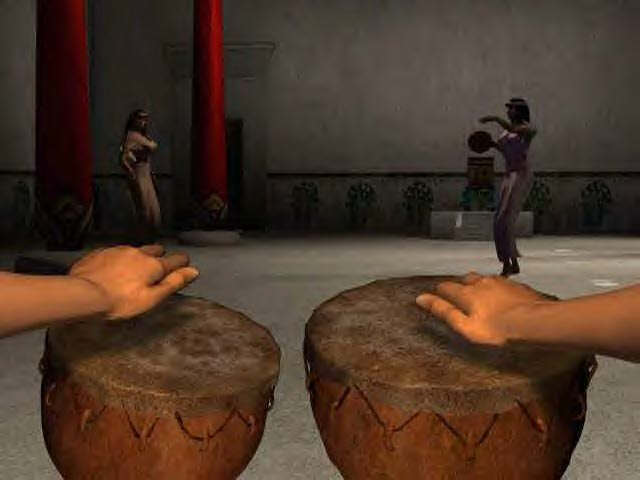 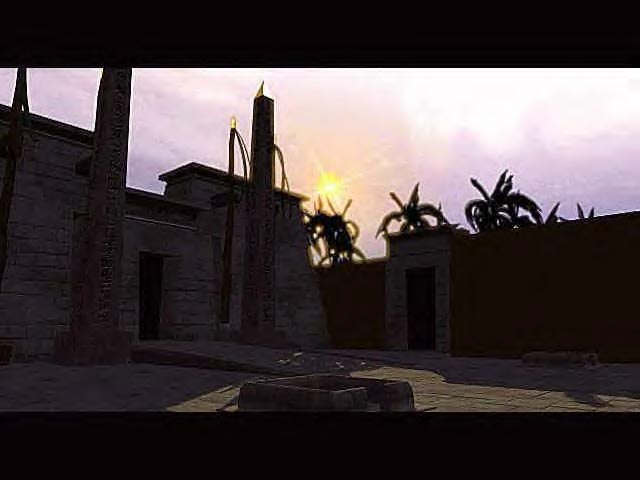 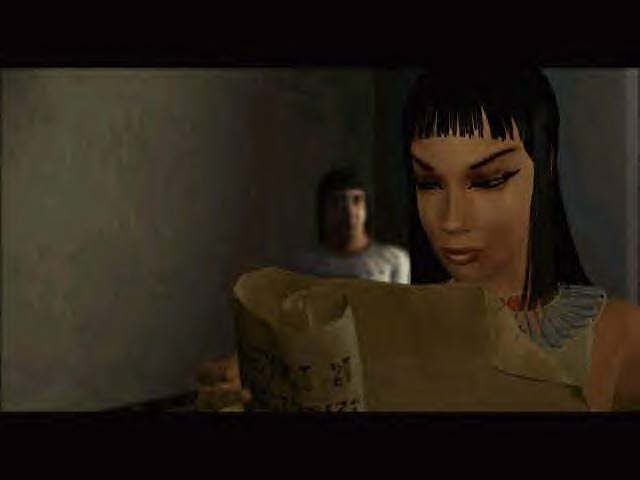 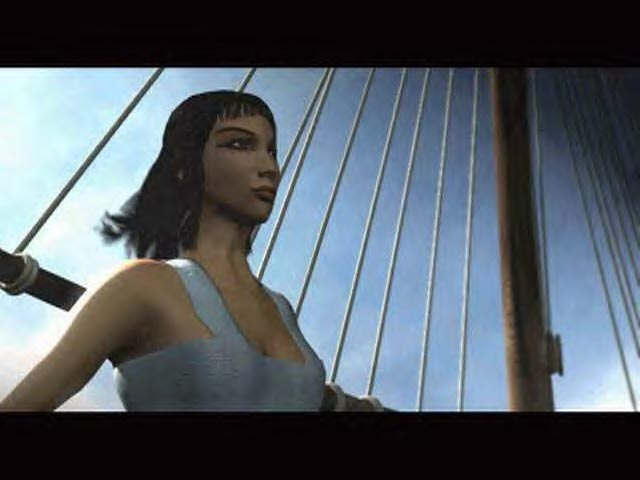 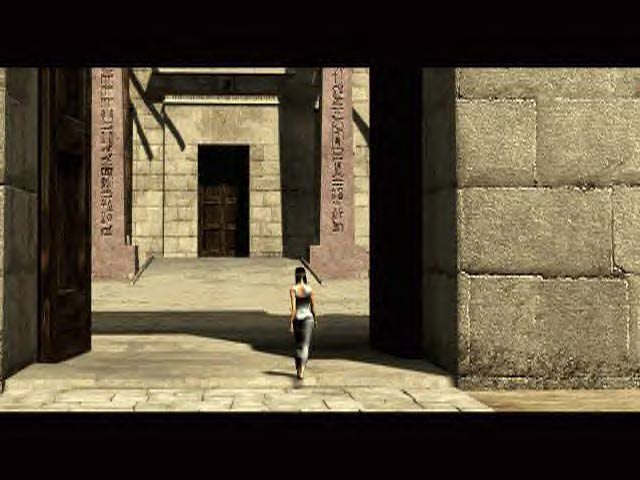 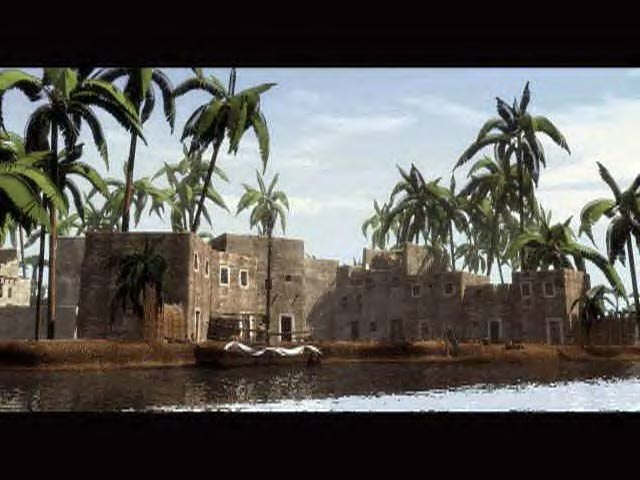 |
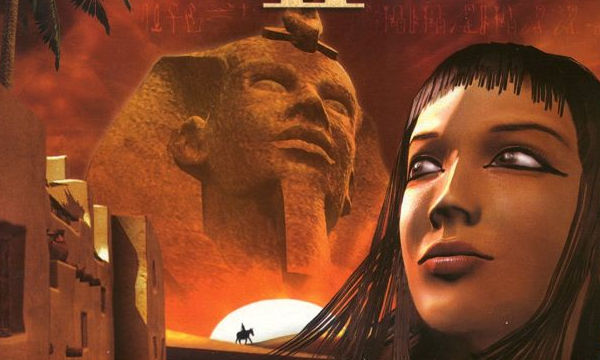
Egypt II is the fifth in a series of historical adventure games coproduced by Cryo Interactive and Reunion des Musees Nationaux, the others being Versailles: 1685, Egypt: 1156 B.C., China, and Pompeii. Egypt II resembles these previous games in that it is an adventure game with historical content accompanied by a documentary base, but Egypt II stretches the boundaries of these earlier offerings by serving up what I found to be a more interesting story and (shades of April Ryan in The Longest Journey) an opportunity to play as a lead character who is a young woman (Tifet, a young priestess and student of Sakhmet, the goddess of illness and medicine).
The story takes place in the city of Heliopolis, the City of the Sun, which was the center of learning and one of the most important capitals of Egypt in 1350 B.C. Under the rule of Amenhotep III, who by this time had been on the throne for more than 30 years, Heliopolis had enjoyed a long period of great prosperity and peace, while focusing its energies and wealth on building palaces and temples.
It is now near the end of the reign of Amenhotep III, and storm clouds are beginning to appear on the horizon as the priests of Amon exhibit an ever-increasing desire to gain power, wealth, and influence by interfering with affairs of state. It is these beginnings of disruption and chaos and, particularly, the changing balance of influence between religion and power that will form the foundation for the story of Egypt II.
Of Heliopolis today, nothing remains, so it is interesting to consider how the graphical reproduction of the city was determined. The only remnant of this great city that cast its influence of Egypt and beyond for centuries is a single obelisk. Yann Troadec, project leader for game development for Egypt II, explains, “As the excavations have not revealed anything that we would have been obliged to respect in the most absolute detail, we were then able to focus on the reconstruction of contemporary architectural details and re-exploit their structure.”
The Story’s the Thing
How often do we frame an early opinion about a game by evaluating the emotional experience felt by the opening sequence? Well, if you’re like me and first impressions are important, then you’ll generate very positive vibes after viewing the opening sequence of Egypt II.
Picture this in a fully animated video presentation for the opening of the story …
The sun rises from behind the Temple of Re, casting elongated then rapidly receding shadows that seem to race across the temple’s main plaza, as the sun continues to ascend in the sky.
The sunlight sends its beams through openings in the wall of the goddess Sakhmet’s chapel, illuminating a statue of Sakhmet and revealing a black cat with bright yellow eyes moving about at the feet of the statue.
The cat leaves the chapel, runs across the temple’s plaza, then out through the gates, and you are next treated to a ground-level view from the cat’s perspective of its race through the streets of Heliopolis.
The cat, seeming to be a messenger of sorts, stops running at the house of Djehouty, Chief Physician of Heliopolis and the adoptive father of Tifet (our heroine). We observe Tifet walking toward the door of the house when she is startled by the cat.
Then Tifet suddenly awakens from her sleep and realizes that her observations have all been a dream. Before she can consider the significance of her dream, there is a knock on the door and she receives a letter from Djehouty saying that he is gravely ill and requesting that she come to his house immediately.
Wow! As I watched Tifet travel from her residence in the city of Bubastis across the desert on horseback and over the sea by sailing ship to the port of Heliopolis, my heart raced a bit, and these exciting initial impressions led me to eagerly look forward to plunging into the adventures that were yet to come.
Thus, the story and the game begin.
The Oukhedou Strain
No, this isn’t the adventure game written by Michael Crichton, but it might have been familiar, because upon Tifet’s arrival at the house of her father, Djehouty, she learns that his illness cannot be identified and, hence, there is no known remedy. Djehouty refers to his illness as “Oukhedou,” and he describes symptoms that include fever, stomach aches, and hallucinations.
As a student and priestess of Sakhmet, Tifet realizes that certain complaints have obvious causes that can be identified, but this is not necessarily the case for every illness. Their teachings and beliefs have brought them to think that illness can also be caused by exterior agents or forces that invade and disturb the functioning of the body. The name for these circumstances is “Oukhedou,” which means that evil spirits can disseminate pain and discomfort in living beings. To fight these evil spirits and body invasions, the physicians, priests, and priestesses of the time used not only preparations handed down through tradition, but also ritual incantations that enable “magic” to help find a cure.
Sakhmet, the daughter of Re (the Sun God), had two sides, possessing both qualities of creator and destroyer. Because she was believed to bring plagues, the priests (who were often physicians as well) performed a kind a sympathetic magic to ward off and heal infections and illnesses. During the reign of Amenhotep III, hundreds of statues of Sekhmet were created, many of which survived and are now in museums. It seems conceivable that such a great display of respect to Sakhmet might have served to suggest that Egyptians (at some time in the history of this period) were able to avert and drive out a particularly virulent strain of plague.
It is interesting that Tifet, as a priestess of Sakhmet, is portrayed as a gentle (nonviolent) but assertive young woman. She is considerate, because she cares about the lives of her father and the citizens of Heliopolis, yet she exhibits a need to augment her softer side by instilling attributes of strength and independence while persistently pursuing her quests and reaching her objectives. She is intelligent; she can solve puzzles and rationalize solutions to problems.
As such, Tifet may be looked upon as a worthy disciple of Sakhmet, whom many women today regard a symbol for the modern woman. In Egypt II, she is a healer, bringer of justice, and guardian or protector of the culture and beliefs of the time. Quite the modern woman’s ideal and why not … I think.
As the story unfolds, Tifet realizes that Djehouty is not the only one afflicted by the unknown disease, but that it is spreading rapidly among the populace and threatens to reach epidemic proportions that could destroy the city.
When Tifet sets out to find a cure for this disease, she knows that she is in a race against time in her desire and commitment to save her father and the inhabitants of Heliopolis.
How will she discover the cause and the source of the mysterious illness? Is the illness the work of the gods or is there some other explanation? What of the strange disappearance of an important scribe at the Temple of Re? Can she depend on the help and guidance of Sakhmet in her quest for answers and how would this support manifest itself? Who among the important political and religious leaders will help her, and who will turn out to be her enemies?
Ah, the questions abound. But the joy of playing this beautiful game awaits you, as an unusual story and an exciting historical adventure unfolds before you.
The Gameplay
Egypt II is played principally from the first-person perspective, except for certain scenes in which Tifet is portrayed in conversation with other characters.
Coming on two CDs, the game is of moderate length and is basically linear, in that you must complete specific tasks in specific areas of the city in a prescribed sequence in order to advance through the game. This is never a problem for me, since I prefer linear progression in games rather than wandering around and doing things without really knowing whether or not I am moving toward a logical solution to my quests.
The player will use a mouse to activate menu screens and to move about the game locations and interact with the objects and characters, which should be a very friendly and comfortable interface for those familiar with Cryo historical adventure games.
The main menu, once accessed, provides the player with the ability to continue/resume a game, start a new game, load or save a game, set game options (including subtitles), and quit a game, using a fascinating “beetle” who crawls around the screen and spreads its wings when you place your cursor near it.
In addition, the main menu allows you to take a tour of the city using a map to visit the various locations in the game, or you can go to the documentation section to research a wide range of subjects about the life and times of Egypt in 1350 B.C. Here you will find subjects such as Urbanism in Egypt, Egyptian Society, Women in Egypt, In Service to the Gods, Medicine, Senses of Daily Life, and The Reign of Amenhotep III.
Visual and Audio Impressions
As with its historical adventure game predecessors, Cryo has brought forth its magnificent 3D technology, which provides 360-degree, rotational look-arounds for all scenes and presents the interesting characters in the game as 3D images and animations rendered on beautifully detailed backgrounds.
The animations in Egypt II are particularly pleasing and, I think, provide enhanced visual experiences when compared to the previous Cryo historical adventures. There are numerous animated videos throughout the game that I found to be not only graphically superior to just about anything that I had seen before, but they also succeeded in riveting my attention to the screen at key moments as the plot was advancing, and it was critical to the experience of playing the game when I could get more out of the visualization of progress in the game from the impact of animated videos than I could ever have gotten from simply listening to dialogue or just moving on to the next scene.
Other lasting impressions from the spectacular animations include a sleeping governor whose chest heaves as he breathes in concert with the sound of his snoring and the tears and mascara that run down Tifet’s cheeks as we see her face in a close-up, reacting to a particularly sad moment in her life. Even Cryo has outdone itself.
With original compositions from Farid Russlan, the music is always appropriate to the emotion, feeling, and mood of the unfolding story, never distracting the player from the other aspects of the game’s presentation.
The voice acting is excellent, which has not always been the case with Cryo games. So apparently they got the message and have taken an interest by employing real English-speaking actors who articulate their lines with proper inflection, emotion, and clarity. Also, unlike the recent auditory offering in Pompeii, lips actually move when the characters converse.
The Puzzles–Almost No Strain
Without exception, the puzzles are woven seamlessly into the progression of the story, which is always a good thing … no distractions and no illogical sidesteps.
There are a nice variety of puzzles, which include some traditional types such as inventory-based puzzles (find an object and then later place in a different place), sliding tiles, mixing ingredients in the right order, and moving/pouring a liquid from one full container to two empty containers with different volume graduations, then back and forth until the original container has a specific volume of the liquid left in it.
Most of the puzzles are relatively easy and there are no mazes, but for me an encounter with the dreaded musical rhythm puzzle could have been a stopper … and it was for a while. It seems that I was expected to be able to simultaneously play two drums to match the beat of music being played to entice a dancer to join another dancer. This is also a timed puzzle. Well, folks, Gene Krupa or Buddy Rich I am not. However, thankfully the game designers must have had people like me in mind, because after an hour or so of futile effort, my leader/tormentor in the game apparently grew weary and told me to take a break and just go ahead and mingle with the guests, which is exactly what I needed to do to progress in the game. So those of you who, like me, cannot seem to master the drumbeats, be persistent, keep trying, and eventually you will be allowed to move on. Thank God.
All in all, the puzzles were fun, logical, and generally easy.
The Conclusion–Easing the Strain
For me, Egypt II was the best of the five (to date) historical adventure games produced by Cryo and Reunion des Musees Nationaux. It has the most interesting story, best animations and videos, and best voice acting, and it presents a heroine to adventure gaming in a way that, I think, works even better than April Ryan in The Longest Journey.
I was extremely comfortable playing this game as Tifet, who clearly came across for me as a character (especially a female character) with whom I willingly and easily identified, as she exhibited many desirable human character traits such as compassion, sensitivity, intelligence, strength, assertiveness, perseverance, resolve, and integrity.
Oh yes … What’s going on between Tifet and the Nubian? And remember the beautiful opening video sequence that I described earlier? Well, the closing video sequence does not lose sight of what the game had tried so successfully to establish with the opening. After you have finished your control over the playing of this wonderful game, pay attention, because I know that you will really appreciate the closing video sequence. It is a perfect ending to a finely crafted historical adventure game.
In conclusion, for those of you that enjoy “edutainment” games in general and specifically have had stimulating experiences in combining historical adventure gaming with revisiting your interests and fascinations with past civilizations and cultures, Egypt II: The Heliopolis Prophecy is a game to go for.
Final Grade: A+
System Requirements (PC): Pentium 200 MMX
32 MB RAM
8X CD-ROM
30 MB free disk space
SVGA, 65,000 colors video card
2 MB video memory
Soundblaster-compatible sound card
Direct X 7