Review: Comer — Part 2
|
Comer Developer/Publisher: Shine Studio By Ray Ivey   |
|
It’s pretty. It’s really pretty. Did I mention it’s pretty? But is it a game?
From Ray’s Adventure Game Rules: Rule #3984: The Pretty Picture Principle. “A game can make up for a multitude of sins if it overwhelms me with eye candy.”
Games that have benefitted from the PPP include Celtica, Beyond Time, The Cassandra Galleries, Golden Gate, Liath, and Redjack.
Sadly, Comer is the exception to the rule. It’s a game that irritated me so much that its Pretty Picture Get Out of Jail Free card just didn’t quite fly.
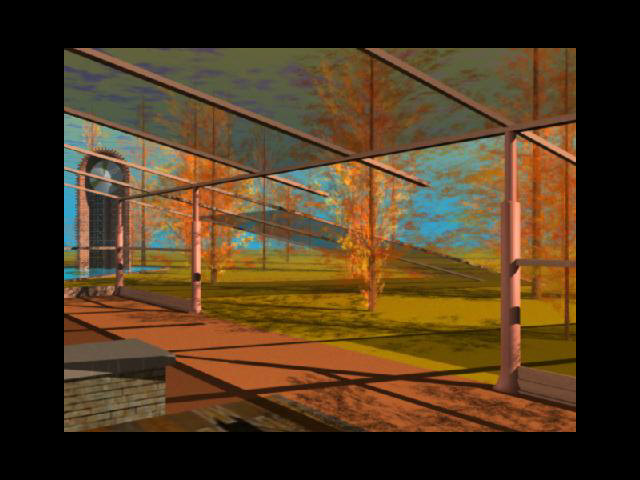
Comer is the first effort from Kyle Choi at Shine Studios in Hong Kong. It’s a first-person, point-and-click adventure, and let me say up front that it has eye candy to spare.
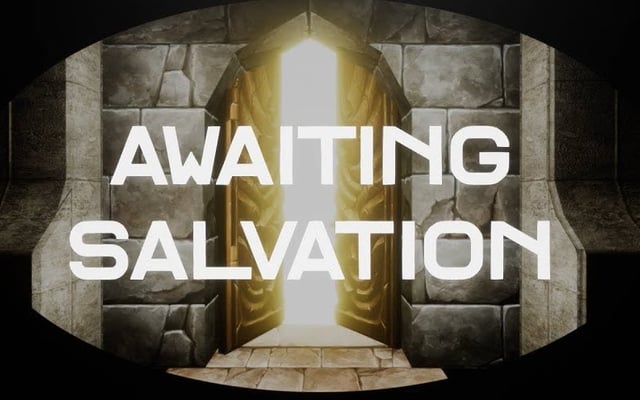
Let me elaborate. This is one good-looking game. You travel through a series of worlds filled with structures that look like they were created by an Asian Frank Lloyd Wright. The color palette is soothing, tasteful, and imaginative. The imagery is consistently beautiful. The buildings are enticing, intriguing, alluring, and mysterious.
If only the game was any of those things. The thin premise of the game is that there’s been a huge cover-up in the natural history of earth, and it’s a secret that a series of a very few travelers have uncovered. These travelers are called “Comers.” You guessed it, you’re the latest Comer.
Your mission in the game is to retrace the steps of those who have come before you and uncover secrets about Earth’s distant past.
Not an unprecedented premise for an adventure game, but not bad. So far so good. Great looks, decent premise … so what’s the problem?
The problem, unfortunately, is the game itself.
I first have to complain about the title. It just feels like an awkwardly translated idea. And that’s because it’s an … awkwardly translated idea. How about “Journeyer”? “Sojourner”? “Explorer”? “Comer” sounds like … oh, never mind. It’s just not an effective English language title. It doesn’t communicate.
Next, the interface. While I’m a big supporter of ultra-streamlined graphic user interfaces in adventure games, the controls in Comer are a bit too streamlined. The best example I can give of this is the navigation problem. In the game, your cursor is a series of arrows that are supposed to be contextually appropriate (right arrow if you can turn right, up arrow if you can look up, etc.).
Unfortunately, there is no difference in the “You May Go Forward” arrow and the inert “You Can’t Do Anything Here, Buddy” arrow. This is a pretty big oversight when designing a game. Coupled with a game that has a very sluggish response time, and you can get pretty frustrated trying to just get around Mr. Choi’s lovely environments.
Next, the puzzles. Again, there are plenty of pretty games with mild puzzles that I have enjoyed very much. But the puzzles in Comer are obtuse, illogical, feel irrelevant to the game, and aren’t very entertaining to solve. I kept balefully trudging through one pretty house and garden after the next, having absolutely no idea why I was doing any of the things I was doing. Flip a switch here, turn on a light here, grab a prop here. Why? Sigh. This is no way to experience an adventure game.
Finally, there’s the ending. I’ve spent many a review wailing about bad endings in adventure games. Disappointing endings, silly endings, illogical endings, unsatisfying endings. Comer is the first game I’ve yet played that simply doesn’t have an ending. The game just stops. After you see a final, baffling video of tree spirits ascending to the heavens (please don’t ask me to explain), you look around to see what to do next. And there’s nothing. No final message. No summing up. No credits, even.
I’ve had it explained to me that the concept of the ending is something about being stranded on an island to contemplate what you’ve learned, or something. Well, a message of some sort would have helped me understand this. Clairvoyance has never been my strong suit, and it shouldn’t be a requirement for understanding a game. And hey, if I’m stranded, why can’t I simply swim across that small body of water there? Nothing about the “ending” of this game is satisfying or logical. You just stop playing.
Not that stopping playing Comer was a huge hardship in my case. It was a mercy.
At this point I feel compelled to make a bit of a political comment. There is a feeling lately that has been wafting through the halls of the adventure gaming community. The idea is that every new adventure game that comes out has to be treated like gold. With the genre in “trouble,” it’s somehow disloyal to be very critical of any new game. I’ve been made to feel a bit apologetic for not loving this game.
Well, I certainly bear no malice to Shine Studios. I wish Mr. Choi well. And to my fellow gamers who like this game more than me, good for you! Prove me wrong, make Comer this year’s Half-Life. What do I know, I’m just one adventure game player.
But to this player, the game just feels like an unfinished amateur product.
I think that if our genre is indeed in trouble, it will only be saved by good games.
It will not be saved by Comer.
In conclusion, Comer has exceptionally lovely graphics, but the story is so ephemeral and the puzzles so irrelevant that I just didn’t care. Comer is no Second Coming.
Final Grade: D
System requirements:
Windows 95/98
100 MHz Pentium or faster
16 MB RAM minimum
10 MB hard disk space
8x CD-ROM drive or faster
800×600 display, 24-bit True Color preferred
640×480 display, 16-bit High Color acceptable
Windows-compatible sound device
Screenshots