Black Mirror II Review
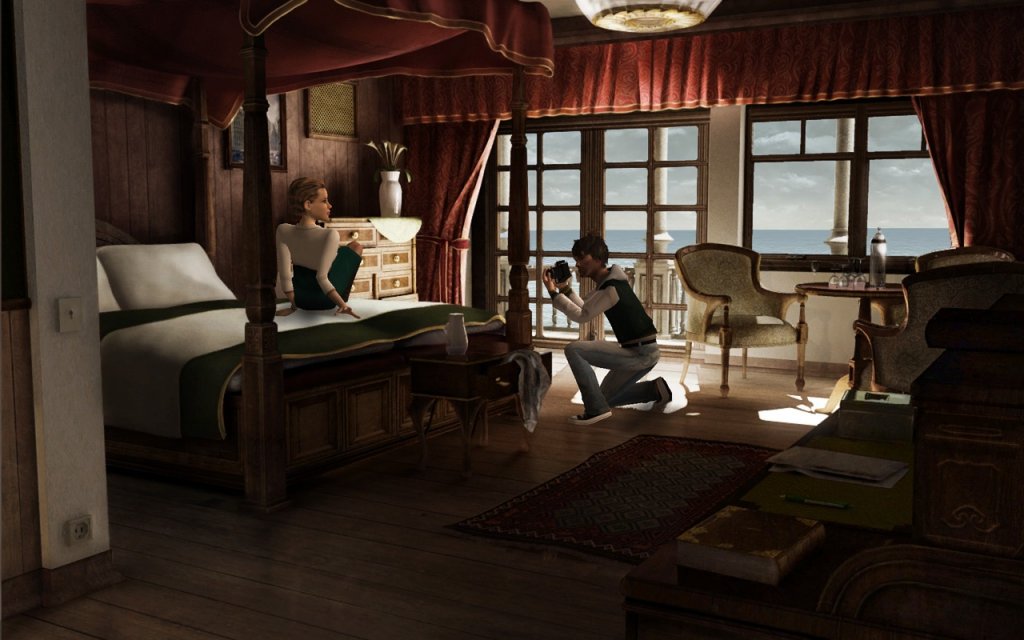 I didn’t play the original Black Mirror, but I know it’s one of those games, like Still Life, that developed something of a cult following. I did play the demo, which I thought was quite atmospherically spooky, with an intriguing, occultish story. Black Mirror II picks up a dozen years after the events of the first game. A young man named Darren Michaels is living in his mom’s small town of Biddeford, Maine, working between semesters in a run-down photo shop. However, the events of twelve years earlier are about to catch up with Darren, none of which he, at first, knows about. The first couple of chapters of the story take place in Maine, with Darren learning about his mother’s strange past in England. Events then take Darren across the Atlantic where the final chapters unfold in the blood-dripping environs of Black Mirror castle and the town of Willow Creek, the scenes of the tragic events of twelve years earlier, and also a little bit in Wales. Darren carries around a great, horrible secret within him — literally — that he will not fully understand until very late in the game. Black Mirror 2 has probably the best production values of any adventure I’ve played. It’s rendered in something they call 2.5D, with 3D sprites cavorting across luscious 2D backgrounds. Only the backgrounds aren’t static pictures. They come alive with smoke pouring out of chimneys and clouds scudding across somber skies and all sorts of other neat animations. Of course, every time I read a review of a new adventure on one of those non-adventure gaming sites, the reviewer always bawls that the graphics of almost any new FPS are way more advanced. That may be true. Those console games can afford it. 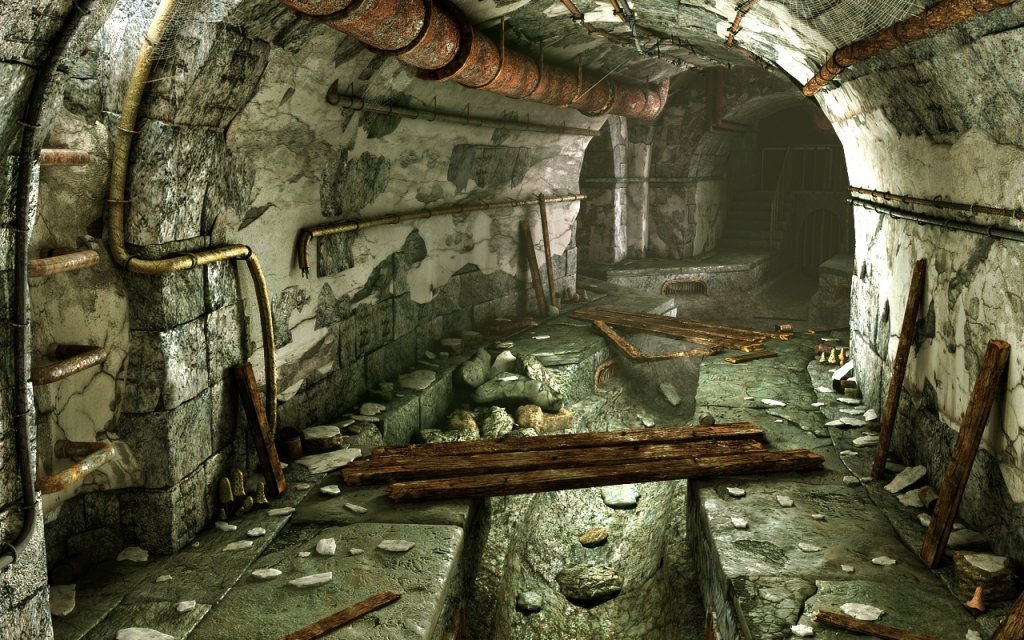 The music is likewise swell, the voice acting too is excellent, and the writing and the story are also among the best I’ve ever encountered in a game. The cut scenes are of cinematic quality. Heck, the interface is smooth and classy as well. They even give the player a choice of which cursors to use — the fancy new ones or the not-quite-as-fancy-but-nostalgic old ones from the first Black Mirror. Of course, it goes without saying that the most advanced feature of the game is the help system. They give you a choice here too. You can have the elaborate, hand-holding never-a-tense-moment help system with the handy switch that instantly solves the standalone puzzles or, you can opt for the no-help help system, which only includes the main character telling you what to do and where to go every few minutes. Either way, rest assured, you will be able to breeze through this well-crafted, fairly long game in about fifteen hours. You’ll never have to move your main character more than a few yards to find the solution, and on those rare occasions when you do, the main character will promptly alert you to that necessity. Yes, I know that many people play adventures for the story and not for the puzzles. As I have granted previously, one could even argue that stopping to solve puzzles does in fact destroy the verisimilitude necessary to any good story’s continuity. But for me, the whole raison d’etre of adventure games is the puzzles. Yes, I love a good story and great graphics and music too, but the main course is still the puzzles. Take those out and, IMHO, you no longer have a game. You have an interactive story. 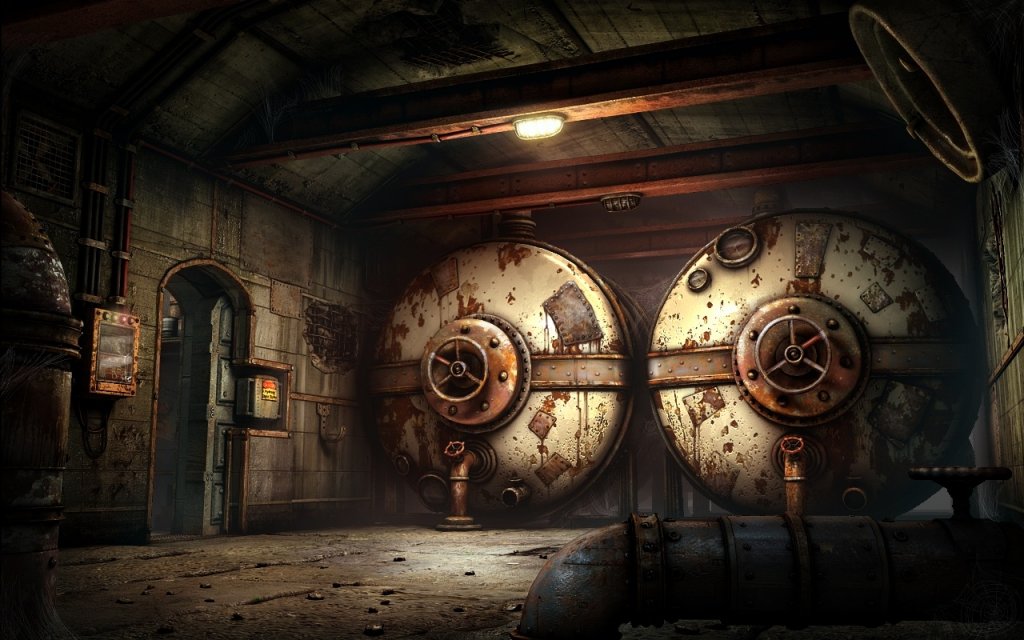 Which is not to say that Black Mirror II doesn’t have puzzles. It is indeed replete with puzzles of the standard adventure game type. Picking up inventory items, using inventory items, occasionally combining inventory items, as well as stumbling every now and then across a standalone logic puzzle. They’re all well implemented. Just try to solve one on your own and see how far you get before help arrives in one form or another. For me, the only challenge in this game was outwitting the help system. Of course I chose “Normal” game play over “Easy” at the outset. I also tried not to right click on anything, because the descriptions are often borderline spoilers. Alas, you do occasionally have to open Darren’s diary at the top of the screen, as a couple of important documents can be viewed full-size only there. Otherwise, of course, the diary offers you a whole other panoply of help, most notably a task menu of what you’re supposed to do next. Things have gotten so schizophrenic for adventure game publishers now that they go to great lengths and expense to create the puzzles, then go to even greater expense to make sure no player ever has to solve any of them. For me, there was one telling moment in Black Mirror II early on. Darren finds a mysterious box amid his mother’s possessions. The box has strange symbols on it and he will have to find the correct combination to open it. So he carries the box around with him for a while until he shows it to another character — who knows the combination and, presto, opens it for him. Well, uh, gee, thanks. That’s the whole game. Intriguing, expertly crafted, gorgeous box. No puzzle. 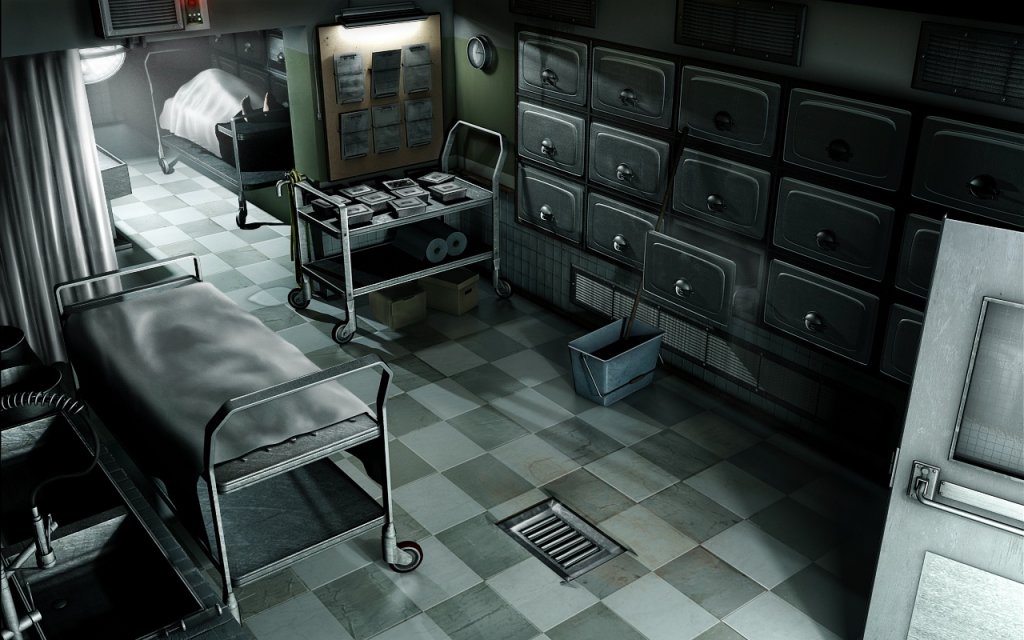 Be aware that you can die in this game. In fact, you’re almost certain to unless you’re playing directly from a walkthrough. There are a handful of “action” sequences throughout the game. Surprisingly, for a game so eager to help you everywhere else, you are given only a few seconds to act before that “Game Over” screen pops up. I would say that unless you’re an exceptionally good guesser, you’re bound to die at least a couple of times before you spot what you’re supposed to do. I don’t like action sequences or dying in an adventure and I don’t understand the compulsion to include them. The game is rated 16+ but mostly because of some Halloween fun-house gore. There is one S&M bondage room depicted, but nothing excessively graphic. Technically, Black Mirror II performed beautifully. My laptop didn’t meet even the minimum required specs and I had no trouble, no glitches. I didn’t even have to knock the standard configuration down. One fun wrinkle is Darren’s camera. He snaps it only occasionally during the game, but the player can look around in every scene for hot spots to shoot which unlock images or mini-games in the main menu’s Extras section. Honestly, the whole game is beautifully made. Unfortunately, since there was zero challenge in it, I basically passed through in a daze. No, wait, there were a few tense moments. Because the inventory band pops up from the bottom into the lower portion of the game screen, every now and then it was a bit tricky to use an item on a partially covered hotspot. I finally figured out that I had to click about a half inch above the edge of the inventory. 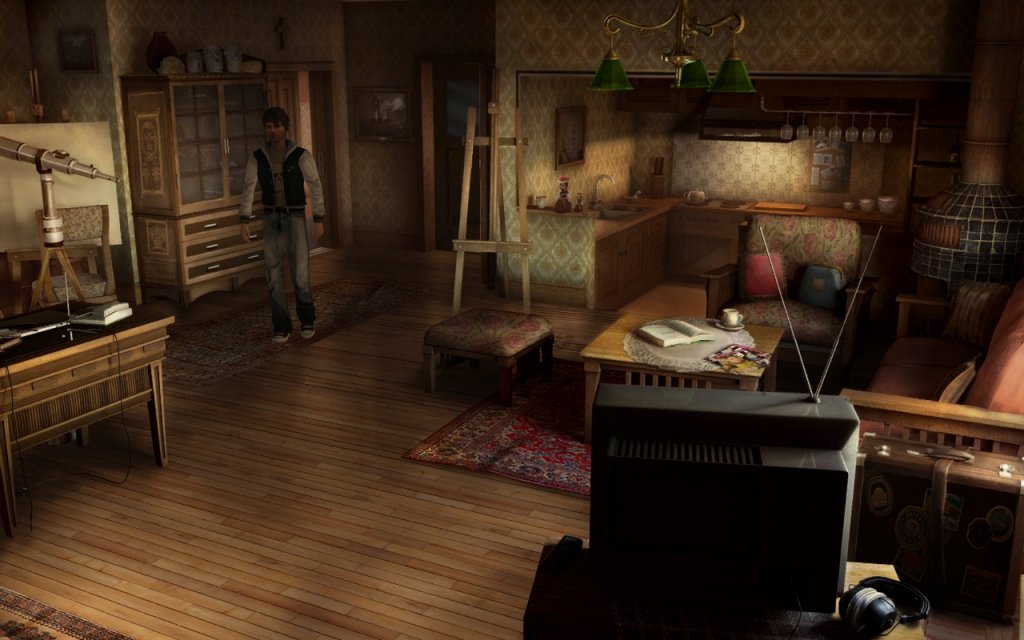 Almost everything in Black Mirror II deserves an A. The graphics, the music, the acting, the plot, the script, the interface. Even many of the puzzles are well thought out. If only the game had let me solve them. Without something to challenge the mind, however, it’s all just cable TV. Which is why, despite its many sterling qualities, I’m giving Black Mirror II an overall B.
Minimum System Requirements
Recommended System Requirements
|