We Have Met the Enemy… And He is Us – Article
|
Articles
I have spent a lot of time talking with many other developers, mostly fellow indies, some of whom have been published commercially and some self-published. I’ve also done some interviews with indies with the most notably probably being A Chat with Independent Developers. There is a certain difficulty with writing an article like this. With self-published indies you tend to get a straight answer to questions like sales numbers, while those that have been commercially published are bound by non-disclosure agreements and can’t give any answers other than providing a general understanding how the system works. As an indie myself who has been approached by several publishers, I found myself in unfamiliar waters and wanting to fully understand how things operated at a lower level. This called for a lot of research on my part and making some educated guesses. I can only hope that this article serves to pull back the curtains a bit to not only help adventure game players gain a better understanding of what goes on behind the scenes and to be more flexible, but to also help other new developers gain a better understanding of the environment they are getting themselves into. On the surface it would appear that adventure game developers (and players) should be celebrating the flexibility that the genre offers. I don’t think any other genre out there offers the same wide range of themes or story lines that can be used. Mysteries, sci-fi, horror, fantasy, love stories, comedies, religious themes, etc. – this genre has it all.
It doesn’t end there either. Within all that diversity, you have different types as well. There are logic based puzzles such as interpreting symbols or sliders, inventory based where you gather and use objects within the game, dialog rich stories containing choices of verbal responses for the player to give, and story driven games where you unravel the plot as you progress within the game. Last but not least we have something going that I don’t think any other genre can offer – longevity. There really aren’t any expiration dates on a good adventure game. Players seek out titles long after they have disappeared from the store shelves. Why? There are a couple of reasons. First, puzzles never die. What was a good mental challenge 10-20 years ago is still a good challenge today. Secondly, and most importantly, a good story will NEVER die. Just like people want to watch movies that were made 50+ years ago, people will still want to play adventure games long after their time in the limelight has faded. This is a major benefit of NOT being technology focused. Games that rely solely on wowing the player with lots of glitz and killer frame rates will quickly become old in a short time as something much more impressive comes along. You would think that with all of this to offer, the genre would be a thriving and vibrant community. Yet it’s not. The Problem with Diversity One of the biggest problems I have seen can be directly related to all of that diversity the genre has to offer. Because there is so much variety, various camps have sprung up within the adventure games fan base. That would be fine if these were just various groups within the genre who have a preference for a certain style. Yet it seems to go much farther than just being a preference. More often than not, it’s all out war with one camp practically denying that the other exists. Yes, I am talking about those that love 3rd person games. I have always found it interesting that those who like 1st person AGs have no problems enjoying a 3rd person AG, yet the reverse is rarely true. It’s like once you have joined the 3rd person camp, then no other format counts as an adventure game and therefore those other games are either ripped apart or ignored entirely. Sure there are arguments about dialog trees, puzzles vs. inventory games, hand drawn graphics vs. pre-rendered, etc. but the biggest wedge seems to be the 3rd person vs. 1st. About the only thing everyone agrees on is that an adventure game must have a story. Living in the Past
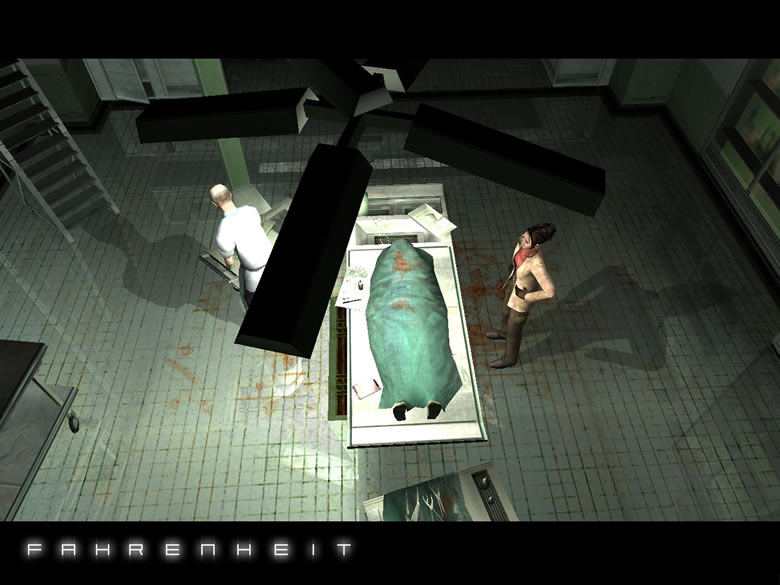
There have been several hundred games released since then. Surely there had to be some memorable ones in there. Yet, only a handful seem to shine through, most notably – The Longest Journey, Syberia, and the Myst games. These games all had high production values, memorable stories and characters, fascinating locations, and absorbed the player into their worlds. This seemed to be lagging with many of the other games, which for the most part seemed pretty sparse and lacked much depth in comparison. You have to love when a discussion about your most anticipated games gets replies of Gabriel Knight 4, Monkey Island 5 and Grim Fandango 2… Caught Between a Hard Place and a Rock For developers this becomes a rather rocky road to travel on. On one hand, the mainstream press constantly laments about the genre living in the past and not advancing, while the fans that support the genre keep harping about wanting games like they used to make. Try to advance the genre like Indigo Prophecy or Broken Sword 4 and you’ll get the purists ripping on the controls and action sequences. Go old school and end up with the mainstream ripping you to shreds and using your game as an example of why the genre is dead – which it isn’t. Is it really any wonder why most AG developers fold after a few products, assuming they even get that far? AG Sites – A Blessing and A Curse
For developers this would seem to be extremely beneficial. Where else can you go to get a good feel for your market’s tastes? However, it would seem that the ugly side of diversity starts to rear its head. You quickly realize that you are damned if you do and damned if you don’t. Surely you can’t please everyone, but you would think you would be able to get most things right. Unfortunately, there are no strict rules with creating an adventure game (which should be a blessing) and you will rarely be able to please the majority. So while the AG forums are meant to give the community a sense of unity, provide a voice for players and show how alive the genre is, it actually does more to show just how fragmented the fan base is. For a genre with the smallest piece of the gaming pie, being even further divided cannot be a good thing. The Silent Majority Needs to Make Some Noise I get a kick out of polls. Going by the ones on Just Adventure I find it interesting how a forum poll might get several dozen votes, while the poll on the main page gets around 1,000. Equally amusing are web stats. As a developer, I get to see where traffic to my site comes from. Visits via press releases and being on the upcoming games listing far exceeds any traffic I get via a forum posting about my game. The conclusion here is that the silent majority is HUGE compared to the regular posters on the forums. In keeping with the theme of this article, I think some finger pointing needs to be done at this group. Obviously they speak with their wallets, but the problem is that that kind of feedback is a closely guarded secret held by a few people. There are some talented developers out there and all they have to go on is what a relatively small group is saying on the forums. If the majority of AG fans are not speaking up and making their voices heard, then how does that serve the genre? Clicking on a multiple choice poll on a website give some indication of what players want, but the only way to truly be heard and make a difference is to get on those forums and speak your mind. It’s easy too, just join the JA Forums and become involved. We’re Spoiled…
The Money Game Let’s do some math here. (Please note that I might be COMPLETELY off here. I do not have access to this information, nor does anyone talk about it, forcing me to do some educated guessing. I can only hope that after reading this that some developers who do know exact numbers can post about whether this is too high, about right, or too low without breaking any NDA agreements. I suspect I am not too far off.) Using Randy’s AG Sales stats he used to post, I’m going to pull a rough number of 100,000 which seems to be at the higher end, but an easy number to work with for this little experiment. So 100,000 copies sold at $20 = $2,000,000 Retail stores take about 60% of the sales price bringing us to $800,000. The cost of printing the boxes, paying the distributor, warehousing fees, disk duplication, shrink wrapping, etc. probably eats up around $4 per unit. So taking away that $400,000 from our $800,000 leaves us with $400,000… (Source: Google it.) Next up is advertising. Advertising the game on websites and print magazines. … it’s pricey, very pricey. Print magazines charge close to $6,000 for a 1/3 page advertisement for one month. (Source: http://www.futureus-inc.com/products/pdf/pcg_ratespecs.pdf) The price drops depending on how many months you want to run it but not by much. Let’s assume the game is advertised in 5 magazines for 3 months. Website banners can run anywhere from $200-$400/month. So lets put the advertising cost at around $100,000. Leaving us with $300,000. If publishers are anything like the portals, which supposedly give the standard royalty rate, then the developer gets around 30% of this margin. So the developer gets around $90,000 (before taxes!). Seems like a decent payday IF you managed to sell 100,000 copies and IF you are one person. If you are a small team of 4 and it took 2 years to make then everyone would have made more money flipping burgers at McDonalds. …yes, some developers never see a penny if a minimal number of copies have not been sold. Which brings up the obvious. How can we expect to see big budget epic AGs when we are only willing to pay $20 for most games? We want them, but aren’t willing to pay a higher price for them. How many times do you hear people talk about waiting for the price to drop? How can we expect games that require large teams of highly skilled writers and artists to be developed? Well, we really can’t. The mere act of raising the prices by $10 (50% price increase) means that the developers pay out increases by 130%. That $90,000 becomes $210,000. At that point it starts to become feasible to hire more talent, grow a team and spend more time on bigger and better games. Where Has This Gotten Us?
Another thing we have been seeing in the last few years is the episodic game formats which most adventure gamers claim to HATE with a passion. To date I believe only one has succeeded – Sam & Max. It doesn’t seem like it was an easy sell either. I suspect that the CSI game Telltale put out helped keep their heads above water. Personally, I would LOVE to see what those guys could come up with given a large enough budget. I can only imagine that it would be highly polished, epic, and with an extremely satisfying conclusion. Last but not least, we are also seeing safe games. Tried and true characters, settings and stories that appeal to a wider audience, with relatively low risk. Characters such as Sherlock Holmes, Dracula, Hercule Poirot, Da Vinci. Settings like Atlantis and Egypt. Stories based on the works of Robert Louis Stevenson, Agatha Christie, Sir Arthur Conan Doyle, Jules Verne, etc. The Publishing Game (or The Money Game Part 2) So where does the money come from to finance the big titles? Obviously it is a very expensive undertaking and most developers do not have that kind of cash lying around. There are two sources: Private investors and the publishers themselves. Private investors will finance a game and some will even go as far as handling language translations and dealing with publisher contracts in various countries. They take the financial risk; while the developer takes the risk that they might never get paid for their efforts if the game doesn’t sell well. The biggest source of financing is the publishers themselves. They probably have the deepest pockets for seeing that large epic AGs get developed in the first place. When they finance a game, the developer is expected to deliver the product by a certain date. In certain instances, they will allow a game to be delayed and finance it further. This can only happen so many times obviously and this is where the rushed endings or buggy products come into play. Now before everyone starts jumping on the anti-publisher bandwagon and blaming them for the bad products, for which they are partially to blame, there is a bit more to the story. It’s easy to say, “Well, they should have held off on it until it was ready to go. Given it more financing and left the developers alone until it was done.” Having a friend in the publishing business I can tell you that not only does the developer have a contract/agreement to deliver the game by a certain date to a publisher, but the publishers ALSO have signed contracts/agreements for the game to be delivered by a certain date with distributors, advertisers, printers, retail chains, etc. If the product does not meet a deadline, there is a huge ripple effect all the way down the chain. Distributors have allocated warehouse space, stores have allocated shelf space, printers have scheduled print times, etc. If the game does not meet the deadline the publisher is still on the hook with bills in order to pay those people for the space that isn’t being used. Just like everyone else, they have penalty fees too. Basically, the publisher starts to hemorrhage money that is difficult to make back. These contracts often times need to be signed MONTHS in advance. Don’t believe me? Look at that PC Gamer rate spec sheet for advertising again and see how many months in advance you have to schedule a game to be advertised in it. There are also the drop-dead dates. These are dates where the contracts become null and void if the product is not delivered by a certain date, which in some cases comes with a penalty fee. Miss the drop-dead date by a single day and the entire cycle has to be started over again with new contracts and a delay of months before the supply chain can allocate resources once again for the product. Let’s not even get into those who pre-ordered and are now asking for a refund! Is it any wonder that some games feel ‘rushed’ to market and we rightly get the feeling that the developers/publishers would rather push a buggy game out the door and issue a massive patch rather than delay it further? Bigger publishers can easily eat that cost and delay a game until it is complete and relatively bug free. Adventure game publishers really can’t when you have games selling in the $20 range with low margins. How did Sierra and Lucas Arts manage to do it? Simple. They controlled most of the chain. They were the developers AND the publishers in full control of a game’s schedule. Their games also sold for $50 at a time when costs were much cheaper than they are now so they could easily eat the cost if things ran long to a certain extent. Breaking the Cycle
The downside is that most people like myself prefer having our adventure games come in a nice box that with a DVD that we can load up anytime we want. It’s that longevity thing – adventure gamers will play the game 10+ years down the road on their 5th computer system since they first played the game. A good story never dies. The other thing is that you won’t be posting big sales numbers when you cut out the retail side. Not everyone hangs out on the web reading about which games are coming out. Retail has the benefit of catching those people who are browsing the store shelves looking for a game. Online sales are definitely growing, but they aren’t there yet. Ironically, I think retail is helping to fuel the growth. With the ever-shrinking shelf space made available for PC games, the consumer is being forced to shop online for them. While the concept of downloading sounds great, it’s just not enough yet. The nature of it only makes it appealing for smaller games that can be downloaded in a realistic period of time. Large epic AGs of 1+ gigs are not going to get downloaded by the masses. So while I understand where all these downloading schemes are coming from and why, I don’t really see this being very feasible for large games. If anything, it promotes developing smaller titles to keep the download sizes reasonable. Maybe in a few years when everyone has an ultra-high speed connection, then maybe we’ll see this take off. For now, only the adventure games that are of a reasonable download size, for example Nancy Drew games, will work with this method. It still doesn’t solve the problem of the majority of people wanting a nice box on their shelf… so I think it’s important to include the option to purchase the game on DVD…in a box. So What Can We Do? There are some things we can do now to help out. Whenever purchasing an adventure game, we should try to buy them directly from the publisher online. This saves the 60% cut that the retail stores take. Amazon? They take 55% of the sale price.
We still need the retail chains to move large numbers of units, but let the casual store browser handle that. If you are reading this, you are an adventure gamer who supports the genre. As such, we should be a bit smarter about getting our games in order to assist further development. Conclusion As an active member of several board gaming groups, I never see people who display a hatred of a particular game format, subject, or style. The CCG (Collectable Card Games) fans mingle just fine with the strategy gamers (Settlers of Catan, etc.) who in turn mingle just fine with the hardcore wargamers, who mingle just fine with the RPG (Role Playing Games) players, etc. Sure there is some teasing going on here and there, but it’s mostly harmless and part of the fun. Those gamers also have no problem playing the other games outside of their core interest. So are we our own worst enemy? I think to a certain degree we are. The variety of games, which makes us unique, isn’t really something that brings us all together, but something that tends to divide us. I’m really not quite sure why that is. We also need to be open for price increases and/or alternate ways of getting our games. There will not be any epic AGs that stick in our minds YEARS later when they are being developed on a shoestring budget. Talent costs money. If we want to see the genre continue to survive and flourish, we really need to do our part and make our voices heard. Visiting sites such as Just Adventure without getting involved in the forum discussions means that a lot of good ideas and insights are never being heard. We also need to band together to support the genre. Ultimately we are in control of what gets made and what doesn’t. If we want to see large-scale epic games with incredible stories, we need to show more support for the developers and companies who can make it happen. |