System Shock 2
|
System Shock 2 Developer: Irrational Games/Looking Glass Studios By Ray Ivey 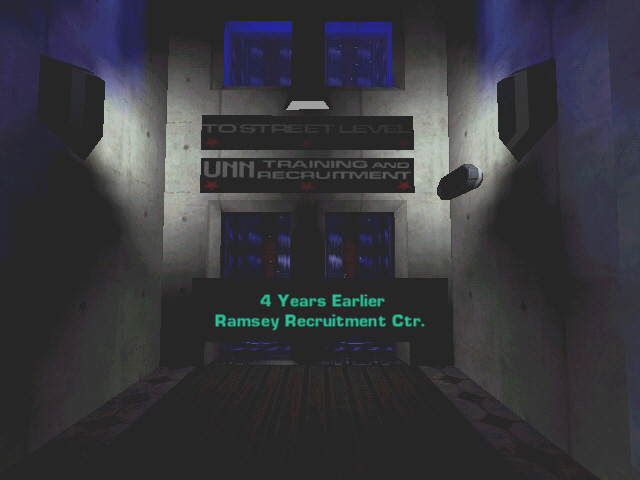 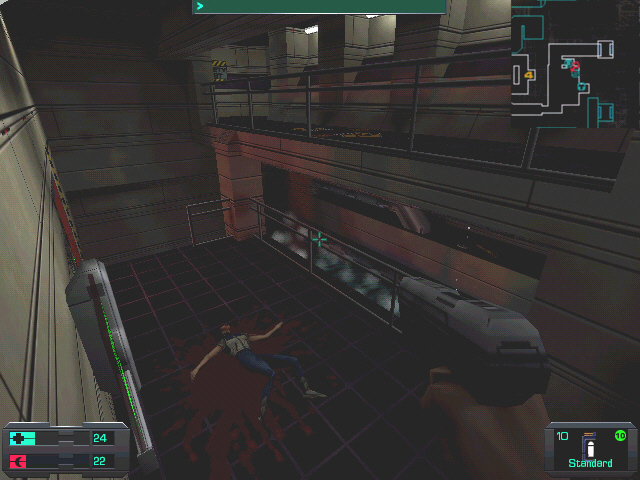 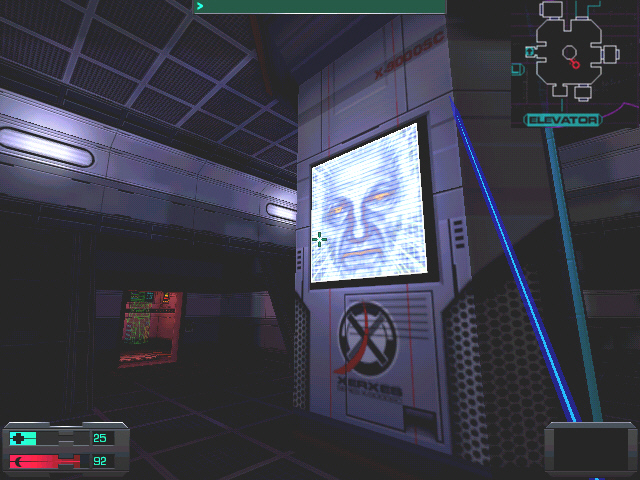 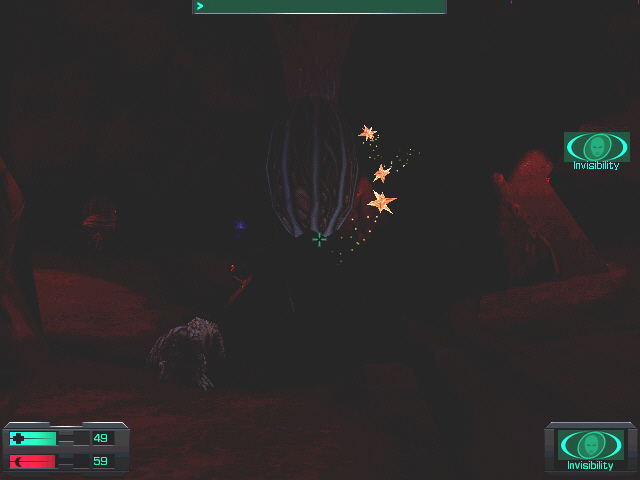 |
If there was any further doubt about the genius of the designers at the now-defunct and much-lamented Looking Glass Studios after the two Thief games, I offer as further evidence System Shock 2.
SS2 is Looking Glass and Irrational Games’ follow-up to the brilliant 1994 original genre-bender. That game was a furious blend of action, adventure, and mild role-playing elements. It was also extremely difficult, and one of the few complaints I had about it was the fact that I frequently wasn’t confident about what my next goals and objectives were.
Right off the bat, SS2 surpasses the original in two important areas. First of all, the RPG elements are much deeper. Second, because of the handy built-in log system, you always know what you’re supposed to be doing (even if you’re not sure where or how!).
In the original game, you played a hacker who woke up on a space station called Citadel where things had gone mad. Your main opponent was a rogue computer intelligence named Shodan, and the game consisted mainly of foiling her attempts to take over the station and the world.
SS2 takes place 40 years in the future, and the multinational company responsible for the Shodan disaster is back in business after being shut down by the government for decades following the events in System Shock. Their new venture is the first faster-than-light ship, the Von Braun. You play a soldier that’s assigned to the Von Braun’s maiden voyage.
The first part of the game is all about creating your character, and it’s a fascinating sequence. You show up at the military recruitment center, go through training (the tutorials are thorough and fun), and then it’s time to develop your character. You do this by a series of missions that you choose for the first three years of your military career. You can go the Navy route and develop hotshot technical skills such as repair and hack; you can develop your strength and weapons skills as a Marine; or you can focus on the more exotic skill set of psi ops and develop tricky psionic abilities such as telekenesis.
After you’re through with this sequence, the game actually begins. You are assigned to the military escort for the Von Braun on its maiden voyage. Your character goes into a long cryosleep and wakes up, just as in the original game, with all hell breaking loose.
You have no idea what’s going on at first, but luckily you get an email from a helpful science officer right away. She gives you preliminary instructions on how to get out of immediate danger.
From this moment on, you’re on a roller coaster ride with no way off. You have to negotiate the labyrinthine decks of the space ship, figure out how to carry out the instructions you’re being given through audio email from the doctor, and all the while having to avoid being made very dead by a host of mutants, cyborgs, gun turrets, giant spiders, and many more inhospitable creatures.
The game does a beautiful job of letting you slowly discover the disturbing backstory, as you come across discarded audio logs throughout the ship. Gradually you begin to piece together the awful events while at the same time gathering clues to aid your own survival. You also sometimes see ghostly remnants of the ship’s dead inhabitants, enacting out their final moments of life. Some of these are heartbreaking.
This mix of high-tech science fiction and horror creates a tension level that’s almost unbearable. I loved playing this game, but it was extremely intense, too much so for some gamers, I would imagine.
Part of what makes the mutants so scary is that they still have a bit of human left in them. They are the remains of the ship’s crew, after all, and some of them have just enough humanity left to mutter things like, “Run.” Or, even creepier, “I’m … s-s-s-sorry …” Something about having a creature apologize while he’s trying to shoot your head off is profoundly disturbing. So is listening to a cyborg/human “midwife” mutter to herself about the horrifying infants in her tender care: “Little ones need lots of care … they grow up so fast …”
SS2 is not just a spaceship dungeon crawl, however. The RPG elements are quite strong and allow you to approach problem-solving in different ways. A good example of this is the problem of the security cameras. All over the ship there are cameras ready to spot you and send in legions of baddies to ruin your day. If you’re a big bad marine, you might shoot out the camera. However, this noise might attract other bad guys. If you’re Navy, you might hack into the computer system and temporarily disarm the cameras. If you have high psi skills, you might stop the alarm with the power of your mind or even render yourself invisible and stroll right past the camera.
As you accomplish interim goals, you’re rewarded by “cyber modules” that allow you to upgrade your skills. These modules are the key to developing your character into a tougher marine, a more crafty Navy hacker, or a more powerful mind-bender.
In addition to character building, other RPG skills come fiercely into play. Special skills give you the ability to maintain, repair, and even modify weapons. Higher hacking skill means a better chance to open a locked door or disarm a gun turret. Research skill allows you to study unknown objects and develop new knowledge, weapons, or abilities.
Resource management is key to success in SS2. “Nanites” are the basic currency of the game, and you find them scattered all over in your explorations. Spending these wisely on matter replicators to create more ammo, health hypos, or other survival necessities is vital to making it through the game alive.
This dynamic of fluid choices is present throughout the game, and it truly allows the player to develop his/her own game style.
And speaking of fluid–the game has a beautiful, sleek look that’s always eye-pleasing. The reality of the 3D world makes you really feel you’re skulking around a giant spaceship.
As with Thief, SS2 is a game you play as much with your ears as with your eyes and fingers. The sound design of the game is incredible. From the hair-raising voices of the creatures to the whirring of the security cameras, the sound design of the game does an amazing job of creating the environment. The things you hear are as important to your success in this game as the things you see.
I’m scratching my head to think of something to criticize about this brilliant game. Wait, I’ve got it. The final showdown is not very imaginative, and is too similar to the ending of the first game. Plus, there was an element of the first game–the forays into cyberspace–which I was very sorry not to see in the sequel.
That’s all I can think of. Back to the good stuff.
The plot of SS2 is strong, well-developed and includes one incredible shock. I don’t want to do anything to give the surprise away, but when it happened, I literally pushed my chair away from my computer and sat staring at my monitor, stunned.
SS2 has many more virtues–a vast selection of fascinating of gadgets and weapons, a huge array of environments to explore and survive, a beautifully produced tutorial, a smooth and effective interface, a versatile and helpful automap, among others.
Irrational Games and Looking Glass have produced one of the best games I’ve ever played. System Shock 2 is truly scary, smart, challenging, fascinating, and disturbing. I recommend it to any adventurous adventure player.
Final Grade: A+
If you liked System Shock 2:
Watch: Aliens
Read: Jurassic Park by Michael Crichton
Play: Thief
System Requirements: Pentium-200 or equivalent
32 MB RAM
4X CD-ROM
SVGA
4 MB VRAM
200 MB disk space
Mouse
Sound card
DirectX v6.1