Review: Thief: The Dark Project
|
Thief: The Dark Project Developer: Looking Glass Studios By Mike Schwab 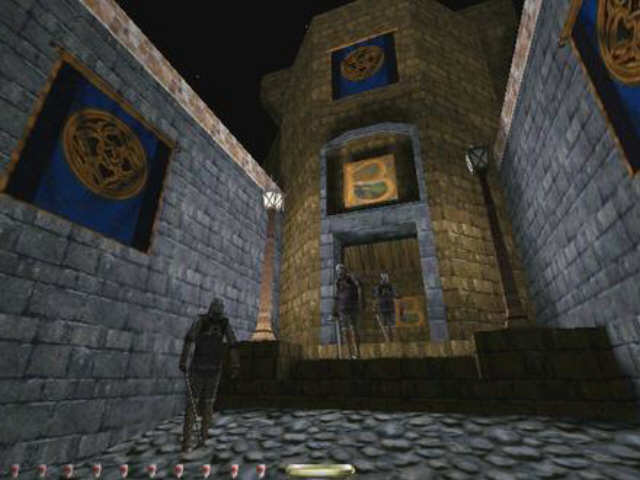 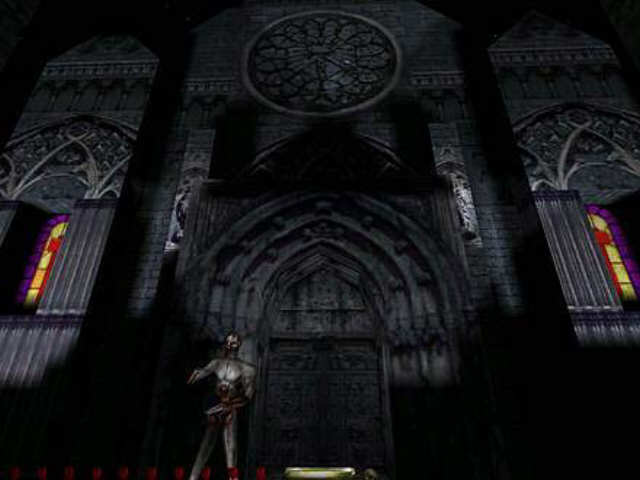 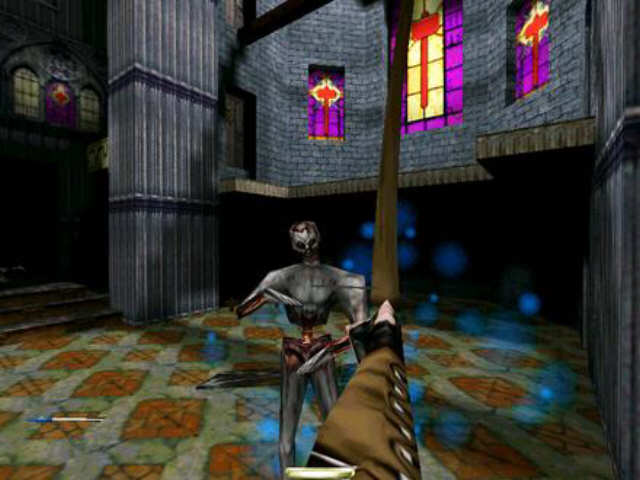 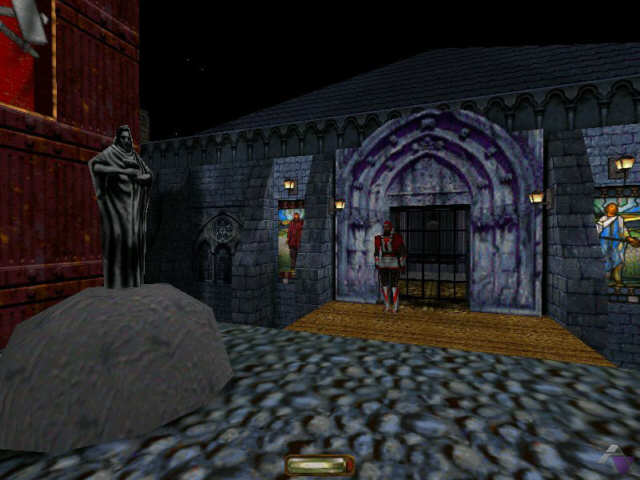 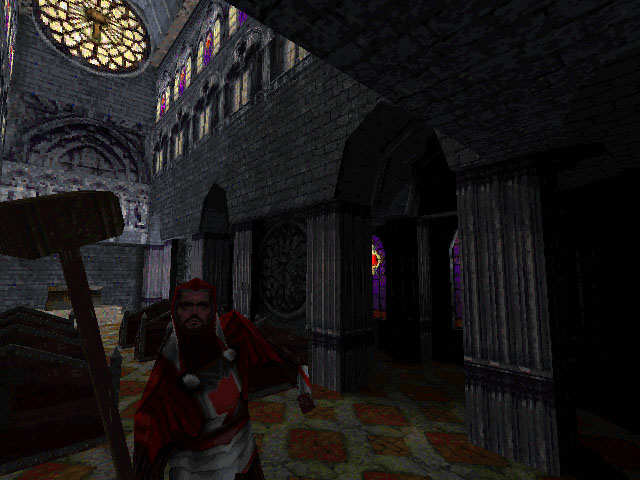 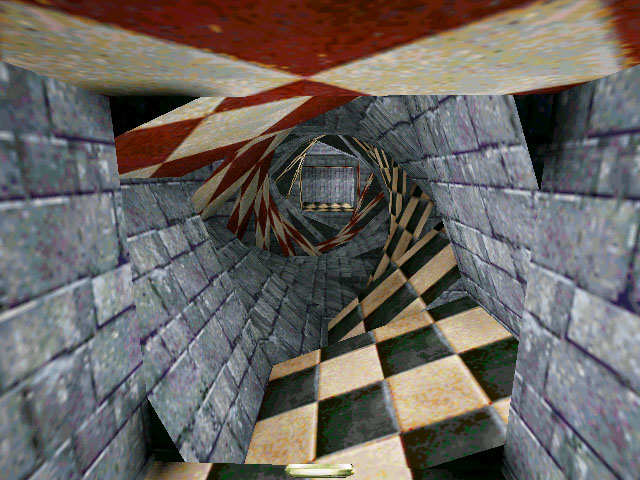 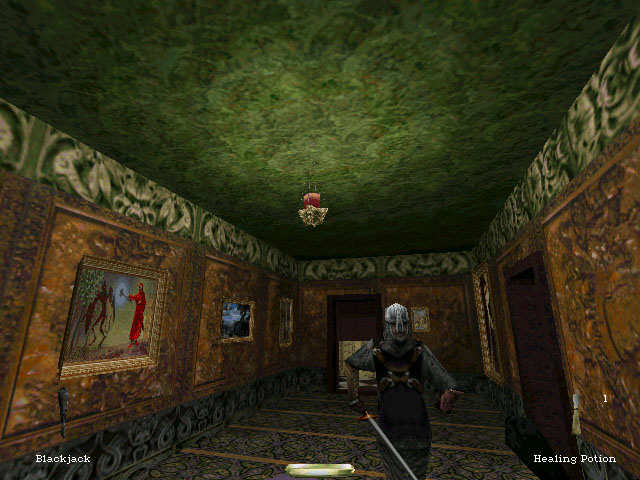 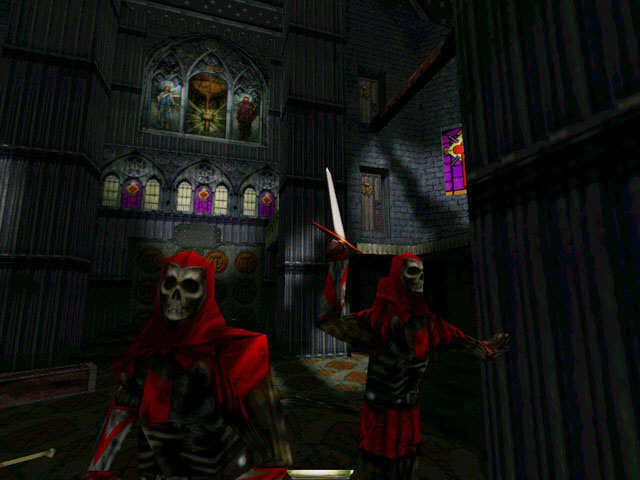 |
Sometimes I hate playing the hero. Maybe that’s why I liked Thief: The Dark Project so much.
How many times do we end up playing the knight in shining armor, the determined journalist, or even the ace detective? Every once in a while, what you really want is to be is the outlaw, the scoundrel, the definitive anti-hero. To hell with saving the world and rescuing the damsel in distress, I want to see what’s in it for me.
Here’s your chance. In Looking Glass Studio’s brilliantly conceived game, you play Garrett, the master thief. Remember when Indiana Jones fought bravely just so some ancient relic could be put in its proper place in a museum? Well, you want that same relic, but you have no intentions of putting it up for display.
Story
Years ago, when Garrett was just a young punk on the streets, he picked the wrong pocket–that being of one of the mysterious “Keepers.” Instead of punishing the boy, the Keeper was impressed with Garrett’s skills and recruited him to be one of their own. The story of Thief really begins years later, just as Garrett has broken free of the Keepers. Fed up with their secret agendas and cryptic ways, you (as Garrett) decide to head out on your own and put your thieving skills to good use. Its seems the city is full of rich lords and barons who have a bit too much wealth on their hands. There’s enough to go around for everyone, right?
Quickly, your path takes some strange twists and turns. After taking a few jobs through your fence Cutty, some peculiar benefactors hire you to obtain a bizarre and ancient artifact, and your expeditions switch to a more supernatural and macabre setting. The risks are greater, but then again, so are the rewards. Making your life very interesting throughout your excursions is a radical and overly pious faction known as the Hammerites. Above all, they believe righteous persons are guided by a being known only as “The Builder” and that an evil essence named “The Trickster” will one day return to wreak havoc on your land. They also prove to be a hilarious bunch as they wander around and babble their religious sayings.
Don’t forget your old “friends,” the Keepers–they love to get involved and try to bend you to their will and influence your path. After all, you were one of their brightest students. All these forces playing against each other throughout the game makes for a rather intriguing scenario, and it even seems a bit political at times.
Environment
Looking Glass designed the “Dark Engine” specifically for this game and went on to use it in another one of their big hits, System Shock 2. The engine is fully 3D and real-time, and you move about your missions in much the same way that you would in a game of Quake or Unreal. This is quite deceptive, however, and you’ll quickly learn that this adventure is quite the opposite of your usual shoot-’em-up.
The setting in Thief is a dark and devious one. Garrett’s world is a little gloomy and dismal but still extremely interesting and detailed. Think of a medieval backdrop, combined with the beginning of the industrial age. Looking Glass has done a great job and created some beautiful scenes and absorbing landscapes. To accompany all of this, you’ll quickly be enveloped by the strange and eerie ambient noise all around you.
Sound plays a major role in Thief. During your excursions, you’ll be able to pick up clues from guards conversing on the streets. You’ll also hear them whistle or clear their throat as they walk around on patrol, cluing you in as to where they are located. Garrett himself will chime in once in a while, with a funny quip or observation on his current predicament.
You’ll need to watch where you step, literally. The guards have an extremely keen sense of hearing, and if you go running over wooden and tiled floors, you’ll quickly alert the battalion. Instead, stick to the stone floors and carpets, and use your moss arrows sparingly to soften the ground on loud areas.
Gameplay
The concept of Thief is so unique and contrary to most other 3D games, you’ll be amazed. They key here is stealth and agility. If you’re hoping to kick some butt, please look elsewhere. You can (and sometimes are required to) go through an entire level without ever hurting or killing anyone.
The shadows are your friends. The less you are visible the better, and the fewer confrontations you engage in, the higher your chances for success. If you run at guards with your sword unveiled, well, let’s just say that I hope you save often. Garrett’s real forte is the art of not being seen, sneaking by his enemies, and leaving without a trace.
To help, you have some nifty equipment at your disposal. You are outfitted with a bow that draws some rather unorthodox arrows, which include water arrows for dousing torches (thus creating dark areas), gas arrows for knocking out enemies, and rope arrows to get to those hard-to-reach areas. Eventually you’ll learn that when you’re really in a pinch, blackjacking someone from behind is one of the best ways to clear the way. Just make sure you move that unconscious body before the next watch arrives.
Whether you are creeping around a noble’s mansion, foraging through an ancient crypt, or invading the Hammerites’ prison, you can only come to one conclusion–the levels in Thief are pure genius. Complex and innovative, they serve a dual purpose of defining Garrett’s world and creating interesting individual scenarios. The levels themselves are huge–most will take you several hours to navigate with many hidden areas and alternate routes.
Thief has a mission structure that works perfectly, like chapters in a novel. One of the highlights of the game is the briefing you receive before starting each mission. The voice used for Garrett’s narration is awesome, and you really begin to believe Garrett is a living, breathing person. In fact, you’ll be anxious to finish a level so you can hear the subsequent intro. There are also a few cutscenes to move the story along, which are very well-done. One in particular will leave your jaw dropping.
There are no puzzles per se in Thief, but you receive multiple objectives that require completion before moving on. Do yourself a favor and get the most out of this game–play on expert. Unlike other games that simply make the enemies harder on higher skill levels, you instead receive additional objectives and more things to do. Over the duration of the entire game, I’d say this expands the length of your gaming experience by as much as 20 percent.
Finale
Looking Glass has quite a history of creating great games, but they really have outdone themselves here. It’s hard to find any fault when you have a fantastic story, unique gameplay, and good graphics and sound to back it up. It’s difficult to even categorize it in any known genre. There will be people who try to convince you it’s too slow-moving and the graphics are only average, but so be it. While they’re complaining, I’ll be creeping through the shadows, finding new ways to sneak into some baron’s castle and lift his prized possessions.
Final Grade: A+
If you liked Thief: The Dark Project:
Watch: Thief (James Caan, 1981)
Read: Robin of Sherwood
Play: Thief 2: The Metal Age
Note: If you are buying Thief: The Dark Project for the first time, look for the Gold version. It contains three extra missions interspersed between the original twelve.
System Requirements: P166
32 MB RAM
Win95
3D accelerator recommended