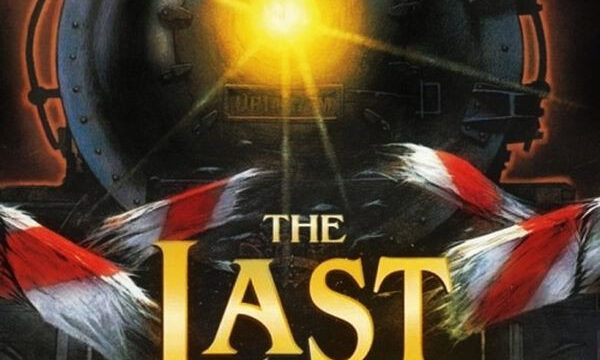
Review: The Last Express
|
The Last Express Developer: Smoking Car Productions     |
The Last Express is without a doubt a unique game. Its visual appearance and gameplay is unlike any other game I ever played. It was created by Jordan Mechner, author of Prince of Persia–one of the most popular games of early nineties (I spent a lot of time playing Prince).The Last Express is called “mystery adventure” by its creators, and it is a fitting description–as you shall see from this review.
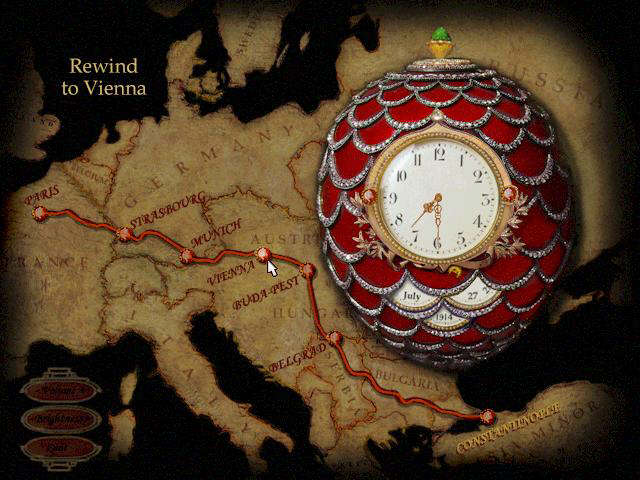
The name of the game refers to the famous Orient Express, an international express train going from Paris to Constantinople via Strasbourg, Munich, Vienna, Budapest, and Belgrade. And why “last?” The story takes place on the last train before the outbreak of the first World War at the end of June 1914 (the service was not restored until 1932). One character makes distressingly timeless remarks about “wars on the Balkans going on for thousand of years and not going to stop anytime soon.”
The express is populated by about 30 passengers of various nationalities, each of them with their own agenda. There are French, Germans, Austrians, Russians, Serbs, English, and Persians on the train, perhaps even more. And of course there’s our hero–you–who is, surprise, American.
You play the role of Robert Cath, an American physician and adventurer. You were invited aboard the Express by your good friend, Tyler Whitney. You miss the departure from Paris but hop onto the train a while later from a motorcycle (driven by a young woman nonetheless) in a dazzling display of daring–and not the last either. You get into your compartment only to find your friend Tyler lying dead on the floor with strange claw-like marks on his face.
That is very unfortunate because you are already being pursued by the French police in connection with a murder accusation (wrongful, of course). Hence you can’t do the obvious, that is, call the conductor and the police. But being a calm and resourceful adventurer, you dispose of your friend’s body in a discreet manner and assume his identity.
And that’s where the story starts getting really mysterious. It quickly becomes apparent that Tyler had some agenda on the train–but you first have to discover what the agenda was. You only have a telegram from him mentioning something big but not giving any very useful details. You discover an empty case with some very expensive object very obviously missing. And you have to identify Tyler’s murderer as well, especially because he or she might be after you too.
There are various shady characters on the Express–militant nationalists, anarchists, weapon smugglers, mysterious wealthy aristocrats, and undercover agents of several countries. You have to deal with many of them–and avoid getting killed in the process. On the upside, you can get some romance as well–if you play your cards right. And of course, you have to boldly go where you are not supposed to–without arousing suspicion and without getting caught. But that’s standard adventurer job description, nothing unusual really.
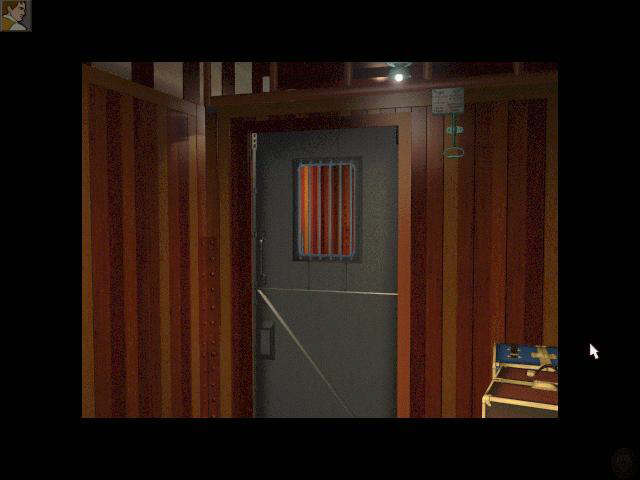
The interface is not-quite-point-and-click. You play in first-person view and can look around and move in fixed steps. There is a small amount of pixel-hunting when you have to find hidden buttons in certain locations, but nothing an experienced adventurer couldn’t solve easily. The movement can be confusing at first before you figure out the layout of the train cars–it is easy to get lost.
There are some inventory-based puzzles of relatively low difficulty. For the most part, the biggest challenge is figuring out how to be in the right place at the right time–and finding out what the right place actually is.
The Last Express employs an unusual system of saving game positions. You do not get any save game slots, but there is a game clock that you can rewind to any point in the past–or you can jump back to major stops on the train’s route. It is also possible to have several games in progress, each with its own clock. This save game system is not as convenient as the usual setup, but it does have an advantage: if you mess up and die or the game ends before reaching the final destination for some other reason, the clock will automatically rewind as far back as is necessary to let you perform the correct actions leading to victory.
That may not be easy, however. The game is partially nonlinear–events seem to take place in the same sequence and at about the same time every time you play, but you have high degree of freedom of movement around the Express. This means that you may or may not see certain scenes, talk to certain people, or overhear certain conversations. Most of them are fortunately not critical for completing the game but may give you useful clues.
And this is probably what I liked least about The Last Express. You often don’t know what to do. Nobody is giving you any clearly defined quests (recover this, deliver that, kill this). I suppose that’s part of the mystery, but I prefer slightly less mysterious games. This game felt a little too vague to me. I didn’t get the right feeling of identification with my character because I knew too little about him at the beginning. Only during the game did some details about his past surface.
But apart from the gameplay, which wasn’t exactly my cup of tea (though it could well be someone else’s), I did like The Last Express. It is a high-quality game, and it is clearly visible that no expense was spared to get everything right down to the minutest detail (which, unfortunately, is a quality that too many American productions lack).
The game producers were lucky enough to discover an old Orient Express car in not too bad condition. From this car they created a very detailed 3D model, which served as a background for most of the game’s scenes. Next, scenes with live actors were shot and combined together with the computer-generated background into complete video sequences. But 3D models and live actors are not unique, and I said The Last Express was. So what makes it so unusual?
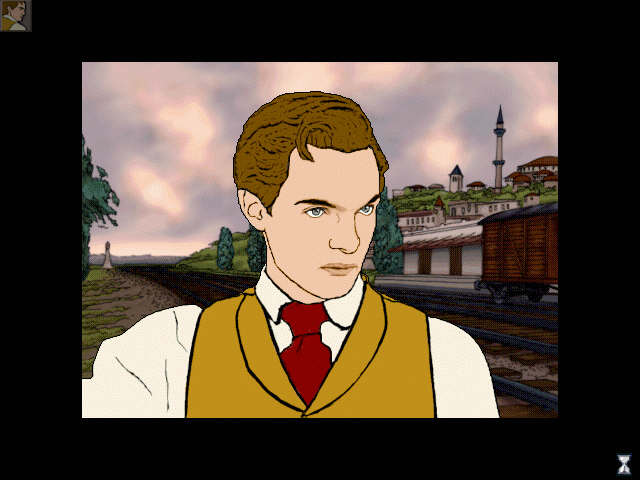
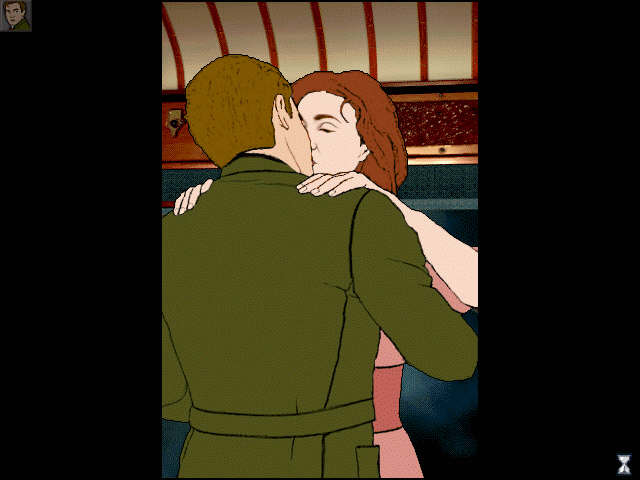
The Last Express does not look like a game with live actors at all. It looks like an art nouveau cartoon. If you don’t remember, art nouveau is the style popular around 1914–one of the more famous artists of that period was Alfons Mucha, whose paintings and posters are well-known. The game creators achieved this cartoonish effect by taking the completed FMV sequences and processing them with a computer program that emphasized the contours and “flattened” the pictures. The result looks in my opinion quite nice–you can see for yourself from the screenshots.
On the game CDs there is a video about the making of The Last Express, which depicts the process of the game’s creation in detail.
The animation is unusual, too. Most of the time the animation isn’t fluent and looks more like a slide show (perhaps one frame per second). It doesn’t look nearly as bad as it sounds, and I think this technique allowed the authors to cram a lot more video sequences onto the three CDs than would be otherwise possible. There are, however, some sequences with high frame rates–and they look really good.
Those sequences are, for instance, the fight scenes–there are several occasions where you have to engage in hand-to-hand combat against your adversaries (usually armed only with your fists). It is easy to get killed, but if you die the fight simply starts again, repeating until you get it right. Personally, I could live without the fights, but they are not all that difficult to win. I suppose the fights are a legacy of Prince of Persia.
Another area showing an unusual attention to detail is sound. The French actually speak French, Russians speak Russian, and Serbs Serbo-Croatian–most of the foreign language dialogs are captioned so you won’t be left out in the cold if you don’t speak all those languages (I certainly don’t). The painstaking obsession with accuracy goes so far that the people at Vienna train station speak with noticeable Viennese accents, different from how the Germans speak. This little detail really impressed me.
The music is quite nice, too–properly dramatic in the right places and recorded in high quality. There is even a lovely violin concerto in the game (this slightly reminds me of the amazing opera scene in Gabriel Knight 2). Unfortunately, you can’t listen to it much because you have to busy yourself breaking into locked compartments and “borrowing” items while everyone else is enjoying themselves at the concert. But whoever said the adventurer’s life was easy?
The Last Express is a very well-made game, created with love and unprecedented attention to detail. After long and hard thought, I decided to give it an A-. The graphics and sound quality is excellent and certainly deserves an A. The story is quite interesting too, although it’s easy to miss some details. But the gameplay is a bit too unorthodox for my liking, which accounts for the minus. Still, The Last Express is a quality game and a classic.
Final Grade: A-
PC System Requirements: IBM or 100% compatible Pentium, 60 MHz or better on Win95
486DX/2, 66 MHz or better on DOS
Windows 95 and DirectX 5 or higher or DOS 6.0 or higher
SVGA card with 1 MB memory or more
8 MB RAM (16 MB recommended)
4X CD-ROM drive
100% Microsoft-compatible mouse
Sound Blaster 16 or 100% compatible 16-bit sound card
Screenshots