Review: Shadow of Destiny
|
Shadow of Destiny Developer/Publisher: Konami 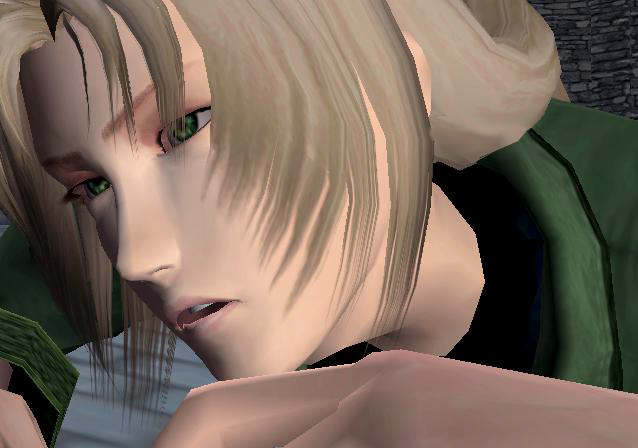 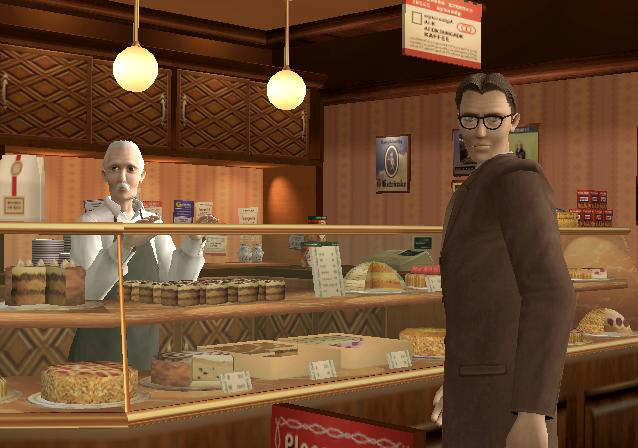 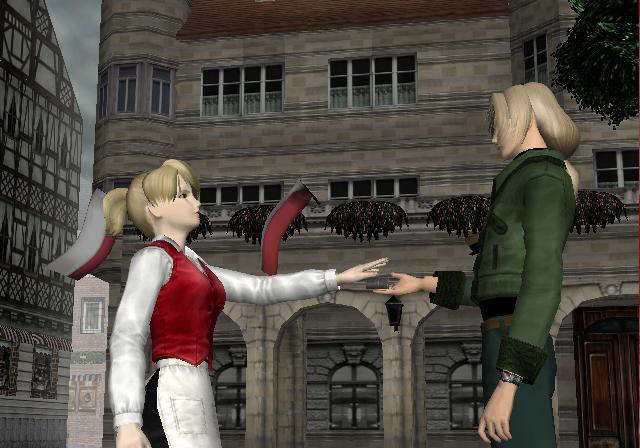 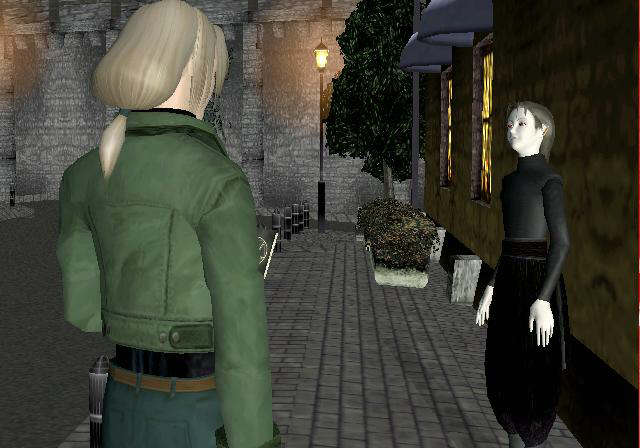 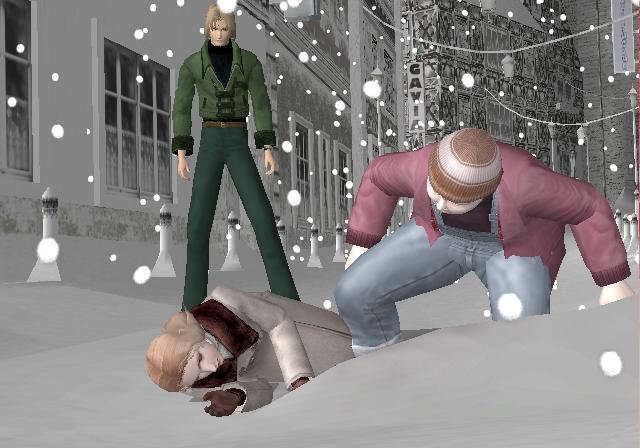 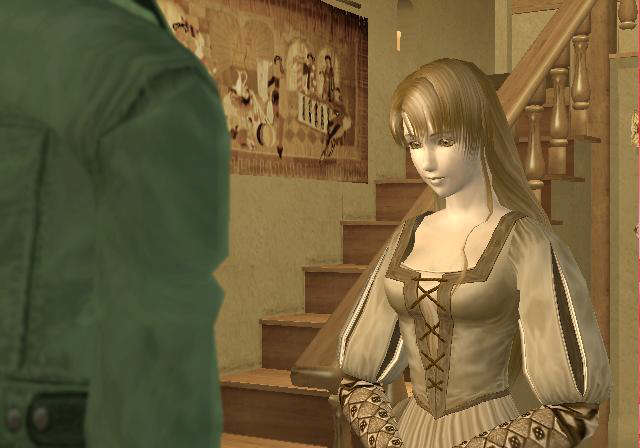 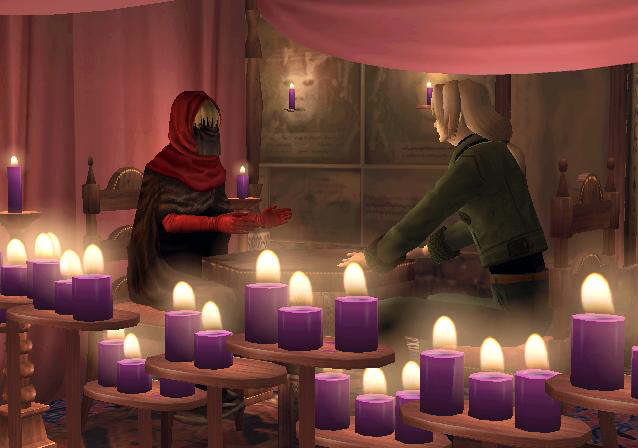 |
Imagine, if you will, the following scenario. You have just finished reading William Shakespeare’s Romeo and Juliet. Still feeling invigorated by the scope of this timeless romance, but also melancholy from the ending, you can’t wait to share your feelings with others. As luck would have it, you soon run across four of your closest friends.
Your enthusiasm is boundless as you relate the sad tale of the doomed lovers, but wait … Friend #1 interrupts your soliloquy by insisting that neither Romeo nor Juliet perished in the version he read. Friend #2 thinks you are both crazy and is adamant that Romeo lived whilst Juliet died, and Friend #3 maintains that the opposite is true. Friend #4 is a burned-out hippie from the sixties and claims that Romeo and Juliet were both space aliens sent by a foreign government to spy on communes.
What would be the point of all of these different endings? The joy of a shared experience that can be discussed and debated has now been diminished. Perhaps if one had the time, he or she could read all five versions and then choose the ending he/she liked the best. But isn’t this just a cheap emotional cop-out, an attempt to appease and be inoffensive to a generation who believes that personal satisfaction must always come first?
In my opinion, this is the biggest problem with Shadow of Destiny, Konami’s newest adventure release for the Playstation 2: a gripping, vibrant adventure is cheapened by providing the gamer with the possibility of five different endings. I personally found the ending of the game I played fascinating and emotionally involving–an enormous step up from the usual shallow console mentality–but I have no urge to replay the game and make different decisions that will allow my character to follow a different path and encounter a different climax. And what if I do? And what if the new ending leaves a sour taste in my mouth and I then have reservations about recommending the game? Am I then to be hesitant in my opinion, “Yes, you will like the game if you get this ending, but hate the game if you get this other ending.” Bah. While progress is inevitable, some things are not meant to be changed, and a good story will always stand or sink of its own accord and not because of a gimmick.
Which, finally, brings us to the focus of this review, Shadow of Destiny. Nestled among the dozens of sports, arcade, and action games for the PS2 is this solitary adventure game. If this is the only adventure game ever released for the PS2, then it still will be worth the money I spent on the system. If one hundred more adventure games are released for the PS2, then I have no doubt that Shadow of Destiny would rest securely in anyone’s top ten list of games.
Shadow of Destiny immerses the player into the chilling world of Eike (pronounced Ike) Kusch: a man who has been granted the ability to travel back in time to prevent his own murder. Sounds simple enough, but Eike’s success at foiling his murder only invites another attack from an unknown assailant later in the same day. In fact, each of the eight chapters begins the same way–with Eike’s death–but always in a different manner. Any decisions that Eike makes in the past will, of course, have repercussions in his future. Your ultimate goal is to survive the day while discovering who or what is behind the repeated attempts on your life. The entire game takes place in a quaint German villa that reflects the time period to which Eike has traveled. Streets paved with cement may be paved with cobblestones one hundred years earlier or are simple dirt paths as Eike travels even further back in time. This microcosm of how a community grows and prospers generation through generation is actually an invigorating plot element that lends itself to numerous possibilities for sequels. Since much of the game’s enjoyment is derived from discovering the changes in the town, physically and through the population’s collective mentality, going into further detail would spoil a few of the plot twists.
Eike’s ability to jump through time is facilitated by a digipad, a small beeper-like device that is powered by energy units found scattered throughout the various time periods. The concept of the energy units should have been eliminated, as their sole function seems to be to extend gameplay as you run about town searching for a unit to power your digipad. What makes even less sense is that the spare energy units are always in the same locations, so it becomes a matter of simply running to that spot over and over. This is video game mentality at its worst. The digipad itself is given to Eike early in the game by the Homunculus, a demon-like creature who can transmogrify its outward appearance to suit the current situation. An interesting character worthy of further discussion to be sure, but I would rather you unearth the mysteries of the Homunculus on your own.
Occasionally, this ability to travel through time can seem daunting, so Eike has thoughtfully provided us with a diary that we can use to keep track of his immediate thoughts. It would have been a nice touch if Konami would have followed Cryo’s lead and also provided an encyclopedic history of the town for added perspective and depth. Most of the inventory puzzles are no-brainers, but this is a game that is concerned more with ethical choices and their ramifications on the future and past. As much as I dislike the multiple endings, it is interesting to find the trigger points that will alter the course of the story (again, we won’t ruin your enjoyment of the game by pinpointing these trigger points). An added point of interest is that the majority of chapters only allow the player one hour to figure out a way to stop Eike’s imminent murder. So if you spend thirty minutes in the past searching for a solution, then thirty minutes have also passed in the future. This small feature adds a vital sense of immediacy to the game.
Shadow of Destiny is a wonderfully conceived game. It comes highly recommended to all adventure gamers and to anyone who enjoys a solid whodunit. It is rare when the only faults you can find are minor quibbles: a few of the “elderly” voices sound like a teenager’s imitation of what an “old” person sounds like, and some of the in-game movies seem to last forever (there are a few that I clocked at seven minutes and more). In a game of lesser quality, this would be a major issue, but SOD uses the in-game movies to further the plot instead of just brandishing a cornucopia of eye-candy.
After you have completed Shadow of Destiny, there is an option to replay the game; additional scenes have been added, and there is the attraction of viewing the different endings. Again, while this is a noble effort, why not just open up the entire game at once so that it is a richer, fuller experience? Why force players to explore the game in jigsaw fashion, acquiring bits and pieces of knowledge in a haphazard fashion? Not all of us have the time, nor would we wish to replay the game even if we did have time.
Konami has a reputation for delivering solid games and sequels that are even better (unlike Capcom, a company that churns out assembly line sequels simply to sponge off the success of the original–is there even one iota of difference between the numerous Resident Evil incarnations other than the changed setting?). Shadow of Destiny offers a satisfying conclusion (well, at least the one I saw) while leaving a small crack in the plot for a follow-up. Even if there is no sequel, I still leave satisfied, but since I only played through to one ending, I am not satiated with the concept of the game.
Now for the most important part of any review–the final grade. So in keeping with the spirit of Shadow of Destiny, if you are a gamer who prefers action, then go to paragraph A; if you are an adventure gamer who prefers an involving storyline that requires active participation, then go to paragraph B; or if you are an adventure gamer who does not own a console system, then go to paragraph C.
A. Forgive me, but I must “borrow” a line from the now infamous Gamespot preview of Shadow of Destiny–“In the end, Shadow of Destiny seems the antithesis of a twitch game. There is, in fact, absolutely no combat in the game. If anyone out there still cares about narrative-driven, laboriously cinematic games, then Konami apparently has you covered.” Well, duh.
B. A thoughtful, intelligent game that allows the player to feel as though he or she is an active participant. Hampered by some overly long cinematics and a gimmick that allows for five different endings, Shadow of Destiny is still a must-play for every adventure gamer.
C. What are you waiting for? If you do not immediately begin to support adventure games on console systems, then you will have only yourself to blame if the video game companies decide that the genre is dead. Of course, when you consider that many adventure gamers still consider their P166 systems to be cutting-edge …
Final Grade: B+