Review: Ripper
|
Ripper Developer/Publisher: Take 2 Interactive By Charadee Nisonger 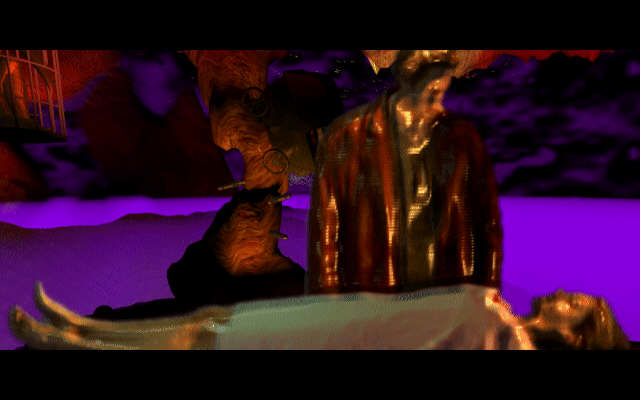 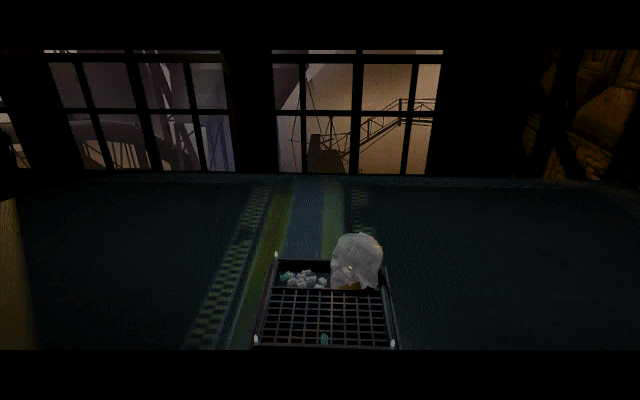 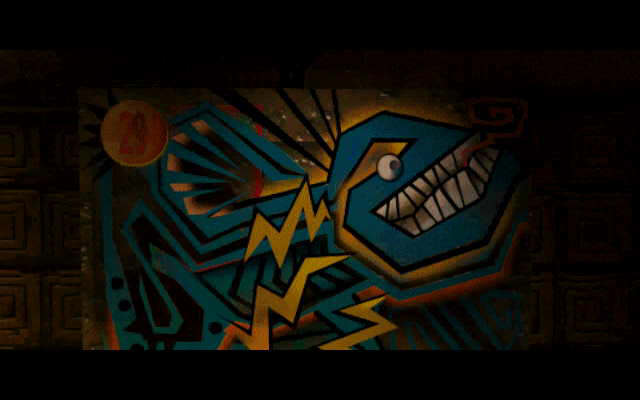 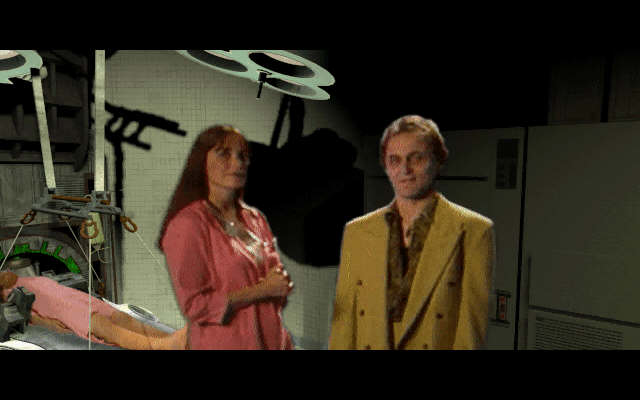 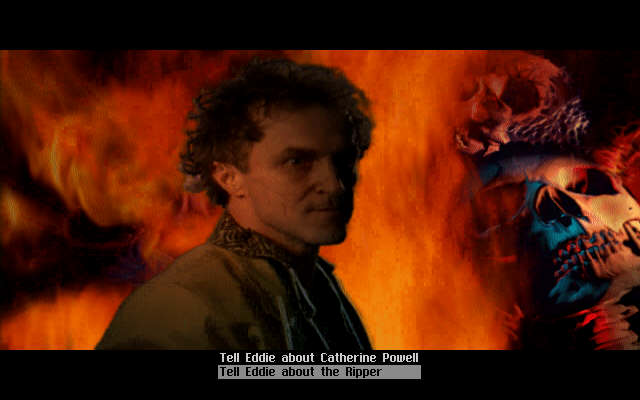 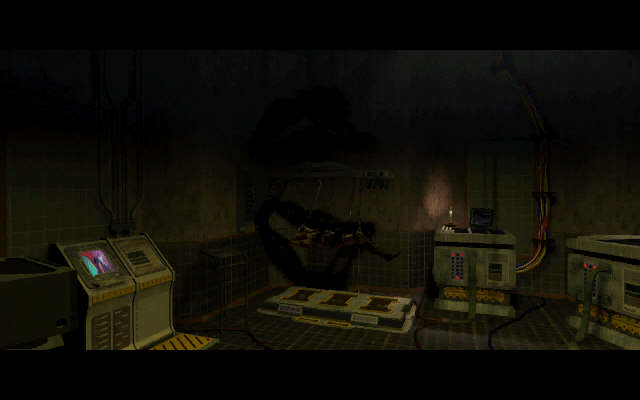 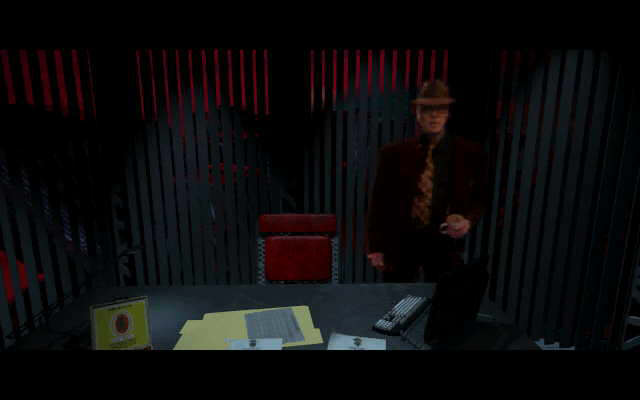  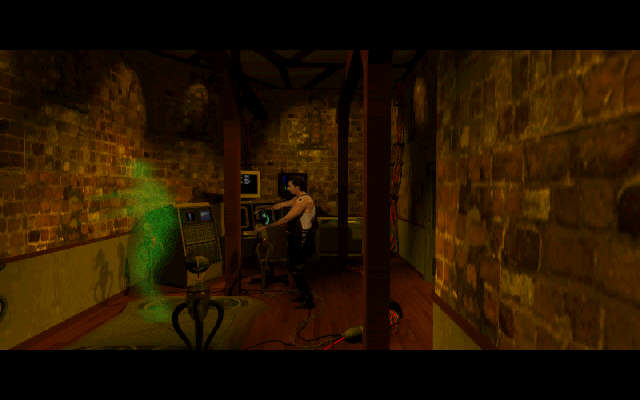  |
“My editor, Ben Dodds, called me at 3 a.m. to give me the news. It was a woman this time–the third victim. Of all the reporters in this city, the Ripper picked me to write to. I knew that another mad letter to the city was soon to come and I would run it on the front page of the Virtual Herald. I would let the world know the Ripper had killed again.”
It is Manhattan in the year 2040. You are Jake Quinlan, the handsome ace reporter for the Virtual Herald; a daily cyberspace-distributed newspaper. In this time of mind-blowing technologies, no one would have expected anything like this to happen. They would have never anticipated that the Ripper would return over 150 years later, but he did, better than ever, eviscerating his victims and leaving no trace of his presence or method.
You are his tool, his link to the masses. He sends you e-mails via your WAC computer system informing you of his malicious deeds so that you can pass the information along to the public on the front page of the Herald. All in a day’s work. Until Catherine Powell, Quinlan’s assistant and girlfriend, is attacked … and survives. She lies in a deep coma at the Tribeca Meta Cognitive Center awaiting treatment from Dr. Burton, one of the best in her field.
Quinlan makes it his duty to solve the Ripper mystery, but it won’t be as easy as it seems. Obstacles pop up every step of the way, and very few people are willing to give you the time of day, let alone a lead. You must find connections between the Ripper; Catherine; Dr. Burton, a respected doctor; Joey Falconetti, an outlaw cyberspace deck cowboy; Detective Vincent Magnotta, a cop teetering on the brink of insanity; and a virtual reality gaming club called the Web Runners; not to mention figuring out how the Ripper attacks, and what his weapon is.
You play as Jake Quinlan in this first-person game. You get to explore 3D environments, talk to various characters, hang out in virtual reality, solve puzzles, and try to save your hide as people drop like flies around you. There are three levels of difficulty for puzzles, three for combat (yes, there’s combat) and four different possibilities as to who the Ripper is that change with every new game you start.
Plot
Futuristic Manhattan, psychotic serial killer who disembowels his victims, uncooperative sources, and you get all of the murder info firsthand. It can’t get much better than that. It always keeps you guessing on your mission to find out who the Ripper is, how he is killing his victims, and why he is committing such heinous acts. Along with spying, tampering with evidence, a love triangle, bugging rooms, a secret lab, and an encrypted journal are the pieces of evidence that suggest that the Ripper is not who you think it is to weave an intricate but easy to follow web of a plot. I give the plot an A+ for sheer brilliance and the ability to stay true.
Characters
The characters in Ripper are some of my all-time favorites. One of the first people you meet is Detective Vincent Magnotta, a cop with a past and a temper. You will quickly learn that Vince plays by his own rules and doesn’t care what anyone else thinks. As you dig deeper into his past, you will discover very interesting little tidbits about him. Just try getting information out of him, and you’ll know why people hush when he walks by but can’t get the words about him out fast enough when he leaves. He scares the bejesus out of me every time I play.
There are a lot of other interesting characters to talk to, both in the real world and in virtual reality/cyberspace (these are pretty much the same thing; you deck into cyberspace through virtual reality). Almost everyone will aid you in your investigation with juicy information on people or places, places to find things, or other segments of necessary info. The voice acting for the characters is very good and rarely slipped up. The live-action acting, however, was not the best that one could hope for. At certain points and for certain characters, the acting becomes too over-the-top, while at other times and with other characters, it was perfect. Overall, I give the characters an A-. The characters themselves were interesting and well thought out, as were their scripts, but the acting sometimes fell short.
Visuals
Three different types of visuals were used in Ripper. One is the 3D-rendered environments, which you can move through and explore. The movement in this mode is very smooth and fluid, with only a little bit of “residue” (what I mean by residue is the gray or brown parts that remain where black pixels used to be). This style is used in both the real world and virtual reality, although in virtual reality there is no residue.
The second type is the live-action scenes. These are of very good quality and are quite well-detailed. They are dark, which adds to the mood and mystique of the game, but not so dark that you can’t see the game play.
The third and final type is a classic: a stationary background with only the necessary parts moving or with live-action video laid over top of it. I don’t know about you, but I quite enjoy this as it was seamlessly rendered in this game.
All three modes are great. The only problem with having three different styles is the fact that you have to switch between those styles. There is often a delay between the styles. The length of these delays depends on what video mode you have it set on. Change mode is the mode that has the least amount of delay between styles. Due to the fact that I was running a DOS game in Windows 98, I encountered some trouble with visual type 3, but it was easily fixed with a patch.
All in all, I give the visuals a B+ due to residue, style-change delays, and the spotty finish. But keep in mind that I’m not sure whether these things would show up on your computer; I’m just saying that they did on mine.
Audio
The audio in Ripper is excellent! The music manages to set the mood very well for each scene while not interfering with conversations or sound effects. There are also ambient sounds that go along with the places you are in, especially in cyberspace. The many conversations were well-recorded, and all of the dialog sounds realistic.
There are also many sound effects for computers, elevators, puzzles, and other necessary elements of an adventure game that add to the realism. They fit very well with each other, the music, the characters, and the actions of objects, both in the real world and in virtual reality.
The sounds in virtual reality convey the feelings one would feel while decked into cyberspace, incorporating both natural and manmade sounds. They work together to create the mood of something wonderful. You could find yourself imagining these sounds in virtual reality. Even though the two types of sounds in cyberspace are different, they meld together brilliantly.
I give the audio a solid A+ for its seamless performance both in the real world and the virtual world.
Interface
The Ripper interface is point-and-click, scrolling 3D. Like most scrolling interfaces, there are predetermined paths that you can follow. The main cursor is a dagger, and when placed around the sides of the screen, it will point in the directions you can travel.
Sounds easy, as I’m sure most other games with this interface are, but Ripper’s is often difficult to use. The paths can get complicated and just getting from one door to another is sometimes a chore, especially in the meta-cog lab.
This game’s interface also relies on hotspots. In regular interaction, the cursor changes depending on what you can do at that hotspot. A magnifying glass indicates that you can take a closer look at that object/area. A talking skull indicates that you can talk to that person, and it also works in cyberspace. The skull with a virtual reality visor on indicates that you can deck in to that particular computer and get to cyberspace. The hand with the wiggling fingers indicates that you can pick up or use the item in that hotspot. The globe indicates that the door your cursor is over is the way to travel away from that particular site. If your cursor changes to a computer that looks like a laptop, it means that that object can be scanned into your WAC computer for later examination.
In the main cyberspace area of virtual reality, there is a cursor that somewhat resembles a ray gun that you use to navigate from well to well. In puzzles, a regular mouse cursor is used and turns red when placed over an object that you can move or a button you can press. In combat situations, the cursor is a crosshair.
The options menu drops down from the top of the screen so it doesn’t get in your way. It contains your save/reload, game options menu, access to your inventory, your WAC computer, and any other options you would need for the game. Inventory items are easy to use, and your WAC computer is also easy to navigate. I give the interface an A- for lack of clutter but complicated movement paths.
Puzzles
For the most part, the puzzles in Ripper are the type where you need to find clues and/or talk to people to figure out what to do. The only problem with that is that many of the clues don’t relate well to their corresponding puzzle. Once you’ve figured out how the clues correspond to the puzzles, some are actually fun to figure out. Others, however, are incredibly tedious in having to map out the puzzle and place the pieces, whether they are crystals or microchips, in the correct sequence or configuration.
There are a few strategy puzzles, including one that would be considered chess with a twist. While it can take quite a while to master, those who enjoy these types of puzzles will be quite entertained while figuring out the rules for both your pieces and the computer’s.
There is a pretty good selection of puzzles, so just about everyone will find one that they like, if they can figure it out, that is. This is the only part of Ripper I would recommend using a walkthrough for, but I would suggest that before you do, you try the puzzles. If you absolutely can’t figure it out without a walkthrough or don’t want the haunting presence of a walkthrough nibbling away at your conscience to have just one more peek, there are cheat codes to bypass any puzzle you don’t want to rack your brain trying to figure out. I made the mistake of using a walkthrough on all of them the first time I played, and it spoiled some puzzles that would have been enjoyable and given me a feeling of completion. And great news: only one timed puzzle, which is easy to solve.
I gave the puzzles a B+ due to the fact that they’re half and half. Half incomprehensible and tedious, half enjoyable and fun.
Overall
This game is definitely worth playing. The involving plot, simple interface, interesting characters, stunning graphics, and well-designed audio definitely compensate for the tough puzzles, complicated movement paths, and occasional overacting. The controls are easy to use, and icons are simple to figure out. There are a lot of conversations, but they are all entertaining and/or useful. Video sequences are well put together, fun to watch, and if you get sick of them you can always hit your trusty escape key. Besides that you get to explore cyberspace and stop the worst killer in the 21st Century. If you can find a copy, pick it up. The story and visuals themselves are worth playing for.
Final Grade: A-
System Requirements:8 MB RAM
2X CD-ROM drive
VGA with 512K of video memory
10 MB free hard drive space
Sound card
DOS (supports Windows 95/98)

