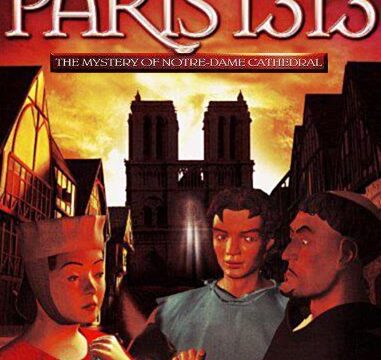
Review: Paris 1313
|
Developer/Publisher: Index By Ray Ivey 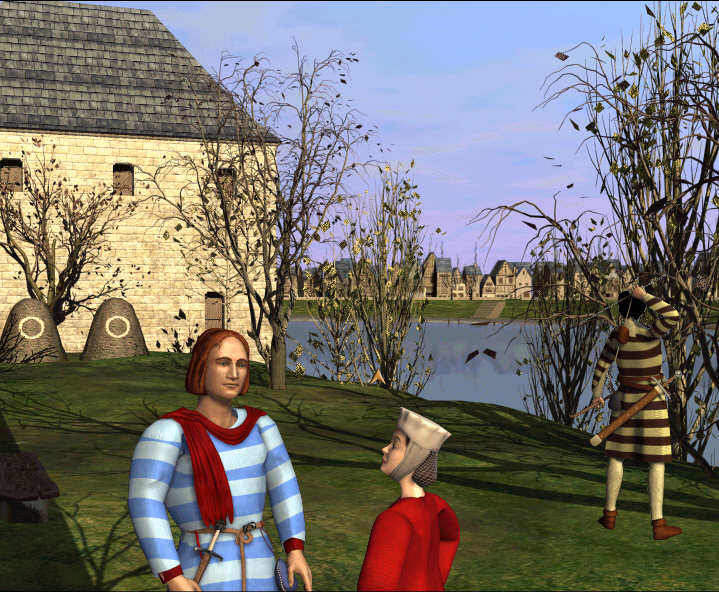 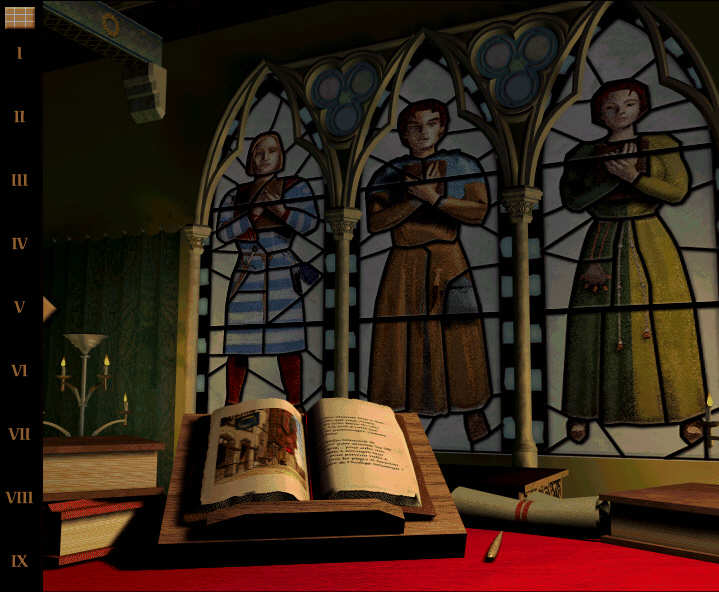 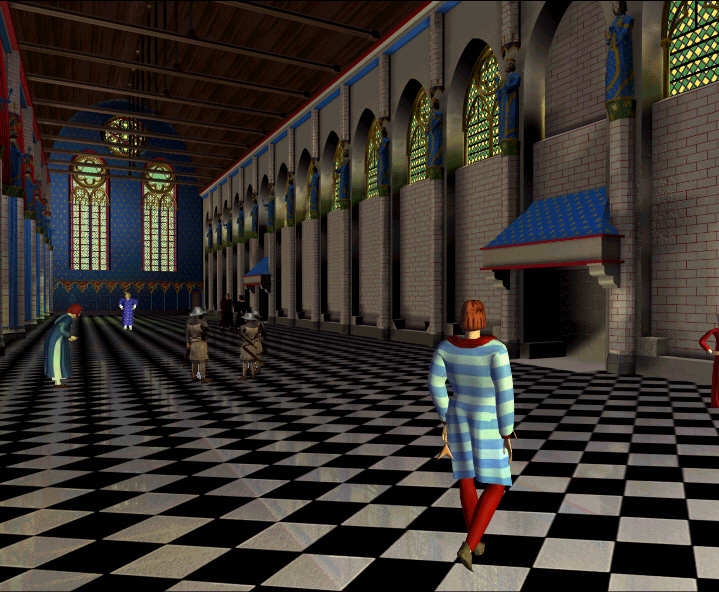 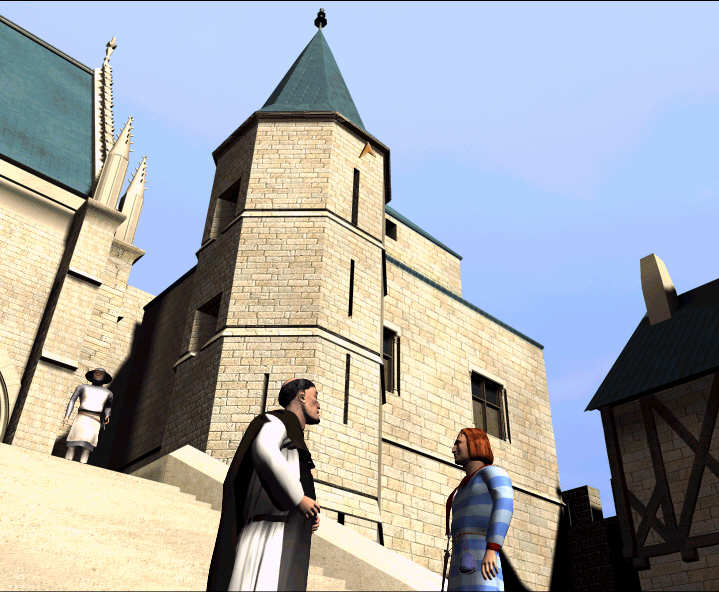 |
Whew! I feel like I’ve been on a trip to medieval France, after playing Index’s Louvre: The Final Curse and Paris 1313 in the same week!
At first I was concerned when I was loading up P1313, afraid that I would be suffering from “too much of a good thing.” I mean, Paris is my favorite city after all, but I like to vary my game playing choices as much as possible.
I needn’t have worried. Though made by the same teams that created Louvre, P1313 is very much its own game. In fact, it experiments with adventure game structure in a very admirable way. I don’t think I’ve ever played a game quite like it.
The twist the game uses is the fact that there are three protagonists. No, this is not a role-playing game in disguise; you don’t build or develop the characters. You simply have three characters to move through the story with. Throughout the story’s nine chapters, each of the characters has a separate episode (which you can play in any order) that move the story forward to the next chapter. Frequently the episodes interrelate, giving the story a tantalizing Roshomon quality.
In one of the game’s many admirable touches, the main screen depicts the three characters as three stained-glass windows, below which lies a book that you, the player, are completing. As each chapter of the story begins, you choose which order to play the character segments. Each one has a specific goal he or she has to accomplish to move the story forward. These goals are anything from escaping from an evil cardinal’s clutches to solving a riddle to finding a missing piece of equipment.
The fact that the three protagonists are from three different strata of society adds an element of complexity and depth to the plot. It’s quite intriguing to see each character’s story develop and move forward as you complete each chapter.
The music is lovely and convincing, and it succeeds in creating a medieval atmosphere.
The graphics range from good to excellent, and they beautifully recreate the feeling of 14th Century urban Parisian life. The range of locations helps in this regard, as you spend time in castles, churches, taverns, caverns, archery ranges, and many other interesting places.
For a historical “infotainment” game, as P1313 will surely be pegged, there are a lot of good puzzles on hand, word puzzles involving matching pithy sayings, mechanical jigsaws, riddles, and more. As a jaded adventure gamer, I always get excited when I stumble across a puzzle I’ve never seen before. Early on in P1313, there’s a brilliant puzzle involving climbing a wall. You control a character’s hands and feet separately as he scales a perilous, dark wall in order to save a fair damsel. You have to plot your strategy carefully, finding ledges and jutting rocks to grip or stand on. As you manipulate the graphics of the hands and feet, the animated character responds to your actions with great specificity. In design and execution, it’s a real plum.
The story is rich and rewarding, dealing with an evil Papal plot (always love those), forbidden love, and the search for an important lost technology. The main mystery of the story involves the lost blueprints for a strange modern clock. It’s interesting to see how passionate everyone is about such a mechanical creation, especially the churchmen who are incredibly threatened by it (it’s blasphemous–only God “knows” time).
I have to say just a few words about Index, the French team that developed this game, along with Vikings, Crusader, Louvre, and Dracula Resurrection. They seem to have taken the best elements of the Cryo historical series (titles such as Aztec and China)–a rich sense of historical detail and accuracy, stunning visuals, and stories that touch on relevant and interesting details of the culture–and figured out how to ratchet up the adventure and puzzle elements to create a truly compelling collection of games. I think the team at Index has seriously arrived, and Index will be able to keep the talented gamebuilders at Arxel Tribe on their toes!
The major problem with the game as it now stands is that it has been very haphazardly translated into English. In several places, the translation is incomplete, and this is a real sticking point for those players who don’t parlez Français. If Index intends its English version of Paris 1313 to be a success, this issue must be addressed.
This is a fairly short game but quite an enjoyable one, especially if you’re a sucker for medieval history, like yours truly. Play it, and you’ll feel (like I did) that you’ve had a brief medieval Paris vacation!
Final Grade: B
If you liked Paris 1313:
Watch: Queen Margot
Read: Notre-Dame de Paris by Victor Hugo
Play: Pilgrim
System Requirements:
PC:
Pentium 133 (166 recommended)
32 MB RAM
Video card with millions of colors
16-bit sound card
4X CD-ROM drive (8X recommended)
Windows 95/98/NTMac:
PowerPC
120 MHz (200 recommended)
20 MB RAM available for the application
Video card with millions of colors
4X CD-ROM drive (8X recommended)
System 7 or higher