Review: Odyssey: The Search for Ulysses
|
Odyssey: The Search for Ulysses Developer: In Utero 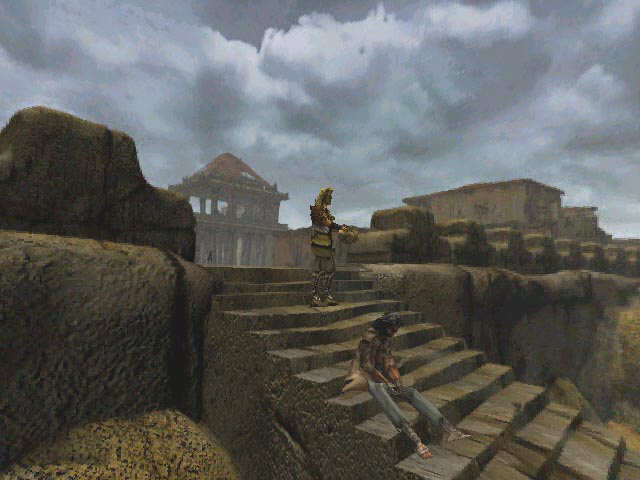 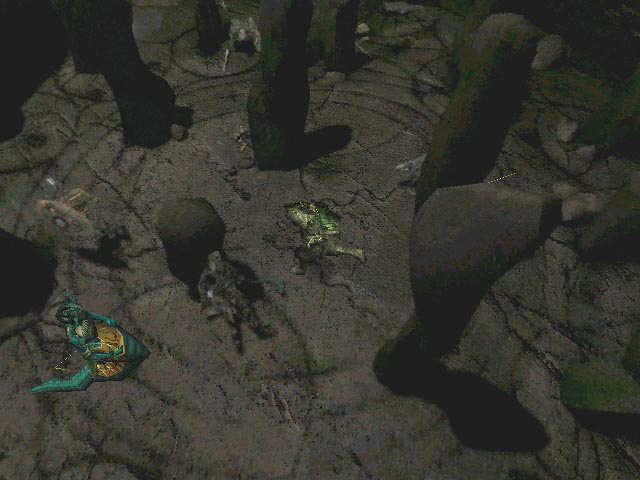 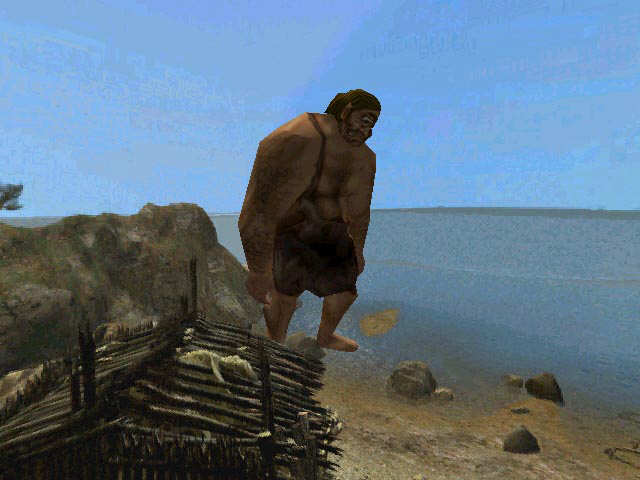 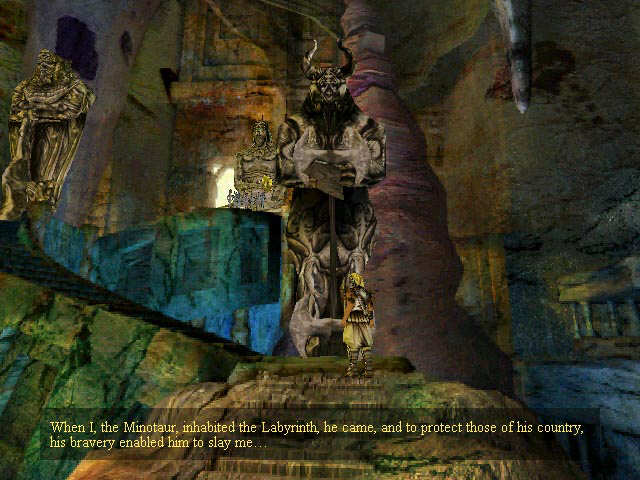 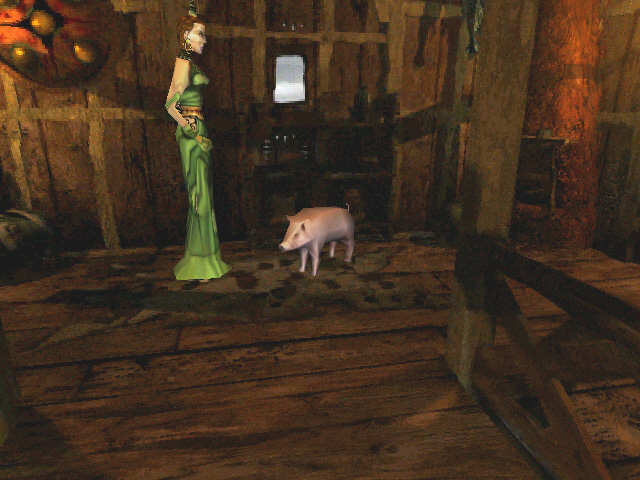 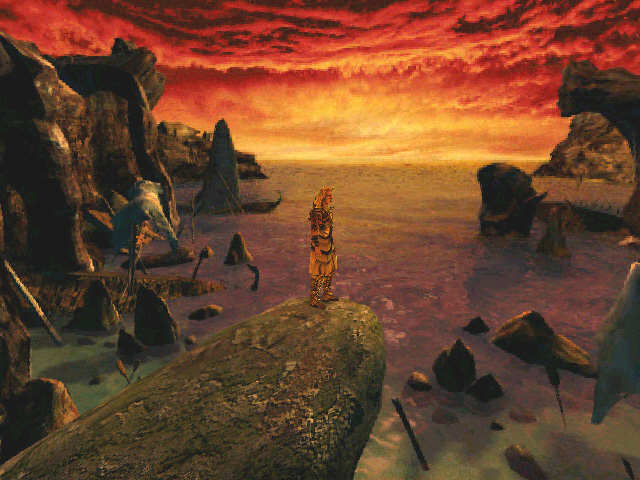 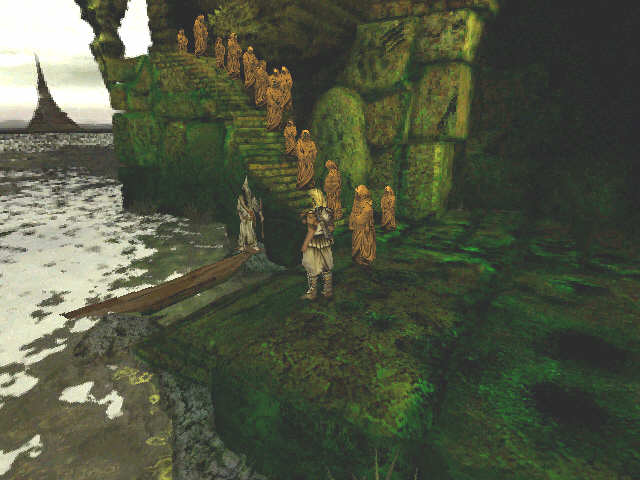 |
For every action, there is a reaction. For every negative deed, a positive one. And for every New Adventures of the Time Machine, there is an Odyssey. Odyssey: The Search for Ulysses is the second installment in Cryo’s Legends collection, and by the hoary hoardes of Hades they got it right this time.
I cannot remember the last time I had so much pure fun playing an adventure game. I gasped when a member of the world’s oldest profession made me an offer I had a hard time refusing; I laughed when my attempts to speak to the Lotus Lady were met with refrains of “la la la la” similar to what your little sister used to do when she didn’t want to hear what you were saying (I never had a sister, but if I had I am sure she would have been that bad); I laughed even more heartily when my attempt to escape a cabin while in a drunken stupor led to a colossal Cyclops snatching me up and … well, needless to say, it was not a pretty picture. Finally, it occurred to me that I was not so much laughing at the game (because really, what is so funny about being used as a toothpick by a Cyclops?) as I was exhilarated at the opportunity to play an adventure game that allowed me to outwit a Gorgon, confront a Cyclops, and rub elbows with a universe of mythological characters. I know that I for one have grown weary of adventure games that regurgitate the same old scenarios: a detective involved in a potboiler, a science fiction future that is bleak and dreary, or a world populated by faceless elves and dwarves whose names cannot be pronounced.
Odyssey: The Search for Ulysses is essentially a computer sequel to Homer’s work of Greek mythology. Ulysses, the hero of The Odyssey, conquered the Trojans and the city of Troy and then mysteriously disappeared. Now years later, at the request of Ulysses’ wife Penelope, Heritias sets forth to find his childhood friend. Following in the footsteps of Ulysses, Heritias first visits Troy and, as he gathers clues and leads as to his friend’s whereabouts, Heritias will experience his own odyssey as he journeys to the islands of the Aegean Sea while fighting devious creatures and attempting to resist the manipulations of the gods.
Such an epic journey would seem to necessitate that your character will occasionally die (the death scene is a nice homage to the conclusion of Ingmar Bergman’s classic movie The Seventh Seal), and it may be that this aspect of the game has mistakenly led some to believe that this game is an action/adventure, but it is not. Never must you control Heritias to jump, fight, or swim (it is a sad comment on the alienation of adventure gamers amongst themselves that some of them consider a game with death sequences as an action/adventure). There are action sequences in the game, but these mostly occur as cutscenes after a puzzle has been solved. There exists only one instance where you must unsheathe and swing your sword, and even this one scene is more common sense and knowledge of Greek mythology than it is an action sequence.
Movement is controlled via the keyboard, and while this was a problem in The Time Machine due to many timed and action sequences, it never adversely affects Odyssey. While there are some puzzles that could be considered as timed by purists, they are really more a matter of proper placement of Heritias. Your encounters with the two Cyclops are just such an example. As long as you have the proper inventory item and are aware of where to go, there is no reason to “race” to a solution. Progression through the plot is linear, so there is never any of the to-and-froing that diminishes many a game. Nor is there ever a need to revisit any of those locations, though complete freedom of movement is possible while you are in these areas. Some puzzles may be difficult without a knowledge of Greek mythology, but careful attention to conversations and inventory items will allow you to overcome those obstacles.
The graphics consist of 3D characters against fully textured, prerendered backgrounds, and they are beautiful. As in most 3D games, the characters are sometimes blocky, but your immersion into the game’s Mycenaen Greece atmosphere overcomes this shortcoming.
Without providing any spoilers, and it has been difficult to not speak of favorite sections of the game as I don’t want to obliterate anyone’s pure enjoyment of discovery, Odyssey concludes as any self-respecting myth should–with a trip to Hades. Only what should have been an expository denouement is instead belittled by a shortcoming in the programming, for regardless of the answers you provide to your judges, you still end up visiting the same three circles in hell, albeit in a different order. This not only seriously erodes the game’s replayability, but also diminishes the thought process that went into making conscientious decisions during the journey.
If you have ever wanted to captain a flying ship, be a passenger in Charon’s sloop, or be tested by Poseidon, then Odyssey is a must-have for your adventure collection. Now if you will excuse me, after conquering the combined malicious and devious forces of gods and monsters alike, I feel I deserve some R&R. If I can only remember where I earlier encountered that charming young “lady.”
Final Grade: B+
If you liked Odyssey: The Search for Ulysses:
Read: The Odyssey by Homer
Watch: Jason and the Argonauts
Play: Quest for Glory series
System Requirements: Pentium 233 MHz
RAM 64 MB
Windows 95/98
3D accelerator card
Microsoft DirectX 7