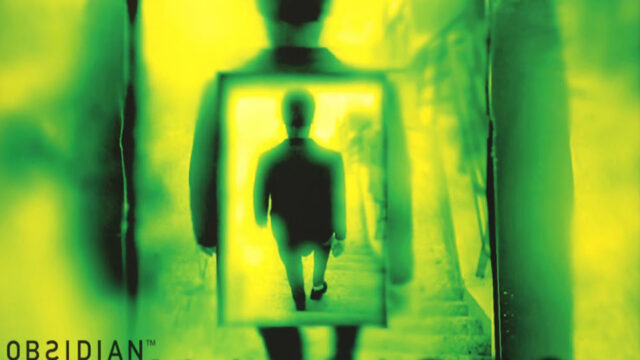
Review: Obsidian
|
Obsidian Developer: Rocket Science Games By Ray Ivey 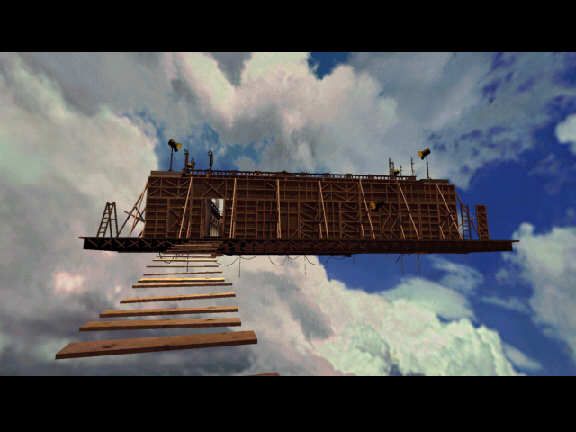 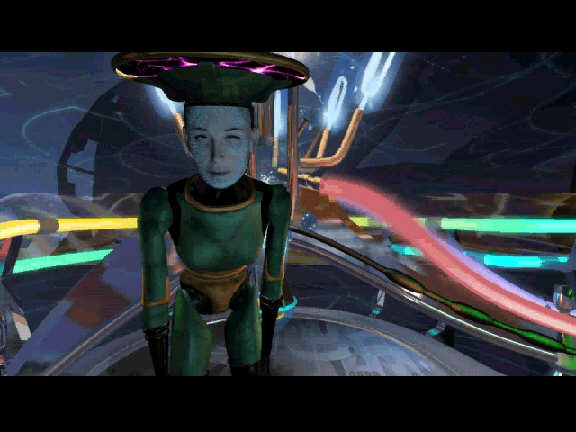 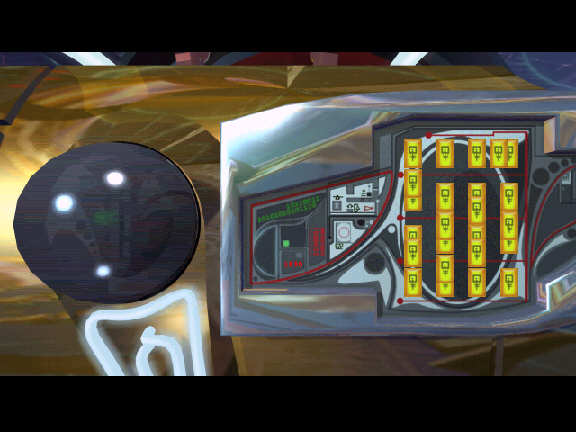 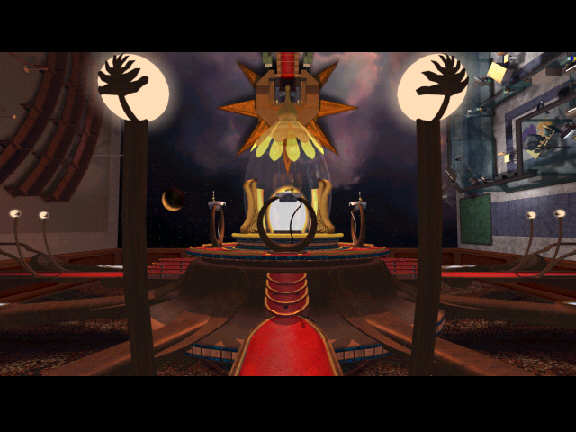 |
Recently I did something I’ve never done before. I played a game over again. I know, lots of players play their favorite titles over and over again, but I’m so eager to get on to the next game that I never take the time. It’s the same way for me with books and movies. It takes a very special title to get me to slow down and revisit it.
Obsidian is that rarest of titles, ladies and gentlemen. It blew me away when I played it early in my gaming career, and it blew me away again when I replayed it.
This first-person, point-and-click adventure begins in a beautiful northwestern forest in the near future. After a few steps forward you find a tent, in which is a small personal computer. This device handily delivers the exposition of the story: You play Lilah, a scientist who, along with your boyfriend Max, has just launched a huge artificial intelligence orbital factory to clean up the atmosphere and repair the ozone layer. The computer includes data on the project–called Ceres–as well as personal information and even details on dreams you and Max have been having. Now on vacation after Ceres’ launch, you and Max have noticed a bizarre phenomenon in the forest: a huge black object that grows steadily hour by hour.
Just as you are finishing up absorbing this information, you hear a scream–Max must be in trouble! You run to the huge black object–which you’ve named Obsidian–and you get sucked into it. After a dazzling cutscene, the game truly begins.
Obsidian takes you through a series of beautiful and bizarre worlds that have been created by a rogue offshoot of your Ceres AI program and based on your own dreams.
The graphics are rich and beautiful and stunningly diverse and imaginative. Your movements are all fully animated, and the cutscenes are spectacular.
The first “realm” you have to navigate is called the Bureau, and it’s a brilliant nightmare right out of Orwell’s 1984. You are in a large cube that has a different type of office on each of the six interior surfaces of the globe. You have to learn to navigate each surface (each of which has its own gravity) and somehow make it through the maze of bureaucratic red tape in order to move on and help Max. Along the way you meet dozens of “helpful” vidbots–strange little robots with television monitors for heads. Each of these vidbots has its own personality, and some of them are hilarious. There’s a moment when one of them whips out baby pictures (tiny robots with baby heads on their little video screens) that quite made me fall out of my chair laughing. Not to mention a pretty darn good Myst joke.
The puzzles in this area, as well as in the rest of the game, are imaginative and frequently just plain brain-spraining. However, unlike some games with difficult puzzles, I never felt depressed or defeated while banging my head against a difficult problem.
I’ve participated in a lot of discussion about what makes an adventure game “good”–I usually answer that it’s that indefinable “playability” factor that’s key. Obsidian has that quality in spades. You simply do not want to stop playing. You’re too busy staring at your screen with a stupid grin on your face saying “Ooh … cool …” This game takes you through a dreamworld that you don’t want to leave.
I’ve already mentioned the cutscenes, but I have to rave about them again. A pet peeve for me in many adventures is that the cutscenes, while excellent, don’t seem to inhabit the same world as the rest of the game. Not so in Obsidian. In fact, a cutscene in which a giant mechanical spider comes to life is simply unforgettable.
As much as I love this game, sigh, it’s not perfect. It has two major flaws. First of all, I wish the different realms, brilliant and distinctive as they are, were more integrated with each other. They are not utterly unconnected, but the game would be stronger if there was a more concrete through-line as you move from one area of the game to another.
Second, the final section of the game, while way cool looking, feels truncated. It truly plays as if the plug was pulled on the budget before the designers had finished building this last area. It makes the ending of the game, while visually breathtaking, a little disappointing from a narrative point of view.
The music in the game was written by Thomas Dolby, and it’s quite effective.
Like so many games, the creative team behind Obsidian, Rocket Science, went out of business (Obsidian lost money). This is a huge loss for our genre. In fact, if I had the power to reassemble one single defunct game building team to create a new game, I’d pick this group. I would love to see what their twisted minds would come up with next.
But we still have Obsidian, and that’s no small thing. If you’ve never played this game, you are missing out on one of the true classics of the adventure genre.
Final Grade: A
If you liked Obsidian:
Watch: The Matrix
Read: Titan by John Varley
Play: I Have No Mouth and I Must Scream
System Requirements:
PC:
Pentium 90
16 MB RAM
4X CD-ROM drive
VGA with 2 MB
Mouse
Sound board
Windows 95Macintosh:
Performa, Power Macintosh, or compatible with an 80 MHz PowerPC processor or faster
4x CD-ROM drive
16 MB of physical RAM (20 MB recommended)
Virtual memory is not recommended
Thousands of colors (640×480 display
20 MB free hard disk space
Macintosh System Software 7.5 Update or later