Review: Half-Life
|
Half-Life Developed by: Valve By Gary Nalven 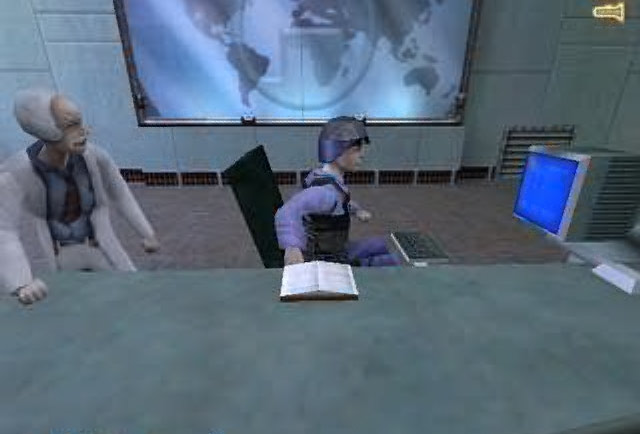 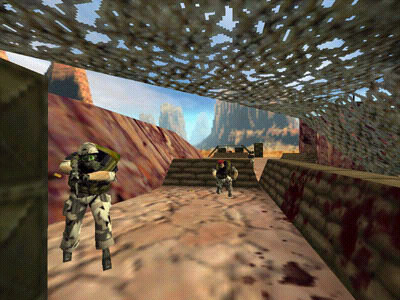 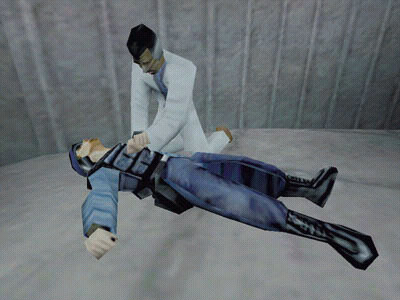 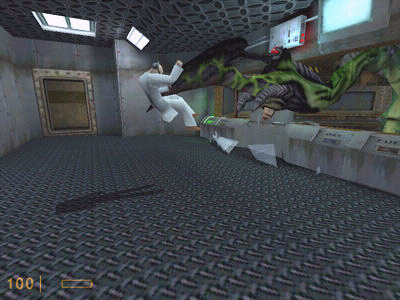 |
Flash back to 1994. Gaming was in the midst of the Doom craze, adventure games and RPGs were still plentiful, and a company called Looking Glass had developed a little game by the name of System Shock. Although it was overshadowed by Doom 2, System Shock was critically acclaimed for being the first game to mix adventure, storyline, and plenty of action in one excellent package. The people who played the game never looked at any first person game the same way again. System Shock was a revolution at the time.
Now we’re back in 1998. The market is full of new first-person shooters but nothing special. Gamers have been waiting four years for a game of the same caliber as System Shock. And here it is.
When I first heard about Half-Life, I didn’t think much. I figured it wouldn’t be very different from other games scheduled for release around the same time. Then I started hearing more about it. I saw all the awards in ads. So I finally went out and bought the game to see if it really was all that. And boy, was I blown away.
Half-Life casts you in the role of budding physicist Gordon Freeman. Not a likely candidate for an action hero. As the game opens, you’re riding a transit car into the depths of the Black Mesa, a top-secret research facility, for your first day of work. When you get to the test labs, everything seems normal. You walk around, chatting with fellow scientists, and are told to grab your Hazardous Environment (HEV) Suit and head to the test chamber. When you get there, fellow scientists tell you, in a highly scientific tone, what you’ll be doing today. They hint that there may be a safety risk at hand, but nothing too big. Unfortunately for Gordon, it is too big. As you manipulate the sample in the test chamber, everything goes haywire, and your screen turns black. After a sneak peek at an alien world, you black out again, then find yourself back in the ruined test chamber. As you leave the hazardous wreckage, you see the friendly scientists splattered against the wall. Walking down the hallways, you see scientists running in fear, some trying to revive fallen comrades. You soon meet up with a scientist who has barely enough wits to tell you that you must get to the surface and bring back help. So off you go on a long, dangerous journey. You must overcome obstacles not just with your gun but with your brain. When it seems that the military has come to help out, they’ve actually come to silence anyone who knows too much, meaning you. At certain times, you’ll catch a glimpse of a spooky guy in a blue suit. All of this comes together at the end, and while the ending may not explain everything, it leaves the door wide open for a sequel. Plot: A.
The graphics, powered by the Quake engine, look beautiful, especially with 3D acceleration. A number of graphics setups are allowed to tailor the game to run on your computer. While the graphics may be pretty, the sound is excellent. An eerie voice on the loudspeaker echoes through the halls. The radio scanner on your HEV suit picks up chatter from the soldiers. If you have a directional sound card, Half-Life will put it to good use. But great graphics and sound are worth zilch if they don’t immerse you further into the game world. And there’s where the game really delivers. From the shaking of the ground as a blue behemoth chases you down a hall to the creepy clanking while crawling through an air duct, you’ll swear you are in the game. Graphics and sound effects: A+.
Well, the gameplay’s the thing, and Half-Life delivers it in cartloads. Fiddle with the controls, and moving will become a second nature. There are lots of enemies to kill, but also lots of puzzles to solve, spooky areas to navigate, and large environments to explore. The puzzles aren’t exactly the likes of Grim Fandango and company, but they still require a good deal of thought, and they aren’t the standard jumping puzzle fare, a la Quake. Certain enemies won’t die with conventional weapons, requiring instead a blast from an experimental rocket or a sharp jolt of electricity (hint, hint!). My only gripe with the gameplay is that the last few levels are really just a lot of tough enemies and hard jumping puzzles. I preferred the challenging environments of the first part of the game. Luckily, the end boss is pretty tough to beat, but you’ll soon find out the trick. Otherwise, play is solid throughout the whole game. Gameplay grade: A.
Half-Life marks the start of a new generation of first-person games. It features a fully interactive environment that’s a blast to play through. It’s really like an interactive movie because it’s so immersive. It’s easily the most revolutionary shooter since System Shock. If you don’t like action, move on. If you enjoy action games but want something deeper and more provocative, look no further than Half-Life.
Final Grade: A+! Although it averages out to an A, I’m going to tilt it to A+ because there’s no game in current release quite like it.
System Requirements: P133
24 MB RAM
DirectX compatible sound card
SVGA video card supporting 16-bit color
400 MB hard drive space
Mouse and keyboard
Recommended:
P200 or PII
32 MB RAM
3Dfx or Riva TNT graphics accelerator