Review Gothic
|
Review Gothic Developer: Piranha Bytes |
|

Stranger in a Strange Land
In 2000, Gothic was showcased at E3. In an obscure corner of the “independent” hall, an extremely “goth” developer (i.e., a uniquely attractive man dressed in black with a shaved head, earrings, and exceptionally cool dark glasses) was doing demos of a new RPG. Like the gentleman sitting at the booth, Gothic was intriguing … a game that took its RPG roots from Tolkien, but moved away from the standard “men in tights” paradigm. A year-and-a-half later, Gothic arrived on U.S. shelves.
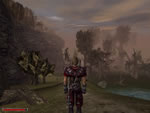 As a back-story, the Kingdom of Myrtana has flourished for many years despite constant attacks by its neighbors. The armies of King Rhotbar have fought and defeated all enemies except the Orcs. Knowing that the Orc Wars will last for a lifetime, the King has established a penal colony to mine the ore needed by his soldiers. In an unlikely twist of fate, the King’s magicians were trapped within the colony as they tried to construct a magical barrier to contain the prisoners. Now, the inmates run the colony while the Mages search for a way out.
As you are about to be dropped into the prison for crimes unknown, you are asked to take a letter to the High Mages. You agree, but soon find that this errand must be deferred while you focus on survival. You first encounter the Old Camp – the original mining operation with a military government and a cloistered group of Fire Mages. As you meet the denizens of the Old Camp, you discover that two other splinter groups have formed. The New Camp is an aggregate of thieves and rebels who brew rice schnapps and horde ore for their own elite Water Mages. The Sect of the Brotherhood is a bunch of weed-smoking visionaries (enter Ray Ivey) who are taking the ultimate trip while trying to awaken their sleeping god. Each camp has its own rules, power structure, dress code, and trade relationships. While each group has a different approach, all three are focused on the common goal of escape. Initially, you can ingratiate yourself with all of these factions, but must ultimately align yourself with only one.
A Balancing Act
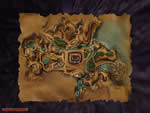 Gothic is a hybrid game – an action/adventure with RPG elements. Your character is predefined as a well muscled white male with no useful abilities (sound familiar, ladies?). You increase your experience by killing creatures and running errands for other prisoners. For each level gained, you are awarded credits that can be used to purchase training in skills such as sword, bow, lockpick, magic, etc. Or, you can use the credits to purchase boosts to your strength, dexterity, or mana. Your access to skills and to the teachers who can assist you are controlled by your alliance.
While the character development provides a definite RPG flavor, the game is rich in story and character interaction. Combat requires only basic coordination and the squeamish gamer can turn off the blood effects. The magic system is simple with spells that include the standard fare such as lightening, ice, and fire bolts. For fun, you can try your hand at such magical tricks as transforming into a creature, creating armies of skeletons to do your dirty work, and shrinking foes into mini-enemies. The inventory interface (sans paper doll) is organized by item type and will be familiar to any serious adventurer. Conversations are conducted through predefined dialog trees and you are blessed with maps to define your position and a log to track quests and progress. In short, this is a hybrid that the adventure gamer can revel in.
As you arrive and explore the camps, you will experience a real sense of acclimation – of being a newcomer who must look, listen, and be cautious in order to learn the rules of this new world. Your actions influence future encounters with prison residents and your decisions impact how you are treated by the leadership of each camp. If you are diligent and attentive, you will soon learn who can help and who can hinder. Unlike the more ethereal “alignment” concept in Dungeon & Dragons, Gothic provides a pragmatic approach to gaming karma.
Sights and Sounds
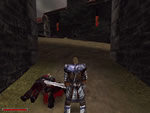 Gothic excels in both graphics and sound. The prison colony is beautifully rendered with dramatic effects for lighting, shadows, weather, and water. The people you encounter have diverse and interesting appearances. And, if you are strong enough for a road trip, you will be rewarded with a vast landscape that includes beaches, rivers, caves, mountains, and swamps. The colony is rich with the artifacts of those who have gone before: shipwrecks, abandoned cities, and the ruins of temples that rival anything ever encountered by Lara Croft. The beasts are varied as well… from the common wolf to hordes of zombies to Dinosaurs that would make Michael Crichton proud. And, unlike the miscreants that inhabit most game worlds, the Orcs of Gothic are a proud race with a rich heritage. Sadly, women are (very) low on the evolutionary ladder. As property of the prison elite, they are depicted in a manner that will send a feminist screaming from the room. It is clear that Piranha Bytes is not concerned with political correctness, as the women of Gothic polish floors while wearing leather outfits too risqué for the cover of Sports Illustrated.
The sound effects and voice-overs are also exceptional. Unlike most foreign games, the translation of Gothic from German to English is seamless. Character dialogue is executed with diction and inflections that will make you forget that the game was developed in another language. And, if that isn’t enough, the environmental sounds add a delightful sense of reality. When you walk past a lake, you hear frogs chirping. When you cross a bridge, the timbers creak. And, as you explore ancient ruins, the sound of your own footsteps is apt to be interrupted by rustles from the shadows that can only mean you are being stalked.
So, What’s Not To Like?
The one area that Gothic falls seriously short is in the interface. The key combinations are downright awkward and not well documented. In the beginning, you are apt to find yourself pausing the game as you struggle to figure out how to open a chest or harvest a meat-bug. The absence of an “auto-run” feature means that you will spend hours pressing the arrow keys (to move, act, speak, fight, etc.) and are likely to have real-life wrists that weaken as your in-game persona gains strength.
The game logic also contains some interesting idiosyncrasies. There is at least one (seemingly) innocuous errand early in the game that will seriously impact your later alliance options. However, the game characters remain unaware of this and continue to prompt you for an action that is no longer possible. When you do commit to a single faction, many characters do not seem to recognize your choice. It is unlikely that one camp would continue to welcome you with open arms when you arrive wearing the uniform of another. It is also unsettling when you are thieving in broad daylight and characters enter the room but do not seem to notice.
 Lastly, the game ending is woefully inadequate. You are denied the visual “warm fuzzy” that should be awarded to a gamer who worked hard to defeat evil and save the world!
Cindy’s Bottom Line
Despite these shortcomings, Gothic is a game that you should not miss. It strikes an equitable balance between story, action, and role playing and presents a fantasy environment that begs to be experienced. Though not as vast as Planescape: Torment, Gothic does an admirable job of presenting a large and complex game world that will have you exploring into the wee hours of the night.
It is this reviewer’s hope that, in their next title, Piranha Bytes will build on their Gothic experience and extend the concept of alliances as determinants of game outcome. Although many details of your game will differ based on your choices, ultimately all roads lead to the same place. The replayability of Gothic would have been greatly enhanced if the game paths diverged to a greater degree.
As a final postscript, Gothic has long load times when played on a 1 GHz Pentium III with a high-end graphics card. Those with PCs meeting only minimum requirements may not find the performance acceptable. It is also advisable to save often, as the game has a nasty habit (on this reviewer’s PC) of returning to the Windows desktop at the worst possible moments.
Final Grade: B++
System Requirements:
Pentium II 400 MHz
128 MB RAM
3D Video card with 16 MB RAM
DirectX compatible sound card
DirectX 7 or higher
If You Liked This Game…
Play Outcast
Watch Escape from New York
Read The Mirror of Her Dreams by Stephen R. Donaldson