Baron Wittard Nemesis of Ragnarok Developer Diary – Part 3
|
Articles
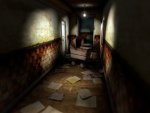
“Exploration is perhaps what I love most in adventure games. That feeling of getting lost inside a large and complex world that is ‘out there’ and waiting for me to come along and discover it.” This is what a friend said to me about first-person adventure games shortly before the development of Baron Wittard began. Since that discussion, the idea of ‘exploration,’ and of the sense of anticipation that it can create for the gamer, have been important ideas and influences to us in building the game world for Baron Wittard. The primary principle driving us was to create a game world that was not only large, but that presented itself to the gamer in such a way as to invoke within them that same sense of being lost or of the expectation of more secrets to come. However, identifying that we wanted to create a large game world was the simplest stage of the design process; the challenging part indeed was in actually creating it; in realising such a world. In this third and final part of the developer diary, I would like to share with you some of the thoughts and insights that guided and helped us realise the strange but interesting world in Baron Wittard: the great city that is Wittard Utopia. Planning the Game World Baron Wittard is a first-person adventure game in which the player must travel to and explore a vast and abandoned indoor city; a city designed by a deceased and eccentric architect who kept a terrible secret. As might be expected, there is more to Baron Wittard’s grand city than first meets the eye. It is a place both of intrigue and of mystery. Step inside and hear the creaking floorboards, the squealing rats, the crumbling ceilings, and the faint sound of movement in the distance, perhaps around the corner. Something else is here, among this dead and deserted place; something very much alive; something malevolent. This, in short, is the setting of the game, and it is a scenario that promises to the gamer a large, claustrophobic environment to explore as well as a mystery to solve. The fundamental challenge for us as developers in bringing this world to life was to strike a harmonious balance between: A) The size of the world, in terms of the number of rooms and locations and corridors; B) The detail of the world in terms of the contents of those locations that can be examined and inspected, such as journals, boxes and machines; and finally C) The way in which that world ‘communicates’ to the player so as to arouse interest in exploring further. Many beta testers mailed us to say how impressed they were with the size and detail of the locations. Baron Wittard is certainly a comparatively large game, with plenty to explore and examine. Firstly, there are the damp and cold subterranean tunnels carved out deep beneath the Utopia. These are unsettling places; places in which evil seems to lurk and in which a sense of foreboding hangs in the air. In these places, the traveller must traverse through winding and labyrinthine corridors, walking close to the cold and dimly illuminated brickwork searching for whatever clues and remnants previous visitors might have dropped or forgotten. In contrast to these tunnels, there are the clean and modern luxury apartments nestled away comfortably on the upper floors. These have a feeling of sadness about them; of having been abandoned and forgotten entirely. At this place, the player can almost feel at ease, perusing through old journals and books and brochures, taking a pause or brief respite from the evil that lurks elsewhere. Secret Passageways, Locked Doors and Sneaky Peeks It is not, in my opinion, enough however to simply make a game world large in order to make it interesting and enjoyable for the gamer. In addition to being large, the game world should also feature other qualities. It should have the ability to ‘communicate’ with the player; to respond to their actions; to ‘tease’ them as it were. By ‘tease’, I mean that the environment should offer the player the promise of new secrets and sights that are yet to be uncovered; the promise of further sections and areas waiting to be reached and explored. This suggestion raises the reasonable question of “Exactly how can the game world communicate such things to the gamer?” How can it ‘tease’ in this way? How can something as lifeless and inanimate as bricks and space and architecture promise anything at all? There are a variety of methods for doing this, and Baron Wittard turns to some of the genre classics, such as Myst and Shivers, for inspiration. Inspired by these greats, the world of Baron Wittard features: (1) Locked Doors, (2) Secret Passageways, (3) Suggestive Maps, and (4) Sneaky Peeks.
Concluding Thoughts One of the most important elements of an adventure game is without a doubt exploration. The excitement of discovering new locations, hidden buttons and drawers filled with objects is part of what makes a game interesting. Because Baron Wittard is not an inventory-based game, the exploration of Wittard’s Utopia is not focussed on finding objects so much as about finding clues, some very subtle, some more obvious. It is also about finding hidden passageways and buttons and switches to operate machines. This approach is similar to the exploration type used in the Myst series. Everything you find brings you closer to unravelling the mysteries of the place you’re in. That exploration is critically important was something we had to keep in mind right from the start. While we were designing the Utopia, we had to make sure that the building and every single room in the building would be interesting enough to explore. We have also used puzzles to invite the player to do some thorough exploring; puzzles that do require the player to search every floor and every room to come to a final solution. There is a lot to be found, some things are of vital importance to the game, other things are not. So every object the player finds should be considered as something to remember. Even if it seems unimportant or strange at first glance, it can turn out to be a vital clue. We hope that you have enjoyed reading and considering this three part development diary for Baron Wittard: Nemesis of Ragnarok. Baron Wittard’s city is a dangerous and menacing place, but it is awaiting your exploration. Take care, traveller, because all is not as it seems there. |