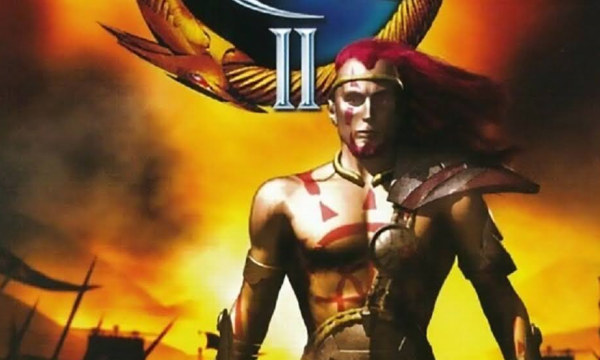
Ring II Review
|
Review Ring II Arxel Tribe Review by Ray Ivey |
 |

I love the Arxel Tribe logo that’s at the top of their games. It a very cool, stylized 3D graphic of a bunch of natives dancing. The thundering drumbeats really show off my snazzy new speakers. Unfortunately, with the recent games that follow this logo, it’s usually downhill after the last drumbeats fade away.
I love reviewing games. I have such enthusiasm for this hobby of ours that I truly enjoy telling people about it. However, like most things, it’s a mixed blessing. If my reviews are to have any meaning, I must not shirk from delivering the bad news as well as the good.
Sometimes the news isn’t so much bad, as just downright sad. That’s the unfortunate case with today’s game, Ring II, Arxel Tribe’s second game suggested by Richard Wagner’s Ring cycle of operas.
Why sad? Because I know what this studio, Arxel Tribe, is capable of. I know, I’ve played the games. Faust: Seven Games of the Soul. Pilgrim. Louvre. And yes, the first Ring. I enjoyed all of these games. I admired these games.
But lately . . . what can I say? The lackluster Pompeii, the almost unplayable Hitchcock: The Final Cut. It seems like, for whatever reason, the playability of Arxel games is in a downward spiral.
As I struggled through the first few scenes of Ring II, I kept wondering about one particular group of people: The Arxel Tribe playtesters. Surely they exist. Every game developer uses them, right?
I kept imagining the deranged feedback the playtesters must have been giving the designers at Arxel:
“Forget mouse support! Where did you get the idea that adventure gamers like mouse support? Oh, it’s okay to use it in menus, but when it comes to character movement and environment interaction? Forget about it! We’d rather struggle with the keyboard. It’s fun!”
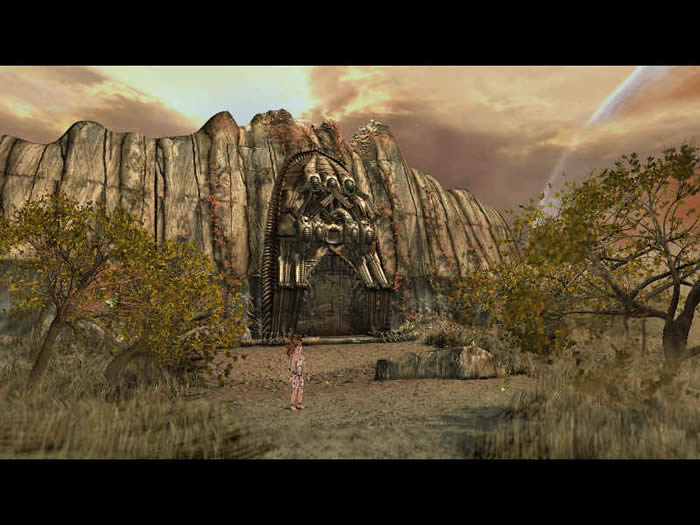
“Okay, in that first scene. Yeah, the one in which the player has not only no clue as to what he is supposed to be doing, but is also getting used to the clunky interface. Well, we think it would be FUN if the only information we DID receive was in the form of an obnoxious, hostile bully berating us every few seconds! Yeah, it’s FUN to be scolded loudly and repetitively at the very top of a game!”
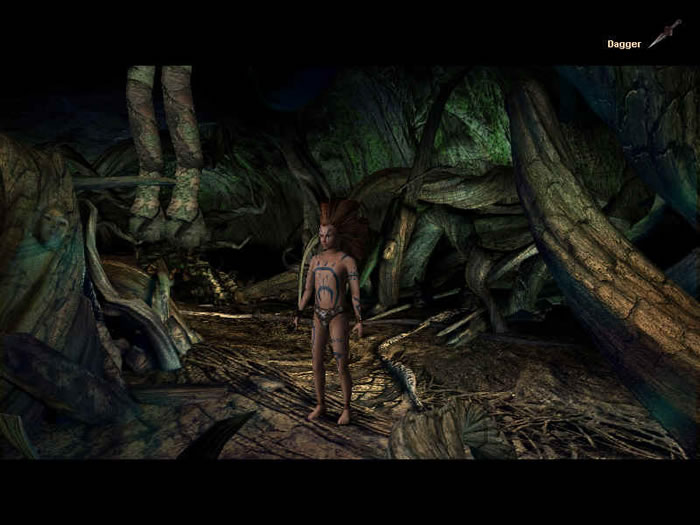
“And that whole inventory thing. Why let us hold more than one object? Yeah, it would be more fun to have to drop one thing whenever we pick up another, so most of our playing time will be spent running around the area, trying to keep track of various objects we’ve dropped all over the place. It’s so fun!”
The more I played the game, the more I just sat there staring at my computer screen, shaking my head sadly.
I corresponded with Stephen Carrière at Arxel, and he generously gave me a bit of insight into the strategy that went into the design of Ring II. When it comes to adventure games, Arxel’s bread and butter are their European customers, and over the past several years they’ve gotten the very clear message from this segment of their customer base that their games needed to be simpler, simpler, simpler. I guess the literary quality that many of us enjoyed so much in Faust and Pilgrim irritated some European gamers.
As I’ve unkindly suggested before, maybe there’s just a wide cultural gap between European and North American gamers. As it happens, us Yanks tend to like games to be, how do I put it, FUN. And far be it to me to lecture Arxel on how to keep their customers happy. Believe me, I want them to stay in business, because I hope that if they do they’ll one day go back to making more games I admire.
Well. By now you may have noticed I’ve told you absolutely nothing about the story or the characters. Dear Reader, I would if I could. But after many hours of play I still have no freaking clue about either. If you play the game and figure it out, drop me line.
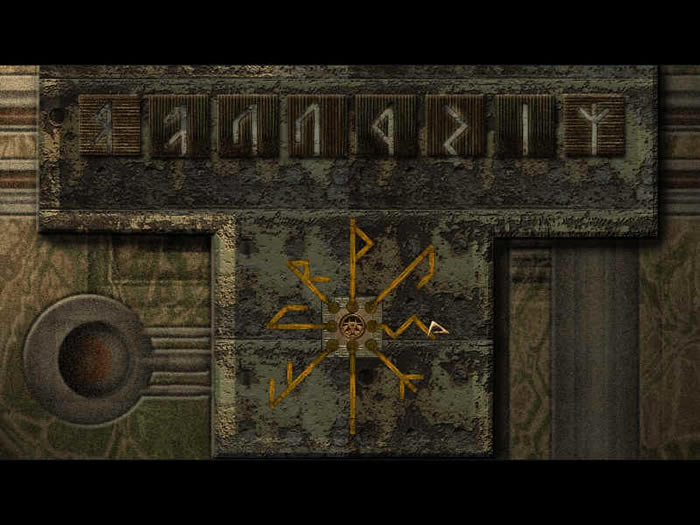
The puzzles are non-intuitive, so you resort to the ever-so-fun “Try every inventory object in every spot” technique. As you can imagine, with a game engine that only allows you to hold one item at a time, this gets pretty damned tedious. (“Where did I drop that stupid rose? Oh, over there. Then where is the wrench? Oh, I must have left it over by that large colorful mushroom.” Can you just feel the sense of fun in the air?)
There are a few more traditional puzzles as well (a slider/build a key puzzle isn’t half bad). The worst, however, are those adorable “do some non-intuitive cryptic action right or you die over and over and over” puzzles. Every adventure player loves those, right? At least when your character dies the game obligingly restores you to a point right before your fatal mistake (thank God for small favors).
What we’ve got here is another one of those sterile, player-unfriendly would-be adventures in the exact same vein (and with what appears to be the same engine) as Time Machine, Odyssey, and King Arthur’s Knights. It’s pretty, but it just sits there, like an expensive doily you’ve forgotten what to do with.
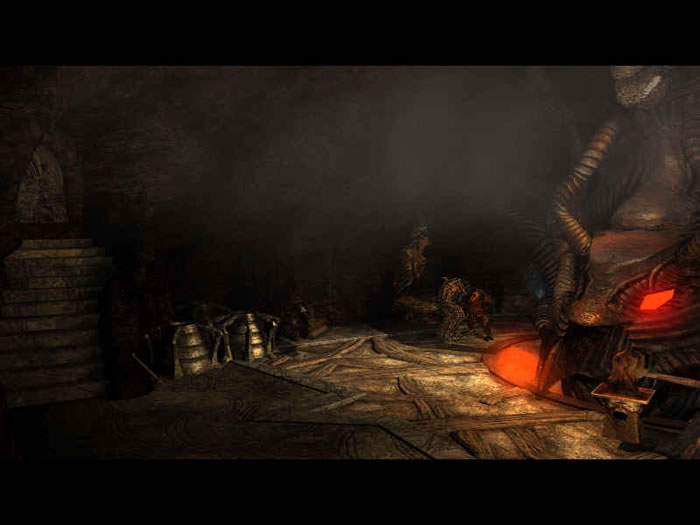
If you liked those other 3rd-person, keyboard controlled games, it’s likely you’ll like Ring II more than I did. Actually, if you can play if for an hour without ending up under your kitchen table in a fetal position, rocking back and forth and muttering “No way out, no way out, no way out” over and over again, then you’ll like it more than I did.
True, it’s quite attractive, particularly when you turn the real-time shadows on. It’s got, duh, great music. The scenes change fairly rapidly so you don’t have to wait too long to see the next cool, attractive environment. It’s generous in the saved-game-slots department. It plays very smoothly.
I refuse to give up on the talented team at Arxel Tribe. They’ve done it before, more than once, and I know they can do it again. I’ll just have to cross my fingers and hope that one of their next games will be the one in which their cool logo isn’t the best thing in the game.
Final Grade: C-
System Requirements:
This review is copyright Ray Ivey and Just Adventure and may not be republished elsewhere without the express written consent of the author. Republication of said review must also contain a link back to Just Adventure.