Chronicles of Mystery: Tree of Life Review
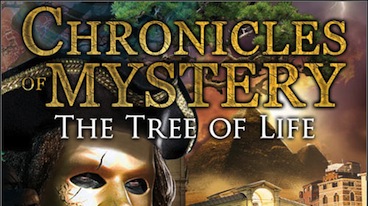
City Interactive: Prufe Reader Wanted by Greg Collins City Interactive’s Chronicles of Mystery: The Tree of Life is the second in the Chronicles series for PC, following The Scorpio Ritual. I haven’t played the first game, but I know that, like Tree, it follows the exploits and travails of the young modern Parisian archeologist, Sylvie Leroux. You can think of her as Indiana Jones without the whip, though it’s more that Indy combines archeology with the cliffhanger thriller genre while Ms. Leroux mixes her grave digging with the mystery-occult genre. Sylvie is not an especially strong character – she tends to be acted upon more than active – but she is an appealing one, and even believable. The Tree of Life has very much the feel of a good commercial supernatural mystery novel. Despite its wanderings into the eerie and the magical, the tale has a mature sense to it. And how many things, especially adventure games, can one say that about of late? Don’t get me wrong. I love a good cartoony romp as much as anyone, but that style does tend to dominate. Tree of Life harkens back, for me, to soberer, earlier graphic adventures with strong stories, such as Riven and Morpheus. The game it most reminds me of, in atmosphere and graphics, is Nightlong: Union City Conspiracy. A good, underrated noir thriller, Nightlong favored the deep-focus perspective over the close-up in its scenes. The main character was often seen as a small figure wandering around varied and active environments. The same is true of Tree. While the game has its fair share of close-up encounters and dialogues, much of the action is viewed at mid-distance. In her newest episode, Sylvie finds herself being roped deeper and deeper into a shadowy conspiracy. She starts out being hired by a maritime museum in Brittany to continue the research on an intriguing ancient artifact. The previous expert died suddenly. And before long, his is joined by a few more bodies, as Sylvie makes her way from France to Venice, then on to Cairo, Gibraltar and an island in the less hospitable regions of the Bermuda Triangle. The story, as pseudo-mystical as it is, mostly makes sense as you’re meandering through it. Matters move along briskly, except for an unfortunate tendency to get overly, at times painfully, verbose in the dialogues with NPCs. The story also goes to considerable lengths at times to introduce you to supporting characters who disappear in the next scene. You will wait for them to return and wrap up their subplots in vain, though I suppose that they may indeed return in future episodes of the series. We’ll all just have to wait and see. The worst offense of the dialogue is the way every conversation must end with some pointless, and often incongruous, exit line by Sylvie, along the lines of “I am now going to continue looking around.” Perhaps these are offered as subtle hints to the player, but they’re still awkward. The game is fully voiced and the actors do, to my ear, a more than credible job. I was particularly impressed with the young Egyptian boy Ali. Once again, Tree appears to be 3D sprites on rich 2D backgrounds. Every now and then I would load a saved game and find that the characters’ bodies had disappeared, a la the Invisible Man. Only their empty clothes could be seen wandering around. Rebooting usually cleared this up. The only technical glitch I otherwise encountered involved the opening of a wall safe. I spent a couple of hours devising all sorts of clever ways of interpreting the given clues – to no avail. Then, the next time I loaded the game, the obvious combination that had failed earlier now worked. Oh well. For a while there I thought I’d stumbled across a truly ingenious puzzle. Which is not to say that the puzzles in Tree of Life aren’t good. In terms of difficulty they tend to fall into the mid range. Largely, they’re inventory puzzles, with a fair number of standalone or mini-game-type puzzles scattered about. You may be surprised to realize that the stone-tile conundrum in that ancient palazzo which has stumped all comers for centuries turns out to be a variation on the 15 slider puzzle, but overall I do applaud the way the game designers went to the trouble to camouflage their mostly familiar puzzles. What I admired most about the puzzles in Tree was their variety. For instance, at one point in the game, a weather map is turned into an intriguing logic maze. A few hotspots are more than a bit elusive, but only if, like me, you are too proud to click the interface button that places a question mark over every available exit and item. The game’s final stumper sequence, on that mysterious island, is also well designed and orchestrated. It only looks like a goofy giant teapot. It’s really a decent challenge, rather cleverly integrated with the surrounding terrain. The final scene on the island with the eponymous Tree, in fact, looks and feels like a long lost age from Cyan’s Uru. If the rest of Tree of Life had played like this, the game would have soared. The orchestral music is of movie-soundtrack quality – atmospheric, lush and unobtrusive. The sound effects are also distinct and of professional grade. At the top of the game screen is your familiar hidden menu that allows you to access the main menu and save and load. There’s also a section which includes transcripts of Sylvie’s past conversations as well as an actual notebook in which Sylvie “writes” her observations and paper clips important documents and photos she’s run across. Inventory items are stored in one of those left-right sliding trays at the bottom of the screen alongside that hotspot highlighter. The game’s system requirements struck me as being commendably modest. The game is not long, but neither is it short. I spent about twenty hours completing it. Elsewhere on the web I’ve seen people claiming to have finished it in about ten hours, but, frankly, I suspect they’re bragging. And, if not, I don’t understand the point of rushing through an adventure game, especially one as lovely to look at and listen to as this one. It would be like traveling to Venice and touring the whole city in half a day. All you’ve done is cheat yourself. During the heyday of Broadway theater, in the Thirties and Forties, there was such a thing as the “well-made play.” What this meant is that the drama, while not exceptional, was nonetheless expertly crafted and staged, making for a thoroughly enjoyable evening at the theater. Chronicles of Mystery: The Tree of Life has that same quality about it. It’s unlikely to win any awards, but it is fun and satisfying to play. The prospect of further installments in the series is a pleasant one.
System Requirements:
|
|
Okay, now that everyone who’s solely interested in the game review has migrated to other web pages, we can get down to addressing a few extracurricular issues swirling about this game and, in particular, its publisher City Interactive. We have not been excessively laudatory of City’s adventure games here at JA. Tree of Life is the publisher’s fourth adventure game for PC – the two Art of Murders: FBI Confidential and Hunt for the Puppeteer, and the two Chronicles of Mystery: Scorpio Ritual and now Tree of Life. Randy, Bobbi Carlini and I have all graded these efforts somewhere in the C minus to C plus range. Surely, City Interactive can not be overjoyed by such average scores. First of all, a C rating at JA really is “average” and not “poor.” But I wouldn’t feel a need to address this at all if it weren’t for the great respect I still have for the efforts of some of the City folks when they were at the now defunct Polish game developer Detalion. In its regrettably short existence that house turned out some spectacular games, including Schizm, Mysterious Journey II (the Schizm sequel), and Sentinel. They also produced a game I haven’t played but someday still hope to, Reah. In my mind, these few games alone make Detalion minor royalty in the adventure game world. All are beautiful, ingenious, challenging, and sophisticated – one might even apply the term “art.” I think, however, that might be part of the problem the talented folks who migrated to City Interactive are now having. I suspect they may feel they deserve the same sort of praise for these new adventure games with the two perky heroines. They probably feel these new games are of the same quality as those Detalion classics. Well, yes and no. It’s true that the graphics are generally of the same high quality. It’s true that they’re still, admirably as I said above, producing games for those of us who like more sophisticated content. It’s true that these new games have clever, well-integrated puzzles. I grant them all that. However, these new games from City also have a few irritating qualities that the Detalion games lacked. I am not going to go through the whole list of missteps. You can read the other JA reviews for that. But it is sadly true that the user interface of FBI Confidential was a disaster. The dialogue in the two games I’ve played has been clumsy, at best. The translations are often surreal, and the “help” these games dole out can be infuriating. All things which were not true of the Detalion games. I will say that Tree of Life plays much cleaner than FBI Confidential, with far fewer “interruptions.” Playing Confidential was like watching a good detective movie with the guy sitting behind you whispering to you every twist and turn on screen before it happens. With a user interface that annoying, it doesn’t matter how great the graphics or puzzles are. The game is ruined. The verbiage in these games has also been at times infuriating. But typos in games now are sadly all too commonplace. I think the greater sin of these City games has been the almost astounding clunkiness of the dialogue. Perhaps it is simply the change of idiom from Polish, or German, or whatever the original language is, to English. But if you’re going to produce a game for native English speakers you have to do a bit better. At times, these games sound like they’ve been translated by one of those “translator” web pages. Paste in your foreign text, hit return and presto – English-sounding gobbledygook. The worst offender at City, however, is whoever is writing the game box copy. Even with Tree of Life, which has done a better job on policing its typos and mistranslations (though they did miss “wicket” for “fence”), the copy on the box is hilarious: “Who is the enigmatic Count of St. Germain? And why some people are ready to kill for informations about the Tree of Life?” (My spelling-and-grammar checker is lighting up like a pinball machine.) Turn the box over and it gets better: “Young archaeologist Sylvie Leroux sets on a journey to find the legendary Tree of Life. It’s [sic] trails will lead her across the channels of Venice . . .” Ah, yes, those mysterious channels of Venice – channels 13 and 27, depending on your cable service. I am not pointing out these howlers simply to ridicule City’s box-copy writer(s). Rather, I am making the obvious point that in an adventure game, everything counts. The whole package has to be smooth, not just the graphics and the puzzles. I have no idea how close the connection between City and Detalion is, or still is, but the comparison of the two developers is instructive nonetheless. Detalion produced gorgeous graphic adventures with challenging and inventive puzzles and near-literary-quality scenarios. Sentinel, for instance, was courageously based on a story by the renowned Australian science-fiction writer Terry Dowling. If Detalion’s games had a fault it’s that they were perhaps too coldly “logical.” Playing them at times felt more like tackling some problem in higher math than experiencing a story. City has clearly been trying to inject more warmth, personality, and even humor into their games. But that is indeed like switching college departments from Engineering to Humanities. You’re talking different hemispheres of the brain. Based on what I saw in Tree of Life, I’d say that City is making rapid progress in this transition, but they’ve still got a ways to go. I do appreciate and admire what City Interactive has been producing. I am grateful that they’re still making adventure games, when the easy thing for any game developer these days is simply to churn out FPSs or casual games. The adventure game community sadly lost Detalion. Despite their obvious growing pains, I would be disappointed to also see City Interactive vanish. |