Nostradamus: The Last Prophecy Review
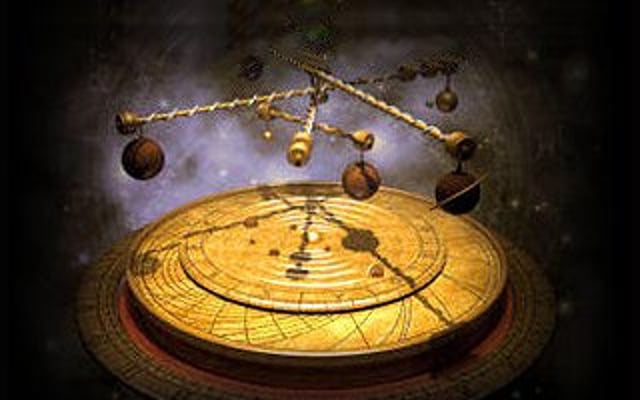
Murder and intrigue; astrology and herbal knowledge; quatrains and history; these key ingredients in Kheops Studio’s Nostradamus: The Last Prophecy blend to create a well-rounded, historically accurate gaming recipe. In the year 1566 in Salon de Provence, France, the world-famous seer receives an unexpected visit from Queen Catherine de Medici. Disturbed by a series of murders that appear to bring one of Nostradamus’ more disturbing quatrains to fruition, she seeks his help in keeping disaster from befalling her family. Unfortunately, the frail old man is unable to investigate the matter for himself. Instead, he offers the services of his capable young son, Cesar. Satisfied by this arrangement, the Queen has no idea that Cesar is actually far away, and that his sister Madeleine has taken his place in disguise. I have to admit that at first, I wondered at the seemingly unnecessary Victor/Victoria aspect of the game. Why not simply have Cesar play as the lead character, since he was taking Nostradamus’ place anyway? Upon further reflection, I suppose the developers felt that having a female lead might have greater appeal to their audience, but that acceptance of a female investigator would be too far-fetched for the time period. And the fact is, they did weave this into the storyline and gameplay well. If you speak to characters wearing the disguise, then show up again as Madeleine (a task that’s easily performed through your inventory when you’re in an appropriate location), you’ll receive a different reception—and sometimes different answers. 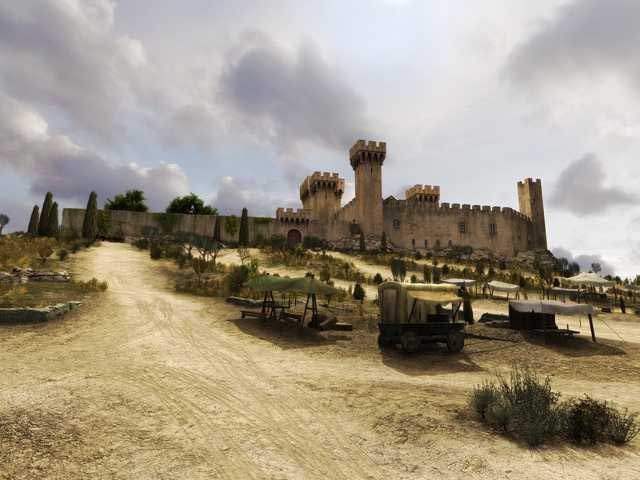 While the game bears the name of Nostradamus, his participation is more that of a mentor or guide. Throughout the game, you’ll take advantage of his vast storehouse of knowledge regarding astrology, herbal potions, and of course his very own predictions, along with his insight into the clues you find. He’ll make sure your look is convincing and help you practice the pitch of your voice. In your toolkit, which you’ll receive from Nostradamus once he green-lights your disguise, you’ll find a logbook and miscellaneous period-appropriate tools such as a quill, a compass, a magnifying glass, scissors, a scalpel and tongs. You’ll access your toolkit by right clicking, which also opens your rather ample inventory and gives you the ability to add or remove clothing items from your character’s image. But don’t get too excited—Madeleine wears a minimum of full coverage underwear at all times! Think “pantaloons and bodice.” But hey, if that’s your thing, I’m not here to judge. 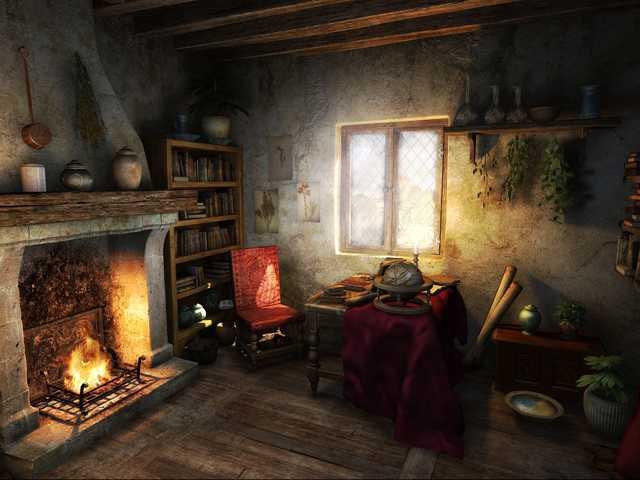 Throughout the game, you’ll draw and research charts, create concoctions, and even solve a planetary puzzle in Nostradamus’ study. Most of these puzzles are fairly logical and straightforward, simply requiring you to find the right slips of paper, books, or other information along the way. Many of them will be handled directly in your logbook, which also has a tab for storing recipes, a map, and previous dialog you can peruse at your leisure. This leads me to the bit of hand-holding the developers may have built a little too strongly into the game. For example, your logbook keeps detailed lists of tasks you need to perform, and Madeleine will even remind you of those tasks should you attempt to end the day without completing them. Once you’ve finished an item on the list, the game automatically crosses it off for you. Convenient… perhaps a little too convenient for some. 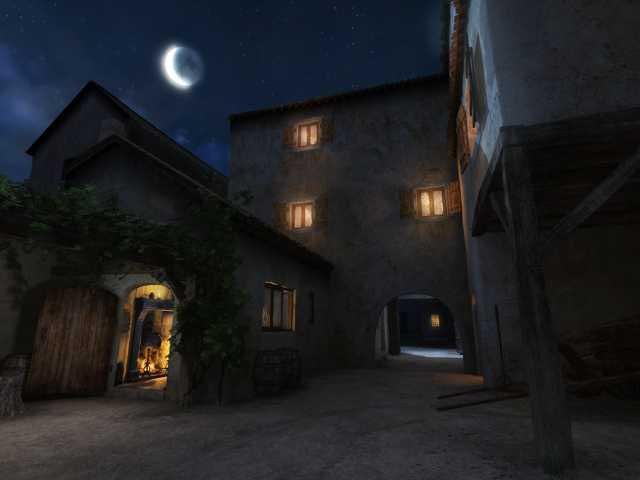 While you will be required to decode and translate many things– including Celtic runes – the parameters within which you’ll work are fairly narrow. You’ll find no Myst-like puzzles requiring reams of paper scattered across your desk. Most everything you need is right there on your screen. In one respect, I found this enjoyable, as I tend to become easily overwhelmed by paperwork; but I felt I should warn you in case you hoped for a more complicated game. Puzzles toward the end of the game DO become increasingly difficult as well as being timed, and there are several occasions when your character can die. One particularly admirable aspect of the puzzles is how well they’re integrated within the game. They work so well within their context that this may add to the perception of ease I mentioned before. It’s not so much that the puzzles are simple; rather, they make so much sense. When you take into account the historical backdrop of the game, this must have been no mean feat. 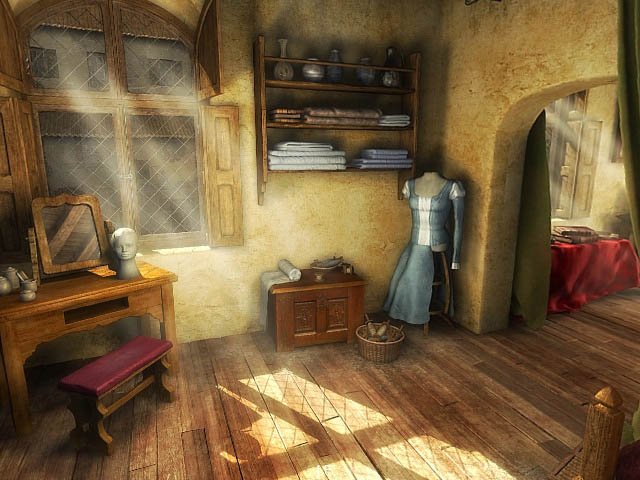 As for the rest of the interface, it’s point and click with a full range of movement within limited locations. This gives you ample opportunity to enjoy the graphics, which I found to be artistically and aesthetically pleasing. The backgrounds were detailed and quaint, giving the definite feeling of stepping back in time. I found I didn’t have to waste too much time pixel-hunting. The environment is rich with objects, but it’s easy enough to scan for hot spots. Once you find one, the cursor will change to indicate whether an action is possible, and which type of action may be required. For example, an item that needs to be examined using your toolkit will feature a magnifying glass. If it requires an item from your inventory or something nearby, you’ll see gears. The characters were also well-rendered, although the voiceovers were not always convincing. By no means was the acting bad enough to detract from the game—I’ve simply experienced better. I also enjoyed the music—soothing, not too distracting, providing drama when appropriate. All in all, this game ran very smoothly, and there were no irritations that begged to be written about in this review. The only possible flaw I can see with the game is, as I’ve stated before, the relative ease of some of the puzzles. But if you’re the type of gamer who enjoys a good, logical mystery within a solid historical framework, I predict you’ll have hours of enjoyment with Nostradamus: The Last Prophecy.
System Requirements:
|