What Is an Ideal Adventure? Part I
What Is an Ideal Adventure? Part I
A guide to create the ideal adventure game
By David Adrien Tanguay
This article was originally published on 9 July 1999 on the Adventure Collective site and is reprinted with permission.
What is an ideal adventure game? The answer to this question has eluded many adventure game designers, developers, and players. Gone are the past glory days of Infocom and Legend, who gave us such classic adventure series like Zork and Spellcasting. Replacing their places, instead, are a multitude of mixed genre titles such as Tomb Raider, System Shock, and many others–all of which have blurred the line that, in the past, so clearly defined the adventure games of yesteryear from the other genres.
Recently, I have taken an interest in this issue, mostly to see if it is possible to reestablish this missing line. The end results are my thoughts included in this essay. The goal of this article is to outline the elements that I think are required to create the ideal adventure game. Although this topic is obviously very subjective, I hope to share with you something that I think you can at least accept as good guidelines for adventure game design.
In this three-part special feature, I will try to 1) propose a working definition of an adventure, 2) consider the properties of an adventure, and finally 3) discuss what makes the ideal adventure game.
Defining “Adventure” in “Adventure Game”
Before we can consider what makes an ideal adventure, we must first lay down some ground rules as to just constitutes an adventure.
There seem to be fewer adventure games being produced lately, even from the traditional adventure producing companies such as LucasArts and Sierra On-Line. Furthermore, many of the games being called adventure today are very different from the games which the term has traditionally been applied to. While we can accept a boarder definition of adventure, such generalization simply makes the term useless for future discussion. A useful definition must establish relatively sharp boundaries. Otherwise, the scope of gameplay will become too large to even consider talking about what an ideal adventure game should be.
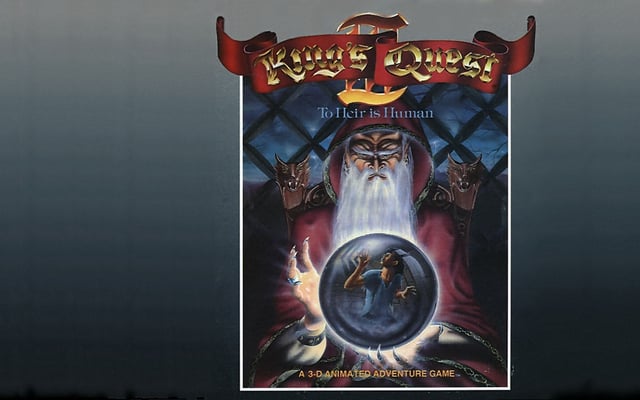
Any definition of the term “adventure” should be based on the games that originally defined the medium. These include titles such as Adventure, Zork and other Infocom games, as well as King’s Quest and other early 1980s Sierra On-Line adventures. The definition should also be exclusive, in order to distinguish adventures from other currently accepted genres like First Person Shooters (FPS), Role-Playing Games (RPG), puzzles, and Real-Time Strategy (RTS) games. We shouldn’t fear a definition that excludes games such as Quest for Glory, Alone in the Dark, and System Shock. Whether or not we decide that they qualify as adventure, they still remain great games!
Story
Story is an important aspect of an adventure. This prerequisite allows us to exclude purely puzzle based games, such as Sokoban, Sherlock, or the daily crossword. However, story must not be the sole defining characteristic. Books and movies are not adventure games, since they have no game aspect and no problem solving. Neither is any game that includes only primitive story elements–Wolfenstein, X-COM, and Alpha Centauri all have some elements of story, but they are clearly not adventure games.
Problem Solving
Maybe an adventure is simply problem solving in the context of a story. This is a good first approximation, but we can quickly see boundary problems. FPS require problem solving, although the problems there are often solved by blowing someone to smithereens! Similarly, there are many run and dodge games where the problems are solved by nimble jumping or ducking at the right time and place. These types of games can also include varying amount of story. Clearly, a meaningful definition of adventure must exclude Doom and Mario. We must therefore restrict our problem solving to the intellectual realm. The solutions to problems in an adventure game should be difficult to conceive but not difficult to execute. This gives us a reasonably narrow border between adventure and the various action genres.
Deterministic Versus Stochastic
This still leaves us needing a line between adventure and role-playing. Games in these two genres share many characteristics, although they usually lean in different directions on the emphasis thereof. Adventures usually stress on story and puzzle content. In contrast, RPGs emphasize interaction with a larger and more randomly behaving virtual world. These differences in emphasis are not definitional, however, since a game clearly in either genre can be designed with either or both of these elements.
Character development is a tempting characteristic to use to divide these two genres. Unfortunately, it falls a bit short. It is not unreasonable for an adventure protagonist to acquire new abilities, such as lock picking or increased dexterity, during the quest. The difference is not in whether character development is used, but in the reasons behind using it. In an adventure, the development is needed to solve a particular problem. In RPG, the development is needed to improve the character’s chances to solve nonspecific problems that may arise randomly from the virtual world.
In essence, the fundamental distinction between RPG and adventure games is the stochastic nature of RPG as opposed to the deterministic nature of adventures. It is the random presentation of obstacles that makes RPG character statistics so important. An adventure game seldom plays with a significant rolling of the die–the game plays out the same every time you run through it if you take the same actions. An RPG game relies heavily on rolling the die for determining combat and other event outcomes, whereby the player must court Lady Luck and develop stronger character statistics to improve the odds of survival.
Definition
With the above insights, we now have a workable definition of an adventure: an adventure is the “deterministic, intellectual problem solving in the context of a story.”
In Part II, we shall consider in detail the properties of an adventure.