Traitors Gate
|
Traitors Gate Developer: Daydream Software 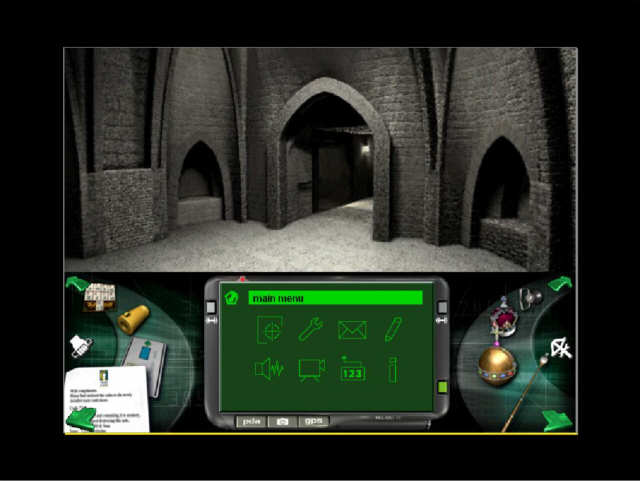 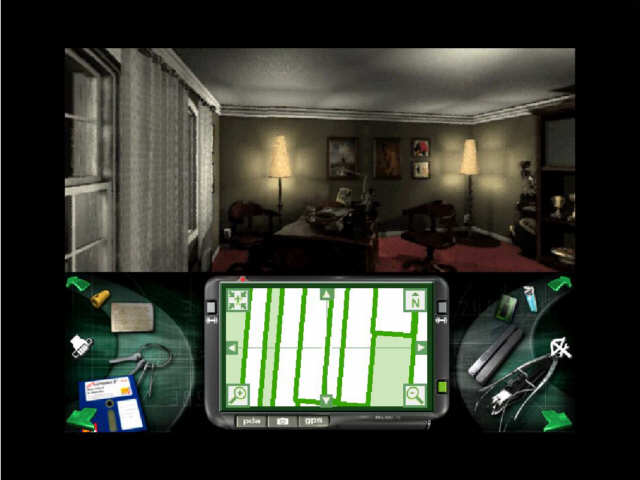  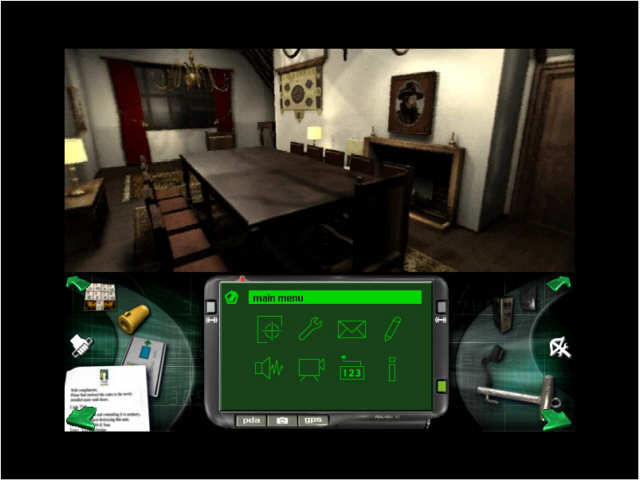 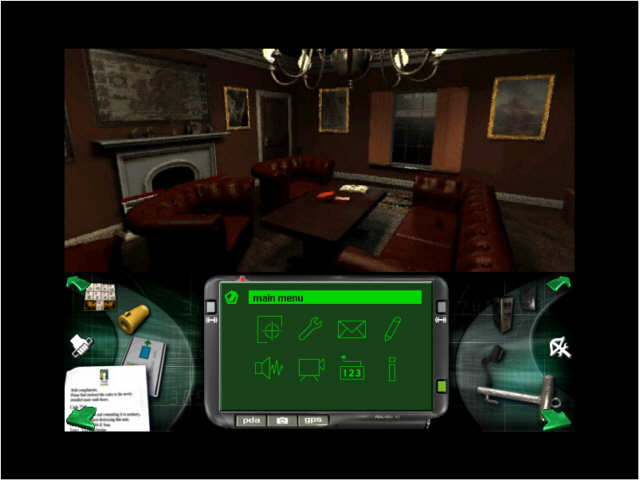 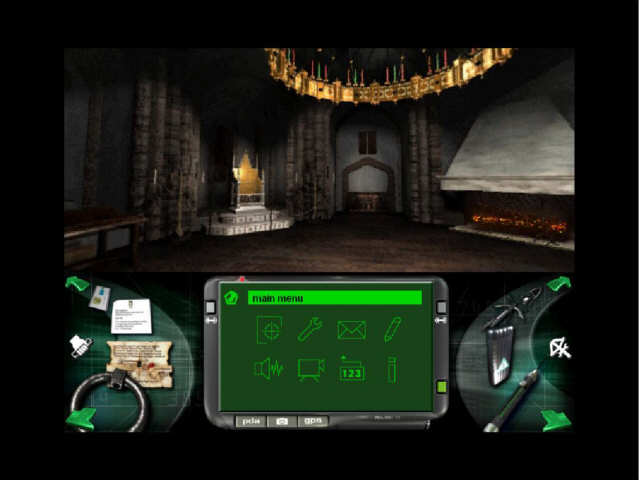 |
Pass me a ciggie, Miss Moneypenny
Traitors Gate is a rarity in adventure gaming. It’s not set in Egypt, Atlantis, or an old house. There are no spaceships or aliens. No murder mystery to solve. So what’s left? How about a good old-fashioned thriller set in the Tower of London? Honestly, what this game reminds me of is the old American TV show from the sixties starring Robert Wagner, It Takes a Thief. And just like the series, it is urbane and fun, never taking itself too seriously. (Come to think of it, I loved that show. How come they don’t show that on the TV Land channel?)
That show followed on the heels of the enormously popular spy movie craze, of which the head honcho, James Bond, has managed to stay hugely popular for over 35 years, and Traitors Gate is an adroit homage to that brand of entertainment. It is a game of the sneak and recover variety, popularized by the likes of Eidos’s Thief series, and despite that game being more of a action title, one could arguably say we could have another sub-genre on the horizon.
The game is Daydream Software’s followup effort to its popular Safecracker title, which was reviewed at JA+ by resident safe-buster Randy Sluganski. The design and look of the game, while sticking in the strictest of fashions to the actuality of the Tower of London, is extremely similar to Safecracker, but this is where the similarity ends. Traitors Gate is expansive and ambitious, nonlinear, with almost no straight puzzles, although there are still some safes and codes to find and get into ( and you just know what safe company the Tower of London is using these days, now don’t you, class?)
The story is that a Major DG Anderson, head of the European desk for ORPHIA (sorry, I never got straight what the acronym stood for) has defected, taking with him files containing detailed blueprints of the location of a number of priceless treasures, the most famous of which are the British Crown Jewels. The Pentagon has launched a covert operation (rather than risking an international incident) code-named “Traitors Gate” to capture the jewels for safekeeping and replace them with traceable copies. You are a top operative for a secret department within the Pentagon who has been given this unlikely task. There are a lot of historical facts regarding the Tower of London smoothly woven into the game, available but not demanding attention.
The player explores and picks up items, with the occasional guard to stumble upon and deal with. Your character can be killed in a couple of places or stupidly caught by the guards and thrown face-down in quite a few more. In other words, save often.
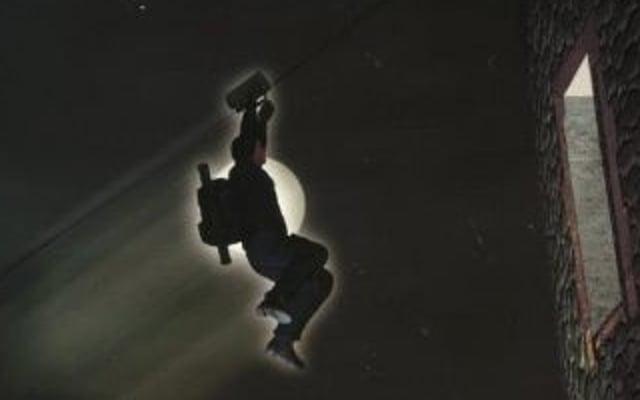
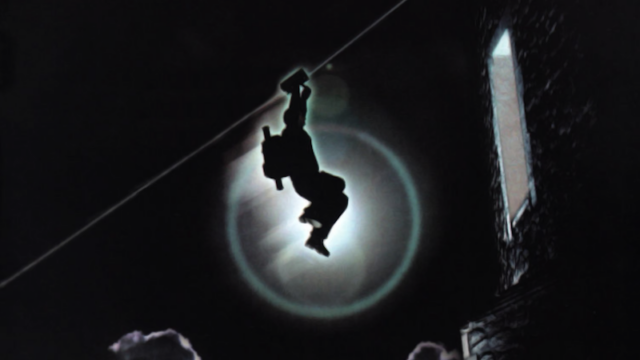
As far as the graphics go, I feel like I’ve now been to the Tower of London and don’t need to fork over the dough for a plane flight to the British Isles to gaze on it, ’cause I’ve already seen it. That pretty much explains the detail of graphic translation between the reality of the Tower and Traitors Gate. This is definitely more than you’d get to see on the guided tour. It has been faithfully recreated from photographs of the site, and the attention to historical detail really puts the player inside this oft-referred-to historical locale. The player is treated to 360-degree views anywhere he/she lands in the game, which really forwards the immersiveness. The game itself is played first person, with very nicely done third-person cut scenes.
The puzzles are pure inventory style, using at times inventory items in conjunction with information from the game environment itself. These puzzles are not always … well … simple. In some instances you either need to Get Smart (ok, I admit it, that was a pun aimed at fans of the sixties spy-spoof sitcom, for those of you paying attention) or get a walkthrough. It is also played in real time, which means a lot of trekking around and no clicking on a map and going poof to a previously visited location. In other words, learn to love the Tower of London, ’cause you’re gonna get to know it, up close and personal. There is also a 12-hour time limit, which is, believe it or not, plenty of time. There is a small and well-designed maze in the sewer underneath the Tower, and this can be easily mastered to move between gaming locations. My advice is in using this is to save your game, map it, then reload the previously saved game like I did so you don’t lose any of those 12 hours.
The interface is reminiscent of the Journeyman Project series, with lots to carry around and manipulate and a well-designed and clean-looking repository for it. There are many inventory items; however, the game does not allow you to discard any, which does clutter up an already bottom-heavy inventory. There is much equipment to manhandle and get familiar with: a camera, which the player can freely use to take pictures that can then be sent off for analysis and helpful game advice in return, a decoder, notebook compass, map, video and audio recorders–basically a gadget nut’s dream.
Sounds are appropriate, where placed. The player is moving as the character Raven for the most part on the sly, so you certainly have no brass band following you around. The soundtrack fires up only in certain locations, which actually heightens the dramatic effect, as you don’t know if it’s occurring because there’s a guard around the corner ready to jump you or what. The brassy, full orchestral music from opening credits and straight on through the game does well to evoke the feel of good, old fashioned spy-movie music. Otherwise, the player is left with minimal yet appropriate ambient sounds, including his own footfalls, a small point of accuracy I always look for (she sniffed).
I found the game fussy about extensions on an iMac 333 MHz, but it ran smoothly (albeit with lags before cutscenes) with its own set of extensions rustled up, and it also ran well on a 6400/200 Power PC. My review copy didn’t come with any game docs (she said in a whiny, nasal tone), causing quite a bit of reviewer hair pulling. (And since my hair’s so long, this got to be quite … festive.) Also, you should know that to play this you’re going to be shopping at Disk-Swappers-R-Us because there’s a lot of it.
Traitors Gate is nicely designed, having all the best elements of adventure gaming, detailed prerendered scenes, stunning and accurate looking cut scenes, a well-developed storyline, and puzzles that are thought through when devised so that they carry the story forward rather than bringing it to a grinding halt.
Final Score: B+
System Requirements:
PC:
Pentium 100 MHz
100 MB free hard drive space
32 MB RAM
8X CD ROM drive
SVGA video card
Thousands of colors
Mac:
133 MHz Power PC
32 MB RAM
100 MB free hard drive space
Thousands of colors