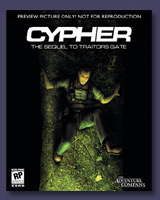
TRAITORS GATE 2: CYPHER Interview
Interviews
TRAITOR’S GATE 2: CYPHER
Interview With Nigel Papworth of Daydream Software
Conducted by Randy Sluganski
Nigel Papworth is the founder of Daydream, the company the developed the popular and very successful Traitor’s Gate and fan favorite Safecracker. Traitor’s Gate 2: Cypher again features the intrepid Raven, a ‘secret’ agent whose methods, while successful, are sometimes questionable. It is adventure gaming on a hire-wire as all of the thrills of action gaming are present, without any of the gunplay.
 JA – Are you still on target for a November release?
Mmmmmm…what month is it now? Last time I looked up from my test machine it was May! Joking aside, yes all things point towards a finished product in a matter of a few days.
JA – Is it necessary to have played Traitor’s Gate to understand the storyline of Cypher?
No, but it would certainly help to give the right mind set- I think people who have played my previous titles might have an edge in that they know a little of my design style…but then again, I’m doing some weird new stuff in this title.
JA – Can you give our readers a synopsis of Cypher’s plot?
Mmm…in one sentence? Ok, here goes… Devious foreign scientist creates devastating computer virus in underground bunker that in turn is slated for lone agent infiltration by our intrepid hero via ancient and labyrinthine ruins in the vicinity :-).
 JA – Will Raven – the star of the original Traitor’s Gate – reveal any more about his mysterious past?
In the game? No! He will, never the less, be venting his rather pithy humor from time to time.
JA – What were your sources of inspiration in creating Raven and his world of espionage?
I like the idea of powerful organizations messing up and then having to clean up their own do-dos. It also allows us to place some stringent rules of behavior on the player without spoiling the suspension of disbelief. This in turn actually makes for more challenging and better gameplay.
JA – Given that the name “Traitors Gate” references the entrance to The Tower of London – featured in the first game – why is the name being used again? Is there any direct connection between the two games?
The Traitors Gate concept is basically: put a well-trained, highly intelligent agent (the gamer 🙂 ) into an accurate historical environment. Mix in some high tech systems and some wacky booby traps and let the fun begin. We had some heated discussions about the name, and went through no end of alternatives. But, we always came back to the strength of the original title. Each scenario (and I have a few more up my sleeve) begins with an act of betrayal by some one in the Pentagon, so hence the traitor. It’s logical to continue with the title as long as we retain the basic premise of the plot.
 JA – What was the reason for switching from 1st to 3rd person perspective?
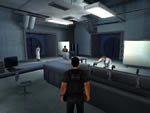
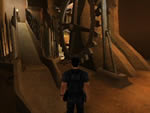
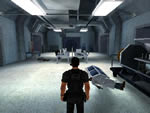
The main change is the use of full real time 3D instead of pre-rendered pictures. This in turn affects the style of gameplay presentation and content. The third person view just seemed to be the most logical way of putting the character into the environments.
JA – Will Cypher feature timed elements?
In that we are working in ‘real time’, instead of presenting choreographed sections, timed elements is one of the tools we can use. I have always disliked challenges where an arbitrary time restriction is present, so I try to design any time based puzzle so that the ‘ticking clock’ is an integral part of the mechanism.
JA – How about any combat elements?
As Raven’s character is all about cerebral skill and stealthy cunning, the successful formula for completing the game is to avoid direct confrontation. There are plenty of games that rely solely on the ‘my Dad is bigger than your Dad’ mentality of gameplay. We try to be a little more creative.
JA – What is the most enjoyable part for you in creating a game?
All of it, apart from Beta testing :-). Actually my biggest thrill is sitting down with a blank piece of paper and a rough scenario and knowing I have three days to invent 30 hours of gameplay. Scary, but I do get to play God for a short while.
 JA – Have the Tombraider games had any influence on the sequel?
When we decided to go ‘real time 3D’, I had a look round at the kind of games that were in development (Splinter Cell, etc.) as well as going through the back catalogue. I had always admired the Tombraider games and thought them well ahead of their time. My only frustration with them was the balance between shooting squeaky bats (which got a bit tedious) and trying to unravel the trigger door mechanisms. I always felt that the later part could have been pushed much further; this project is my chance to see if I was right.
JA – What do you think are the differences and similarities between the Traitor’s Gate series and Eidos’ Thief series?
In think the modern setting and ‘realistic’ gadgetry give me more scope as far as the plot lines are concerned. I am inclined to include a fair bit of literary content as well (for those that like to peruse the written word), though without the gameplay being dependant on it.
JA – Will the majority of the game be played with an over-the-shoulder perspective or will the gamer be able to move the camera?
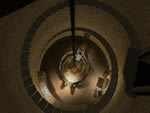
As this is the best view for understanding what is going on, yes. However, the mouse can be used to move the avatar’s view angle so that the player can study the environments with the same freedom as a first person camera.
JA – What is your opinion on working with the Gamebryo engine in general. How would you compare it to other game engines such as the Jupiter?
My experience with the technical side is limited; I am just a lowly gameplay designer. So you’d have to interview one of our strange programming-type people (try the second Friday in the month when we let them out of their locked cellar for a shower).
 JA – Will it use mouse for inventory management and manipulating things in the environment or is it all keyboard controlled? Or a combination of both?
We have decided on using just a few keys (enter, shift and arrows) to control inventory and in game action/steering, reserving the mouse for the camera control described earlier.
JA – How do you think you have improved as a developer since Safecracker – your very first game?
I knew absolutely nothing when I designed Safecracker, which was maybe an advantage. The problem now is that I don’t want to repeat my self. So, when I start a new project I have to search for a completely new angle of attack. The big advantage I have now is a more intuitive understanding of the possibilities and limitations of the programming side.
JA – Do you find that there is a difference between the European and American markets and how they respond to your games?
I was surprised that these games sell so well in North America, as the reputation suggests the market would be more suitable for FPS’s etc. But, strangely, the most difficult market for these more ‘intellectual’ games is the UK. Still, having grown up there, I should have known. After all, it is the society that gave us the football-hooligan, the deep-fried candy bar and Mr. Bean!
JA – On that note we’ll take leave and begin counting the days until we once again team-up with Raven in Traitor’s Gate 2.