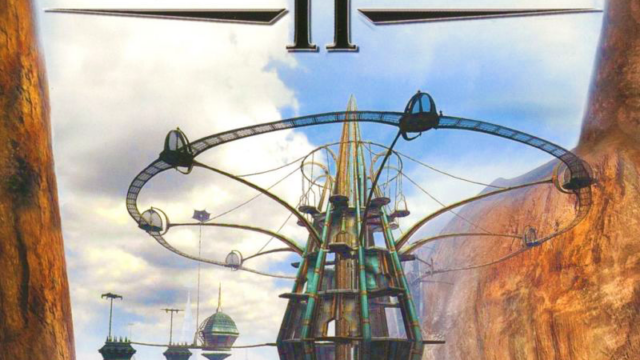
THE MYSTERIOUS JOURNEY 2 Interview with Maciek Miasik of Detalion
Interviews
THE MYSTERIOUS JOURNEY 2
Interview with Maciek Miasik of Detalion
Conducted by Randy Sluganski
Just Adventure recently hunkered down over a plate of haluski and pirogues to chat with Maciek Miasik the developer of The Mysterious Journey 2 (aka Schizm 2). Maciek – and his development company Detalion – are well-known in the adventure community as he is one of the few developers to actively solicit suggestions for his projects from members of the JA Forum.
Their previous endeavors – Schizm and Reah – are both ‘must play’s for anyone who is a fan of Myst-like games with challenging puzzles.
For further information on The Mysterious Journey 2, please make sure to visit the official website for screenshots and a game trailer to whet your appetite for the November release.
A big thank you to AdventureDog and Jonathan Boakes for their invaluable assistance with interview questions.
JA – What is it like being the most famous Polish game developer in the world?
 It’s hard to believe that we deserve this title. After all, almost every Polish developer claims that their studio is the biggest and best known from all Polish studios and we all know that usually this is rather very far from the truth. We try not to hype ourselves too much and rather than that, we let our works speak for us.
Yes, it’s very satisfying to know that your game is played around the world, in such exotic countries like Japan, China, Russia, and Australia and in many other parts of the world. The original game is still very popular and sells quite well and the sequel is in the works. This is definitely some kind of success, but I still don’t drive a Ferrari, so there’s definitely some room for improvement. It doesn’t really matter if we are the most famous Polish developer, but the chance of developing the adventure games, which is extremely difficult here, is all what we want. We’ve been working very hard to become known for the past 10 years and I do hope our “fame” won’t last only 15 short minutes.
JA – Are you still on target for a November release?
Yes.
JA – Is the storyline for Mysterious Journey 2 related at all to the events of the first game, or can we expect an all new storyline?
 No, there’s no relation to the events of the previous game. The game exploits similar themes, “schizm” related, and is placed in the future on some distant planet. The game shares the similar gameplay philosophy, e.g. how the game is played, how inter-character interactions are handled, how the inventory system works. It has a very similar interface as well. This is the sequel of gaming philosophy not the story.
JA – The special effects in the trailer – the smoke, the moving water, the snowflakes – look wonderful. What other surprises can we expect?
Our intention is to offer believable and beautiful environments, not to surprise anyone. We want to use as much of the effects offered by our real-time rendering engine to achieve our goal. We will do what we can to include as many of such effect as possible, but sometimes it’s difficult if we want the game to be playable on less sophisticated PCs.
JA – What is your favorite part of the game?
 It’s still too early for me to pick my favorite part of the game. I believe we need some time after the game is finished to judge its various parts and decide which is the best one, what we really like. When you’ve been seeing the game in various states of development for several months, it’s hard to really enjoy the beauty of artistic creations or challenges of gameplay. Most of that time, the gameplay is not existing or not working properly and everything else isn’t as you want it. This doesn’t bring nice feelings toward your work of art, no matter how others judge it.
The real satisfaction comes later, when you have some trouble-free period with your work, and you are able to take a look at what you’ve done, discuss it with you co-workers, friends and family. And then play it a little and decide about the favorite part. We are still quite far from this moment.
JA – What was behind your decision to keep a 1st person perspective for the sequel?
I should rather ask why should we change the perspective? We’ve been developing 1st person perspective adventures since we’ve started working together (first one was “A.D. 2044”) and the concept proved to work quite well.
 Yes, I know that many recent successful adventures are 3rd person games, but this isn’t the reason to switch. One of the most important aspects of 1st person perspective is the immersiveness factor. I really want to dive into a spectacular virtual world, explore it and at least pretend that I’m somebody else.
3rd person is definitely less immersive. I don’t want to be a puppet master controlling small characters going around the screen. The success of Sim games shows that many of us want to have at last that amount of power, but we are strongly individualistic persons here and prefer to do many jobs ourselves. In our game you are not controlling some character, you are that character.
We feel that those first-person perspective games with stunning visuals, where the player explores very strange worlds and solves various puzzles, are the best way of enjoying an adventure. Although the puzzles can sometimes seem artificial, such games offer a much more believable feeling of immersion in different worlds than more traditional, third-person point and click adventures.
JA – Are there parts of the game that are in 3rd person perspective?
Yes, cutscenes. But you also loose control over the protagonist and just watch the scene. Yes, I know this suspends the feeling of immersion a bit, but allows us to make those scenes more appealing and interesting. We don’t want players to be bored while listening to important but sometimes lengthy dialogues watching only the opposite character’s face or figure.
JA – Was there a feeling of liberation moving from 2D to real-time 3D and what is your opinion on working with the Jupiter engine in general?
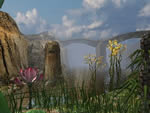 Oh, this is great feeling to get rid of those problems with rendering 300 thousand frames and fixing the errors, which required sometimes months of re-rendering. We wouldn’t be able to develop the game of MJ2 scope in such short period if we wanted to stay with our previous technology. With that technology we can shorten the development cycle, it’s easier to fine tune many elements and it’s easier to add or change something at the final stages. It’s possible to work faster, but it’s not necessarily easier – you have to learn and discover many new tricks and methods in order to get good results.
The Jupiter engine is a great piece of technology and we feel we haven’t explored and exploited its full potential with MJ2. Maybe a next game will allow us to further show what’s possible with this real-time 3D technology.
The move to real-time 3D is just the acceptance of the inevitable. Gaming, no matter what genre, is becoming real-time 3D and will stay that way. There won’t be a return to pre-rendered games. We could do another pre-rendered game, but we simply wanted to help revive the genre and move it ahead.
The quality is different than with pre-rendered games, and this is constantly changing thanks to the advancements in hardware and game engines. But there are numerous advantages to full 3-D, most notably the full freedom of movement and view, high-resolution display, real-time animations and special effects.
We also want to remove from our adventure a sort of “outdated technology” stigma in the eyes of many game players. Thanks to the fact we are using the same technology other “mainstream” titles use, we hopefully won’t be perceived as weird, niche genre, destined for extinction. For me that technology change is a great leap forward for the adventure genre helping us to keep it alive and reclaim its well deserved position among other genres.
But I think the better question is will the players feel liberated when playing real-time 3D game instead of jumping from screen to screen or riding on invisible rails?
JA – Will it use mouse for inventory management and manipulating things in the environment or is it all keyboard controlled?
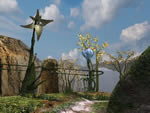 Actually the mouse can be used as the sole control device in the game – you can control the view, move yourself, interact with various objects and use the inventory items. There’s no need for the keyboard, although those used to control the leading character movement with the keyboard, like in first person shooters, will be able to do that.
JA – Will there be any kind of speed control for movement?
Yes, that was the first complaint we have about the game, very early in the development and decided to include such control.
JA – How about an option for a full install to hard drive so no CD swapping is necessary?
The game will feature only a full install to hard drive. No CD swapping will be necessary. The estimated space required for the game is around 2.5-3 GB.
JA – Will there be a simultaneous CD & DVD release like there was for the first game?
No, this time the game doesn’t require that much of storage space and DVD version simply is not necessary. The game is coming on 2 or 3 CDs – the final size hasn’t been determined yet. There’s no real advantage of using a higher capacity media because the quality of the game depends on player’s computer capabilities rather than on the capacity of the media.
JA – One of the screenshots on JA has a little man in it. Is this a character we’ll be talking to or will he be similar to the priest in Schizm, who yelled something unintelligible at us and promptly disappeared without a trace?
The game features about 25 different characters and the protagonist will talk to most of them in the game, standing face to face during the non-interactive cutscenes, sort of FMV, but with real-time rendered models instead of actors. The scenes are triggered at specific places of the gameplay and the player is merely a spectator during them. There is no character interaction in the more classic sense – no endless browsing through questions menus in order to make sure that we asked that critical question. It seems that we are not very patient players and we want to hear or see what’s important right away instead of browsing through menus.
JA – Are there any types of puzzles in Mysterious Journey 2 that you’ll be careful not to repeat because of the numerous complaints about them in the first game – like the bridge puzzle and the puzzle where you had to differentiate similar shapes and identify unusual vocalisms? Or are you going to have puzzles similar to these and try to modify them?
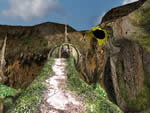 Actually people seem to complain about every kind of puzzle. We should get rid of math puzzles, sound puzzles, shape and color puzzles, slider puzzles, etc. leaving the game without any puzzles. Yes, this would definitely solve the problem of various complaints, but this game is about solving puzzles! We want the puzzles to be real challenges not fake ones – they are intended to be obstacles needing serious thinking. This means that sometimes they need to be hard, but I think we are fair with the players.
Of course there are puzzle ideas we don’t want to repeat. There are no puzzles requiring to win twice in a row, but you will have to build bridges in similar fashion you did it in MJ – for example by playing a simple game.
There are many types of puzzles which are similar to those in the previous game. There is sound puzzle which require matching sounds, shapes and colors. The math is kept at minimum, but calculating in alien number systems seems to be mandatory in MJ games.
JA – What sources did you use for inspiration when designing the Mysterious Journey gameworld?
I don’t know. Everything we see around us inspired us. We didn’t try to copy something in particular, but wanted to create interesting new environments, which are not too alien for most of the players.
JA – Can you describe the creative process that goes into adapting Terry Dowling’s script into your gameworld vision?
At the early stages we exchanged many loose ideas. We told Terry what we would like to do in the game, what themes would be the most interesting, and what kind of environments would suit us best. Then Terry came up with the preliminary story which was promptly accepted. The team worked on the environments suiting that story and created a flow of action or rather a flow of adventure. Terry received the list of planned locations and the graph of game flow, plus a list of proposed puzzles. He returned more fleshed out story and at that stage we created almost final gameplay – finally deciding what puzzles were going to be in the game, in which locations and how the game was going to be played. This is the very first moment we saw how the game was going to be played, with everything placed on a large cork board with small sheets of paper describing locations and puzzles and colored threads showing the connections and the game flow. That cork board patchwork was transcribed on the paper and sent to Terry and then he delivered the first version of the game script, which contained the entire storyline and characters combined with puzzles and locations. There was no actual dialogue yet, but everything was more or less designed. We started to work on the locations, puzzles, models etc, and Terry worked on the scripts for dialogues and cutscenes. His work ends with the final script containing everything that Terry wanted to offer us for the game: dialogue, comments, his visions, etc. As you can see, this is a rather extensive exchange of ideas, messages and documents.
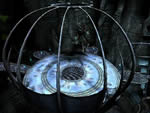 With Terry on board we can try to improve the genre with more human elements, namely characters and stories. The first person perspective is a great tool in offering an enhanced feeling of immersion, but the good adventure game needs something more that breathtaking visuals plus strange puzzles. It needs an absorbing story keeping the player interested. Fitting the story to the interactive game is difficult, but we try to offer the best of both worlds.
We hope we will be able to develop another game with Terry, offering him even more influence on the game, with more opportunity to come up with an even more intricate and interesting story, better integrated with the worlds he envisions. We want him to have more control on the story, characters and setting, because we feel that this is a better way to end up with more harmonic work, where the most important elements: storyline and gameplay work together perfectly.
JA – What is your favorite part of the development/creative process?
The early stages, definitely. Everything is waiting to be discovered, new challenges are coming, and the most horrible period is still months or even years ahead. You keep thinking how great the game is going to be, what special elements you are going to include. It’s usually much later when you realize how wrong you were. Reality always seems to crush our expectations, but also teaches us very valuable lessons.
I think the time when the game is finished should be our favorite, when we can see the fruits of our work, enjoy the fame, and read fantastic reviews. Unfortunately for such small company as ours, it’s the time when real troubles start. We have to think about the future, about not wasting the potential we have on our disposal. It’s usually the most difficult period of the entire development process because of vast number of unknowns. When the game is being developed, we know what to do, and what to expect.
JA – What is your opinion on your North American publishing company changing the name of your game from Schizm to The Mysterious Journey? Do you think gamers find this confusing?
The publisher job is to, well, publish the game and to sell a lot of copies. We all want the adventures to sell well, don’t we? It’s important for the genre. The publisher knows its tools of the trade and it’s not my intention to advise them on that. If changing the title helps to increase the sales, I can only welcome that move. Yes, some customers are confused, but literally tens of thousand of them seem to be quite happy, as the sales reports show.
Besides, this is also a very good excuse for some light-hearted discussions in various adventure-related forums. It’s a good excuse to stop bashing Myst and its sequels and clones for a moment.
JA – Thank you for your time Maciek; we’ll be looking forward to The Mysterious Journey 2!