The Good, the Bad, and the Ugly
The Good, the Bad, and the Ugly
Zork Grand Inquisitor, Starship Titanic, and Mirage
The Good …
|
Zork Grand Inquisitor Developer/Publisher: Activision
|

I am the Boss of You!
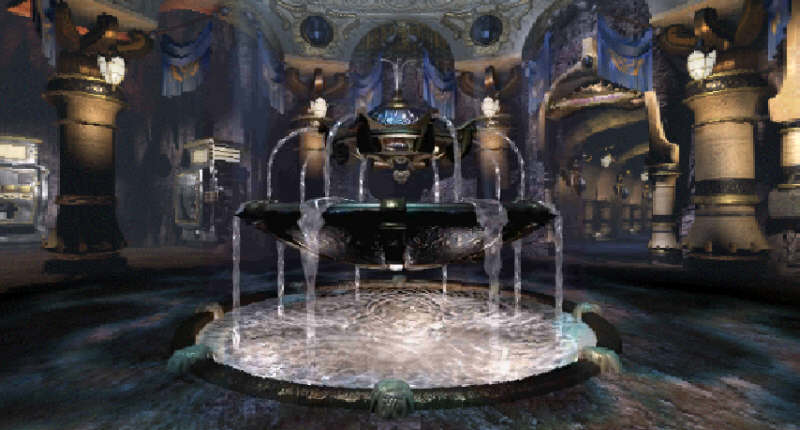
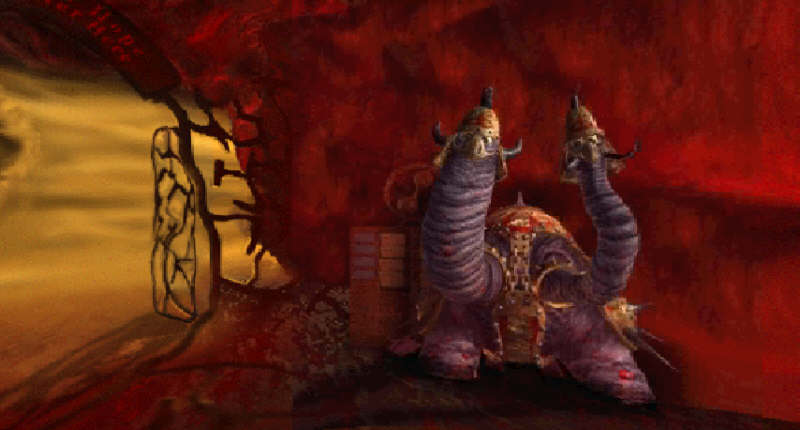
Zork Grand Inquisitor is the last (a subject bemoaned by Zork devotees) of titles in the venerable series and, for me, by far the most enjoyable. There was literally not one aspect of this game that I did not find aligned completely with my personal tastes as far as graphic first-person adventure games go.
The story itself and the quality of writing recaptures the whimsical nature of the early Zork text adventures, something that had in small increments fallen away from the series upon the inclusion of graphics, a change whose pinnacle was reflected in Zork Nemesis (a beautiful but dark, brooding game). In Zork Grand Inquisitor, magic has been banned from the underground empire by edict of a Grand Inquisitor, played by Eric Avari (Stargate). If caught practicing magic, the guilty party is totemized, a punishment whereby the offender is sealed is a small container that looks suspiciously like a paperweight. Your job is to save the kingdom and avoid getting totemized in the process.
The writing is crisp and clever and had me laughing out loud throughout. The jokes are cleverly built in, some delivered by characters, some included in the design.
Another sterling decision, to the designer’s credit, is the inclusion of real actors that do real acting jobs throughout the story. In other words, the names in this, including Avari, Dirk Benedict (in an Indiana Jones parody), and Rip Taylor (think Gong Show), do not give you the idea when they are speaking in your general direction that you’re holding their cue cards for them. There’s also some great voice acting, including turns by Michael McKean and Marty Ingles.
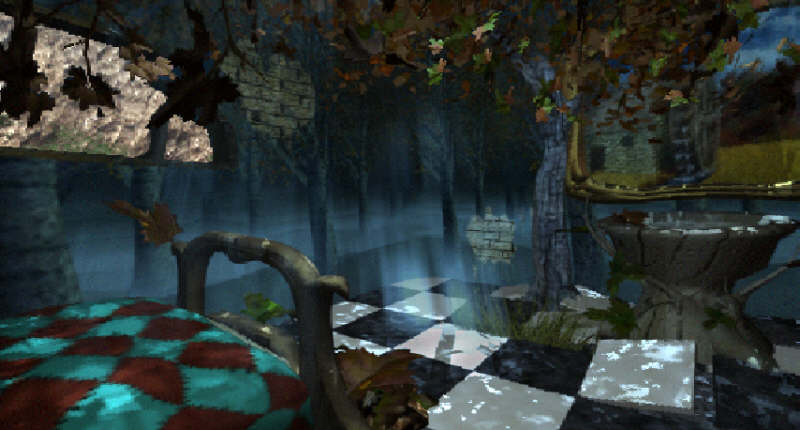
The graphics are extremely well-designed and capture perfectly the lighthearted nature of the subject. Transitions are smooth and waste no time; the prerendered landscape is some of the best artwork in a first-person game. The game boasts something called Z-Vision, really just a fancy title for 360-degree panning, which makes the environments open up, giving the player a freedom of movement that’s quite enjoyable. The cursor is well designed, giving away just enough info to be helpful, but not in too complex a fashion.
There are several design omissions that require, just because it’s so miraculous to have all omitted in one game, that I bring them up. There’s virtually no pixel hunting. There are no mazes. No conversations with mind-numbing conversation trees. No text parser (remember, I played this right after Starship Titanic.)
A particularly nice touch is the inclusion of a mapping system that allows the player to instantly travel to places in the game that she has been through before, virtually eliminating the drudgery some games resort to of making the gamer trot back and forth in an odious and redundant manner to get to and from various areas in the game.
The music is well-done and aligns perfectly with the gameplay. There are some simply clever ambient sounds, such as a snapdragon flower that’s really the head of a creature that’s snapping, and the sound increases and decreases as the player moves closer or farther away from the area.
The gameplay is entirely nonlinear, and huge sections of the game are open once the player gets underground. Despite this, there are additional locations that open up as rewards for completing tasks. The puzzles are put together well, but they are not so difficult that the player is stopped dead in his tracks, and there are enough open locations that one can go back and forth to try different things rather than being stonewalled and stuck in front of one thing trying to figure it out.
The game has some straight built-in puzzles, but most are inventory-based, and the inventory is also designed well, with items no longer needed (with the exception of only one or two) dropping away once used so that they do not become tedious red herrings later. The game also uses the casting of collected spells as puzzles, something I thought I’d dislike very much but came away charmed by, and I had a lot of fun with these.
This game talks and walks like something designed by people that play these darned things themselves. A thoroughly refreshing idea. And it goes in my all-time top 10.
Final Grade: A
System Requirements:
PC:
Pentium 90 MHz
Win 95
16 MB RAM
4X CD ROM drive
50 MB hard drive space
High-color (16 bit) 640×480 VLB or PCI video card
Sound Blaster 16-compatible sound cardMac:
I played this with Virtual PC 4, on a 466 MHz iBook with no glitches.
… The Bad …
|
Starship Titanic Developer: The Digital Village
|



Make It Stop Mommy, It Burns!
Why, why, why? I can’t even imagine what these people were thinking. It looks like an adventure game, it certainly has puzzles, places to explore, a plot, prerendered graphics, etc., but something was done with these elements here to make the completion of this game an equitable experience to having to get multiple doses of oral surgery.
The thing that is so misleading about Starship Titanic is that it actually looks as though it is going to be a fun game. And I went into it with my nose up in the air, having heard the stories of mind-numbingly hard puzzles but thinking smugly to myself, “Ha! I’ve played so many of these, I’m sure I’ll know the lay of the land and have it figured out in no time at all. What a bunch of babies those other players were.” And promptly came out the other side of it holding my nose, with my eyes watering.
Now don’t get me wrong. I adore Douglas Adams. I’ve got all the Hitchhiker books and even a boxed set of the filmed adaptation. But even my admiration for this beloved writer could not ease my temperament in dealing with this title.
The story is quite straighforward. At the center of a galaxy, a beautiful, most elaborate starship, the Starship Titanic, has been built. It crashes into your house (Adams lifts his own material here), and you end up on board. During the course of gameplay, you discover what has happened to the ship and what must be done to repair it so you may return home.
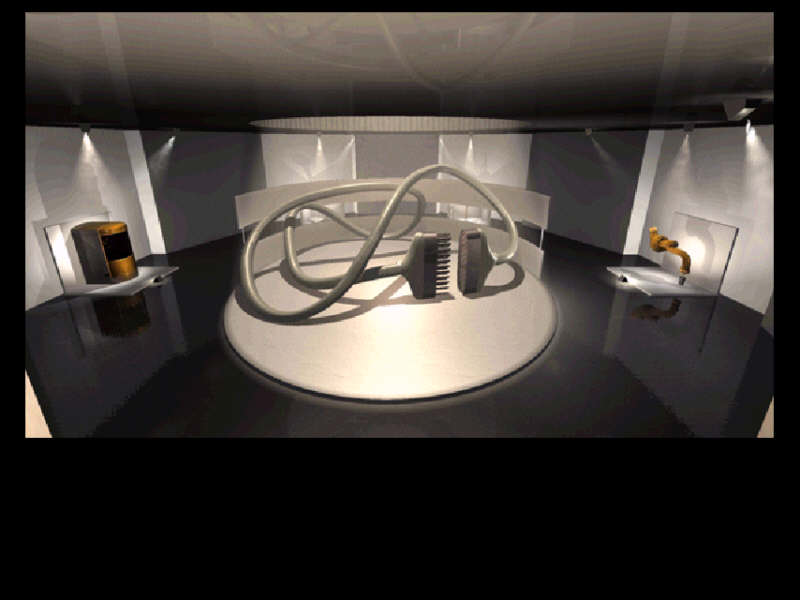
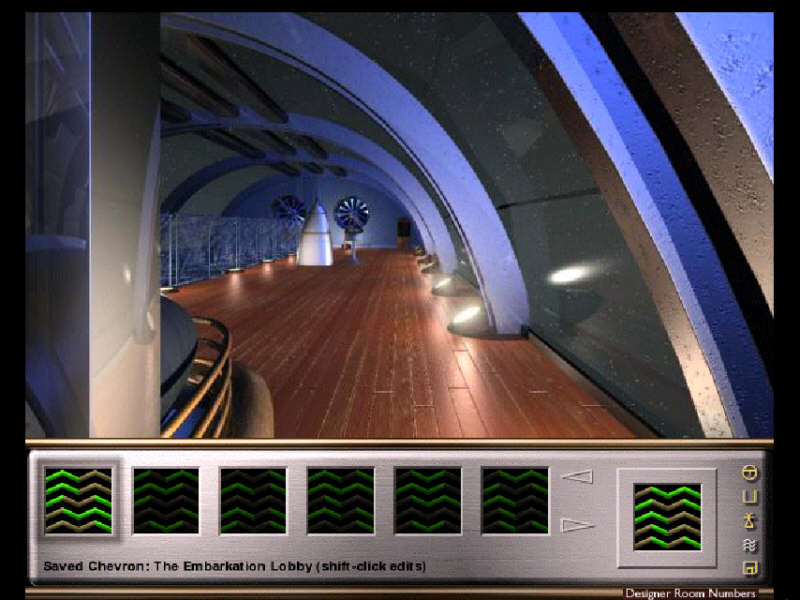
The graphics are actually quite impressive. The design was carefully done, overseen and orchestrated by Douglas Adams himself, and it has the feel of a very elegant old Art Deco hotel, dipped in some sci-fi. A perfectly acceptable mix, and very lovely. Of course, this feature gives a glossy finish to the horrific underpinnings of the game as the player struggles through sloggish game controls, a highly complex inventory system, as well as an unwieldy text parser stuck in the middle, one suspects as a poorly thought out homage to Adam’s earlier Hitchhiker text adventure.
One feature that I really admired, and wish there would be more of in all games, is that the game offers the option of a full install to the hard drive. This was just dandy and serves the same function of getting a multiple-CD game (this is three) onto a DVD.
I have to mention something about the transitional graphics. Someone had the idea that when the game moves from location to location, the screen and all of the graphics should turn blurry while moving. This trick gives the player the feeling that she is at a college frat house in the middle of a hazing ritual that includes attempted alcohol poisoning. The first night I played, I actually got a headache and had to leave the game alone for several days before attempting it again.
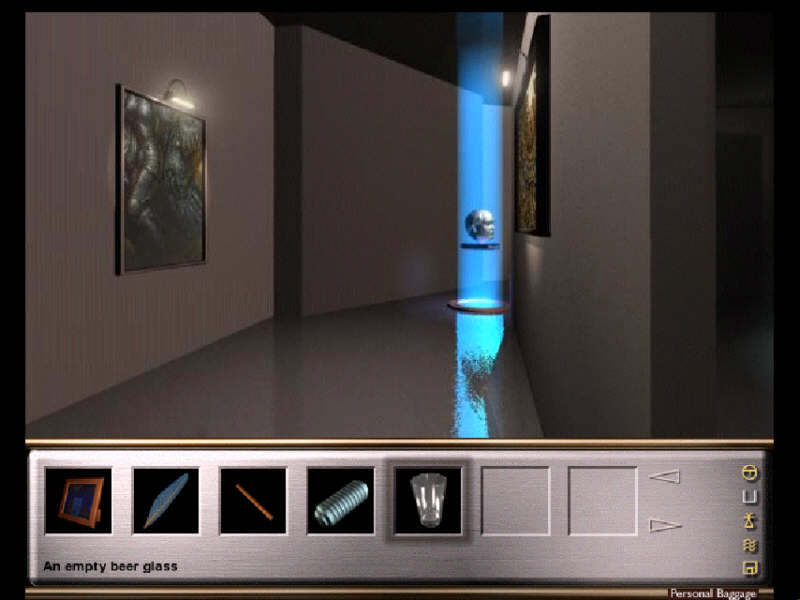
There is a highly complex inventory system, with four different sections–the player must keep chevrons that are for each room in the game in one, another is to have conversations with the mechanized characters met along the way throughout the story, one shows you which room can be accessed in whichever elevator you are in (and there are four elevators, all exactly alike–have fun keeping that straight), and the final one is for inventory items proper. Confused? Join the club.
The music is actually quite well done, and along with the graphics, it tricks the player into thinking he is in for a real treat of a good time.
The puzzles in Starship Titanic are one of the major failings of this game. Did you ever see the movie Heaven’s Gate? Do you remember it? The four-hour debacle that virtually finished off director Michael Cimino in Hollywood? Well, let me tell you, brother, the puzzles in Starship Titanic are like watching into the fourth hour of that movie. That’s the best I can explain it. And I really think the tipoff here is that someone has started to package and sell the game with the strategy guide thrown in for free, and I earnestly believe that we should all, adventuring babies, take that sort of thing as a big fat clue when it comes to game shopping. You could even think of it as a real-world shopping puzzle. “Gee … now what’s the reason these guys are giving me a free twenty-dollar book?” My favorite part of this is the PC Gamer magazine blurb on the back: “Forget Riven. This may be the game that reignites the adventure genre!” Some public relations person earned his or her paycheck the week that was published, that’s for sure!
Unlike Mae West, when this is bad, it is not better. Is there someone that you really want to get even with for some slight? Give him this game. And make sure you keep the strategy guide. That way it’ll work better than a computer virus.
Final Grade: D
System Requirements:
Mac:
120 MHz Power PC or faster
Mac OS 7.5 or later
4X CD ROM
32 MB RAM
160 MB hard drive space
Thousands of colorsPC:
Windows 95
100 MHz Pentium (133 recommended)
16 MB RAM
160 MB available hard drive space
16-bit (high-color) capable video card and monitor
Video and sound cards 10% compatible with DirectX 5.0
4X CD-ROM drive
… And the Ugly
|
Mirage Developer: The Dream Designers
|


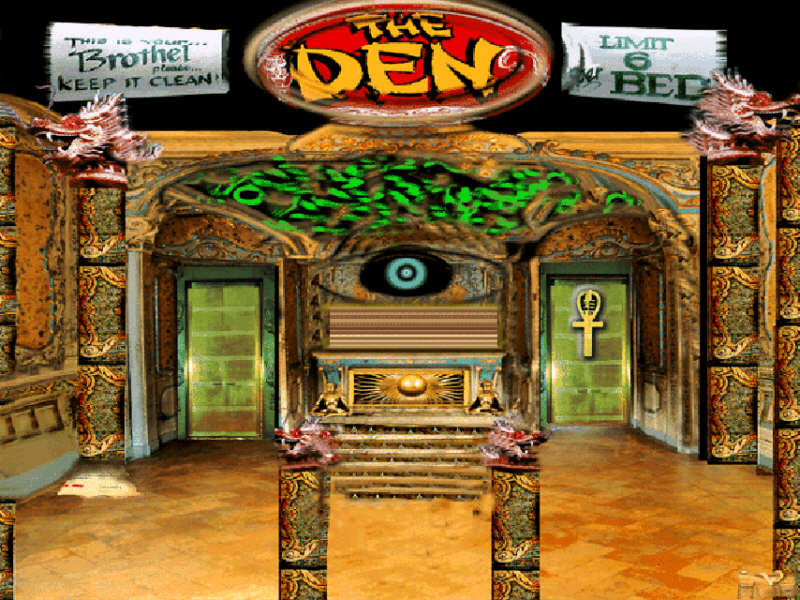
I love bad movies. Sometimes, films in this genre are made badly on purpose (Russ Meyer’s Faster Pussycat! Kill! Kill!), but sometimes the creators are really, really sincere, and the resultant effort, considered serious art by its maker, is the stuff by which bad-art legends are made (Ed Wood’s Glen or Glenda?).
I’ve been discovering some old adventure games that seem to qualify as a new subgenre of their own, all along this line of thinking. I think these came about around the time a few technical advancements were being made, CD-ROMs were first on the horizon. You know what I’m talking about. The odious, bargain-bin-anointed “Multimedia” titles. And like bad films, some of these are so busy reveling in their own clever and artistic achievements, they can’t see the forest for the trees.
The game Mirage handily fits into this newly coined genre, which for the sake of clarity I’ll call Trash Adventure. Ephemeral blips on the adventure gamer radar.
Mirage is actually a western that takes place in the town of BrotHell. Here’s a sampling of explanation from the game docs: “The doors and windows of your imagination will open or close if you find the key to survival. Awaiting you is your just reward as you uncover the dead and bury the living in the hallucinogenic terrains of the ‘Mirage’ desert. … Lost in the hallucinogenic terrains of the Mirage desert. Your thirst and your hunger for pleasure could lead you to a phantasmagoric land trapped forever inside your own imagination. In limbo with the ultimate deadly psychosis called ‘Mirage’.”
Well. Thanks for clearing that up.
Throughout the game you are given pieces of video that spell out the real story: your job is to rescue a girl named Jenny (no, I did not make this up to tease our own Jenny G) from a group of desperate, ugly thespian wannabes.
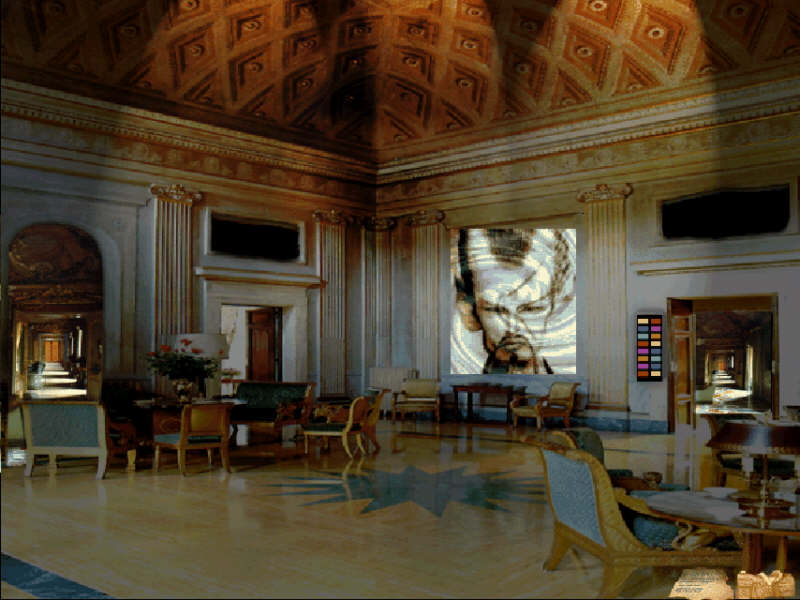
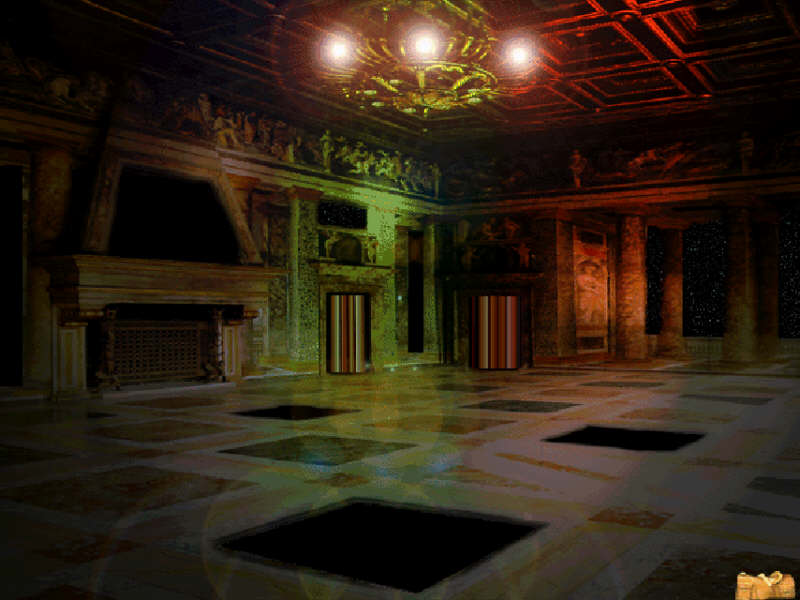
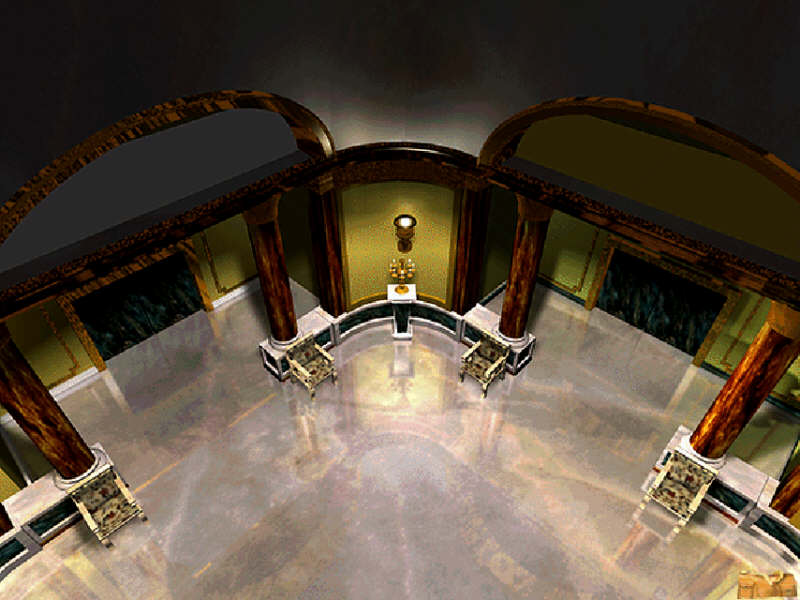
The graphics are that flimsy multimedia-type. You know the kind, a static screen that’s an altered photographic image, and there are maybe two, or even three, areas that pulse a little bit, slyly winking at you to get you to try clicking on them and see if something wondrous may happen?
The cast is bad-film superb. The women are leftover “actresses” from the legendary Vivid Video’s house o’porn, in their first real acting jobs with their clothing on. The male actors look like they were ripped off from one of Vivid’s set crews. The first giveaway to this, of course, is the notice on the back of the CD case–“All actors are on file and over the age of 18.” What a hoot! For an adventure game?
Puzzles consist mainly of clicking on the right thing and finding the correct hot spots in each room that will lead you to the next correct room. There are three inventory items that are collected at the beginning of the game and three more in the middle. All but one aren’t actually ever used. I kind of got the idea that these were needed in order to get through more of the rooms, but this isn’t really spelled out anywhere. There are multiple wrong rooms that can be chosen that will lead to a game over “death” screen. These are enigmatic and inexplicable, although I’m sure the guy that thought them up was having some sort of idea about them; however, the player just can’t decipher it.
One of the great things about this package is that it comes with a separate CD entitled “The Magic of Mirage: The Behind the Scenes Look at the Critically Acclaimed Game.” The guy in charge of the music, cryptically named “Saint,” looks suspiciously like an escapee from a Thompson Twins video. The entire package is pure high camp, all the much better because it has no idea it is at all. A truly Ed Wood kinda gaming experience.
Final Grade: You and I both know this isn’t going to qualify for a good score. But one has to ask by what standard should it be judged? Are we going to apply a John Waters criterion to it and give it an A? Or with a straight face call a spade a spade and give it the F it deserves? I can’t decide. I think the player will have to figure that out for him or herself.
System Requirements:
Mac:
Macintosh LC or greater
68030 or greater
2X ROM drive
System 7 or better
16-bit color
6 MB RAM minimumPC:
IBM 386 or better
2X ROM drive
Sound card
16-bit color
Win 3.1 and above
6 MB RAM minimum
DOS 5.0