The 10 Biggest Turkeys of All Time
The 10 Biggest Turkeys of All Time
Turkeys. Multimedia, full-motion video, star-studded extravaganzas that bragged they would change the face of gaming. They promised us the world and gave us giblets. Not bad enough to be in the Dungeon of Shame, where bad games are perverse treasures to be completed at all costs. Not good enough to be played to completion when something more interesting, such as a Windows crash, demands our attention. These are games that guaranteed a new era in computer gaming and instead delivered repeat visits to software stores with liberal return policies.
Turkeys. Games so poorly constructed that we list them by alphabetical and not numerical order as it is impossible for one to be worse than the other. The only thing these games have in common is ineptitude. What contributed to their failure? There is no single answer. Instead impute their ineptness to a hodgepodge of poor marketing, bloated budgets and lengthy production schedules. Some feature major stars like Dennis Hopper or Christopher Lloyd. Others had multimillion dollar budgets and were in production for years. Somewhere along the line each off these games forgot the key factor to a game’s ultimate success: entertainment.
 9
9
Tribeca Interactive
GT Interactive
1996
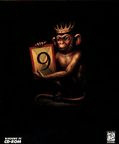
You have become the sole proprietor of the Last Resort–once the world’s premiere getaway spot for the rich and famous–willed to you at the final bequest of an unknown relative. Claiming the inheritance will prove to be no easy task as you must now wend your way through art and animation inspired by drug-laced Kool-Aid. Logic flies out the door–puzzles are often solved by chance. Your mission: investigate the Last Resort as “mischievous forces” are destroying its remaining vestiges and mutating the Resort to serve their own evil scheme. Aided by nine muses that inhabit the Resort and protect its valuables from the outside world, you need to stop this destruction before it is too late and restore the palace’s enchanted splendor.
Does any of this make sense? Would it help if I told you that 9 featured the voices of Christopher Reeve, James Belushi, Steve Tyler and Joe Perry of Aerosmith and Cher? I didn’t think so. How about if I told you that Robert DeNiro was the executive producer of 9 and the co-founder of Tribeca Interactive. No? What if Mr. DeNiro had personally been quoted as saying that, “9 will usher in a new era of computer entertainment,” and “Tribeca will soon be a major force in the gaming industry.” Still not convinced? How about this: You have two weeks to name all of Tribeca Interactive’s releases following 9.
 Black Dahlia
Take 2 Interactive
1998
Eight–count ’em–eight CDs chock-full of Hollywood-quality full motion video and a script that is the equivalent of Chinatown or L.A. Confidential. The plot loosely revolves around the real-life murder of Elizabeth Short, an aspiring actress found murdered in Los Angeles in the 1940s. Her obsession with the color black led the press to dub her Black Dahlia. The game pivots around the Cleveland Torso murders and expands to encompass the Black Dahlia, Nazis, and the supernatural in a web of intrigue and mystery. Dennis Hopper does yet another of his Blue Velvet recreations as an agent drive insane by the investigation. Believable dialogue and an ending that is still discussed could have made this game a winner.
Eight–count ’em–eight CDs chock-full of puzzles that have virtually no relation to the story. Slider puzzles, jigsaw puzzles, and lever puzzles galore–over 60 of them!–that feel as if they were tacked on to increase the game length. Many of the puzzles are so difficult that the developers inserted codes in the game to allow for an instant solve. Terri Garr stars as seer Madame Cassandra. Her monotonous delivery and obvious reading from the cue cards make one wonder if she was drugged and forced to appear in this game without her approval. Disk 7 is a show-stopper; infested with bugs. Calls to the Take 2 support desk either went unanswered or were curtly dismissed with a, “Well, it must be your computer!” Must’ve been a lot of bad computers sold that year. In response to the huge public outcry over Take 2’s technical support, Take 2 announced that they would no longer be producing adventure games as the fans were rude and ungrateful. We know you are, but what are we?
 D
D
Warp
Acclaim
1995
This game was produced for every system imaginable. For its time, D had great third-person graphics and terrific detail, atmosphere, and music. Its mansion filled with deadly traps and a discover-the-true-identity-of-the-serial-killer plot with multiple endings made it a must-have for any horror fan.
The game’s major drawback: it occurs in two real-time hours. You will have finished D in about the same amount of time it has taken you to read this synopsis.
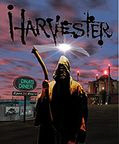 Harvester
DigiFX Interactive
Merit Studios
1996
Decades in the making! Well, not really, but it sure seemed like it as Harvester advertisements ran for years trumpeting its imminent release. By the time it was actually released, not only was it no longer “cutting-edge” but it seemed to have been written by a group of 12-year-olds posing as adults. Or maybe it was a group of adults with the mentality of a 12-year-old. Either way, Harvester did nothing to reap new adventure fans.
Supposedly set in the America of the 1950s, Harvester attempts to emulate David Lynch in a Leave it to Beaver/Norman Rockwell setting. But the Beaver’s mom now has a cleaver, and she will hack you to pieces–and then eat your body parts. Harvester is more interested in attempting to offend than it is in presenting a sardonic look at the underbelly of life in the idyllic nifty fifties. The main character is thrust into a situation where he does not know who he is or where he is. It took them three years to come up with this?
The town of Harvest is controlled by a Lodge (imagine ominous music every time you read The Lodge), a secret order that has a strange grip on the townspeople. The firemen are an effeminate, lisping force who sketch nude models, the grade school children have misshapen heads courtesy of a school board that advocates corporeal punishment, and what is that strange looking meat in the walk-in freezer? Yawn. The producers of Harvester were hoping to offend the world and sat back waiting for the resulting controversy to sell truckloads of games. If their efforts had been subtle instead of in-your-face blood, guts, violence and a “look at the bad things we are doing” attitude, they could still be pumping out sequels today.
 Of Light and Darkness
Interplay
1998
The box art for Of Light and Darkness was extremely controversial. How do we know it was controversial? Because the PR people for Interplay kept posting on the newsgroups that the box art was controversial. Never you mind that no one ever saw an article in Time, USA Today, Entertainment Weekly or any of the gaming magazines concerning an uproar over the box art. The Interplay PR shills were determined that they would make this game sell by contriving their own controversy. Something tells me that they had played this turkey and knew it wouldn’t sell based on its gameplay alone. By the way, the box art features an angel curled in a fetal position. I haven’t a clue why this is considered controversial.
OLAD is another star-studded extravaganza. James Woods and Lolita Davidovich headline what is every point-and-click adventurer’s nightmare: timed puzzles. The main goal of the game is to redeem the Apparitions. To do this, you must race against the clock as you travel through rooms that represent the Seven Deadly Sins while redeeming the souls of notorious evil sinners from the past millennium. Factor in a lot of hooey about the Dark Lord, Nostradamus and The Book of Revelations, and there should at the very least be an interesting plot. There isn’t. OLAD should have a sticker on the box: Guaranteed to Cure Insomnia. If you play this game, it will be your eternal responsibility to explain to St. Peter at the Pearly Gates why you were not able to complete a timed sequence to stop the Apocalypse.
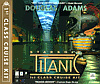 Starship Titanic
Simon & Schuster
1998
Douglas Adams is a god. He has written one of the funniest books of the last 25 years–Hitchhiker’s Guide to the Galaxy–and what is recognized as one of the best text adventure games of all time–Infocom’s Hitchhiker’s Guide to the Galaxy. He should have quit while he was ahead.
The premise–an advanced civilization has built the biggest and most luxurious space craft in the galaxy: the Starship Titanic. As with the original Titanic, nothing can go wrong–until it crashes into your house (can we say ripping off your own material here?). You soon find yourself aboard a interstellar vessel that is run by robots who have lost their minds, and the only way home is to repair the ship. To do so, you’ll have to question the robots, upgrade your class, and unravel the mystery of what caused the accident on the day of the launch.
The game is full of Douglas Adams’ usual dry wit and humor, but the plot never advances beyond its basic shallow premise. Conversations with the robots take place via a text parser (for you newbies, that is when you had to use your keyboard to type a question and the computer gave you a response). This idea must have sounded great in board meetings, a combination of the best of the past with the 3D graphics of the present, but it fails miserably in execution. The graphics, while highly detailed, are staid and unimaginative. The majority of the puzzles have zilch to do with the story, and repetitive transitions scenes are mind-numbing.
If you really want to lead us into the future, then don’t do it by repeating the past. Text parsers had their day in the sun; this is one ship that should have stayed in dry dock.
(By the way, just so you know what a sell-out I am, when I met Douglas Adams at the E3 two years ago, I sheepishly told him how much I loved Starship Titanic.)
 Toonstruck
Virgin Interactive
1996
Toonstruck is the record holder of two dubious honors: quickest game to ever make it to the bargain bin and game residing in same bin for the longest period of time. There seem to be more unsold copies of Toonstruck in the world then there are buried cartridges of Atari’s E.T. If there is a breast game among the turkeys, then Toonstruck is wing and thigh above the rest. A lively combination of live-action video and cartoon animated sequences, Toonstruck starred, to name just a few, Christopher Lloyd (Back to the Future, Taxi), Ben Stein (Win Ben Stein’s Money), Dan Castellaneta (the voice of Homer Simpson) and every adventure gamer’s favorite thespian, Tim Curry.
Toonstruck is a computer descendant of the classic film, Who Framed Roger Rabbit. The protagonist, Drew Blanc (Christopher Lloyd), finds himself sucked into an episode of the cartoon series he despises animating, The Fluffy Fluffy Bun Bun Show. Drew must now save his fictitious land of Cutopia by constructing a Cutifier machine that will reverse the detestable plans of the evil Count Nefarious. Countless wisecracks and tricky puzzles are employed to present a polished and professional product.
The creation of Toonstruck entailed 250 artists who designed 75,000 frames of animation over a two-and-a-half-year period. The reviews were almost universally excellent. The game died on the shelves. Quickly. Like missing sock theories and the age-old question of why we drive on the parkway and park in the driveway; there has never been a reasonable or logical explanation for Toonstruck’s demise. The losses were rumored to be in the millions, and Virgin has never recovered from their foray into the happy-go-lucky universe of Fluffy Fluffy Bun Bun.
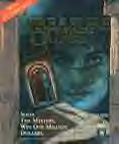 Treasure Quest
Sirius Publishing
1996
What if you gave away a million dollars and nobody came? Even Regis couldn’t help this clunker! Treasure Quest was a multimedia mystery challenge with a million-dollar prize. Problem was, no one could finish the game. The clues were so obscure that it took almost three years for a winner to be announced! By that time, the game was in every Kay Bee Toys bargain bin for $2.99. Not a bad investment to win a million.
Professor Jonathon William Faulkner has died, leaving an inheritance of $1,000,000 to the first student who can solve the mystery he created. You must search every corner of the professor’s rambling 10-room mansion. He has hidden words and phrases in each room that fit together to form a quote. After you have assembled a quote for each room, you’re only one step away from solving the mystery. Then … submit your claim for the million dollar prize. Terry Farrell, star of TV’s Deep Space Nine, is your spiritual guide. She appears in 10 assorted costumes, performing a different mystical role in each room of the professor’s mansion. Ms. Farrell is featured in dozens of Treasure Quest video clips to assist you in your million-dollar quest. Be sure to watch her every move, and listen closely when she speaks because every word and note you hear, and every mental image you experience, may be an important clue.
The bigger challenge was staying awake throughout the course of the game. Since there was only one million-dollar winner, I am assuming that only one person has ever successfully completed Treasure Quest. Now that is someone who is either an adventure gamer to be admired or a glutton for punishment. And that is my final answer.
 Trespasser
Dreamworks
1998
Have you ever had an urge to play an entire game staring at your cleavage? (If you answered yes to this question and are not a woman, then you have other problems we can’t discuss here.) Not only is Trespasser one of the most uninspired games you could ever play, it is also a hog on system requirements and runs slower than a constipated Brachiosaurus. It is a sure sign that your action/adventure game is a failed project when the average puzzle consists of clumsy attempts to stack boxes and the action sequences feature a woman’s lithe arm pointing a revolver at an enormous dinosaur. Dreamworks’ press release proudly trumpeted that you would be able to “battle relentless wildlife with anything you can get your hands on.” Yep, beating off a Tyrannosaurus Rex with a two-by-four makes for scintillating gameplay.
Trespasser’s ludicrous premise is that you are a young woman (voiced by Minnie Driver, Hollywood’s then-flavor of the moment) whose plane has crashed on Jurassic Park’s Site B. You must now roam through eight levels of jungle foliage searching for help. Encountering the occasional scaly beast becomes a dreaded nightmare, as their appearance usually brings the graphics to a screeching halt. A realistic physics-based engine makes every simple task aggravating and tedious. Slogging through barren landscapes hoping for a glimpse of a dinosaur in the distance is hardly anyone’s idea of excitement and makes one wonder what the developers at Dreamworks were doing for the two years it took them to create such a buggy, illogical, and lackluster product. Computer Gaming World gave Trespasser front-page coverage, proclaiming it as a game that would change the industry! Do you get the impression that maybe they had not yet played Trespasser?
 X-Files
Hyperbole Studios
Fox Interactive
1998
Looking for a game that recreates the mystery and suspense of this long-running hit television series? Looking to spend a few nights with Mulder and Scully? Well, look somewhere else–you won’t find any of the above in this seven-CD compilation where the only mystery is why the title characters don’t appear in any interactive scenes until the last act of the gameplay.
Conveniently, both David Duchovny (Mulder) and Gillian Anderson (Scully) are missing (explained in the opening cinematic), and you, Agent Craig Willmore, have been recruited to find their whereabouts–dead or alive. Willmore, of course, stumbles across some shady dealings that soon grow into a government conspiracy and evidence of aliens. Instead of milking this angle for all it’s worth, The X-Files spends an inordinate amount of time building a plot around Willmore’s failed personal life and his limp attempts involving a love interest with a female police detective.
All-original footage shot just for this game guarantees excellent full-motion video and location photography. But an original plot written by series creator Chris Carter falls flat–the live-action sequences are poorly handled and the puzzles are the “ask a hundred questions until you get the right response” variety. Throw in a lot of mouse-clicking and pixel-hunting, and by the time you finally find Mulder and Scully, you’ll be secretly wishing that the mother ship had spirited them away.