Sound Designer/Composer for Uru
Interviews
Interview with Tim Larkin
Sound Designer/Composer for Uru
Hi Mr. Larkin! Thank you for taking the time to talk to me and answering some questions for all our readers at Just Adventure.
Of course, Jennifer! And thank you for taking the time to talk to me. Weve been very excited about Urus coverage on Just Adventure.
 How did you get involved with Uru and CyanWorlds?
I started working with Broderbund [Mysts publisher] and I had heard much about Myst and was very interested in the project. When Riven came out, I lobbied hard to be involved. I ended up developing sound for Riven and through this I developed a good relationship with the Miller brothers. During this time, I also did sound work for the early stages of Uru.
Were you a fan of the games beforehand?
(Laughs) Thats a real good question. I was not a real fan like you; in fact, Im not really a gamer at all. I had no idea what Myst was until I was at Broderbund, in 1994 when Myst became really huge. It interested me so I picked up a copy and played a bit of it. Im ashamed to say I never made it off the island. But I loved the aesthetic of it and I loved the genre. At the time, I was working on kids stuff at Broderbund, but I really wanted to get involved with Riven, which was more of my style. I have to say that Im a huge fan of the style.
There is a room on Aegura (journal room for Teledahn) where I heard some snippets very reminiscent of Riven. Did you draw on the past works of Robyn Miller (Myst, Riven) and Jack Wall (Myst III: Exile) for inspiration?
No, not on Jack Wall. Most of Urus music was written before Exile was released in 2001. Robyn was a big influence on the part that I made a conscious effort not to sound like him. When I began writing for Uru, I used Robyns music as a departure point for what I wanted to write. Uru takes place in a completely different time and place [from the previous games]. The composition you speak of was an early exercise on exploring and getting away from Robyns style, hence the similarities. I played it for Rand [Miller] and he picked up on the fact that it was similar. I really wanted more of my own style in this work.
 These men set a very high standard for the musical quality of all Myst related productions. Did this intimidate you at all?
No it didnt. Again, it was a style I was attracted to. This style of music is very natural to me. Robyn set very good moods, but I wanted to take it somewhere different. I came here as the audio director, and Cyan and I had a very similar aesthetic. There was some talk early on that Robyn still would do the music for Uru, but I had written a piece that I thought would work as well. Rand came into my office one day and asked if I also did musical compositions. After saying yes, Rand asked me to write some pieces and present them to him.
How different was it developing the non-musical soundscape of the game versus the musical? Or were you able to incorporate the two? (i.e. incorporating non musical elements into the musical compositions)
Sometimes theres a fine line, especially in creating an ambience for an area, especially in the abstract. I believe that the ambience for Relto is especially obscure and people on the boards have reacted positively to it, saying its their favorite composition in the game and that they hope it ends up on the CD. Some pieces are very abstract, but are also very musical. The line between ambience and music is very fine and can be crossed a lot.
How different was working on an adventure title such as Uru compared to your past gaming works like Prince of Persia and Lord of the Rings?
Not that much different. Its about creating the sound even though the styles are dramatically different. Prince of Persia was similar to Uru in that it has lots of mechanical elements. Whats different with Uru and what was challenge was the real time, 3D multiplayer element. We had to take into consideration the possibility of 20 different players playing at the same time, from different scopes and view points. Riven was from one point of view, one point of hearing. Everything was fixed, so you knew how the sound would come across to the player.
 Compared to your Oscar winning work on 2002s The ChubbChubbs?
Film is linear, so you have a definite path on where the music is going, a point A to point B. The story is already there that youre underscoring. A game is almost the same, but its not a linear. It takes place over hours or months. So there isnt as much control over transitions or how you would go about having the best sonic experience. You make the best judgments you can, no matter how or where you go through it. Thats why we took the time to understand all perspectives and other players, all the places they can go and what they can interact with. That is the biggest difference. The creation process is similar at the beginning, coming up with the best sounds you possibly can. When its implemented, thats where the differences lie. You have regard limitations with hardware, whereas with film there are no limits.
There is great contrast in the music of Uru, from the almost humorous twangy sounds of the New Mexico desert, to the haunting vocals in the Kadish Gallery. How important to you was it to create a unique, contemporary aural environment while remaining true to the past sounds of the Myst series?
Thats it right there, great contrast in the game. You even put it in your question. You start out as yourself and in our time, in the desert. So it was important to me to set that scene so that you were completely comfortable. Southwest, desert, deserted gas station feel. Kind of like in the movies where someone is driving through the desert for hours and their car runs out of gas. Later, you get a hint of something completely different when you enter the tree. The music continues to evolve as you go from Age to Age. The palette is little more abstract and obscure other places you go.
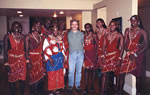 I was recently listening to the African Montage that you have hosted on your website timlarkin.net. It struck me that atmosphere is so incredibly important to you and throughout the sample, I felt myself being lead through all sorts of places. What do you draw on as inspiration for the stories that you tell in your compositions?
It varies from every piece I write. I draw on visuals for the most part. For instance, I would wander through the vault in Kadish and then get a concept for what would sound good there. The African thing was different. About a year ago, a tribe of Massai came to Spokane. I recorded them at Cyan and wanted to weave those things into the music of Uru. I like to do things that are really different. I want to do things that havent been done before.
Part of your background is in jazz, specifically the trumpet. How do you feel this has helped you throughout your career and in your current position as Audio Director for CyanWorlds?
It gives me a little bit of a different perspective on things. A lot of people just start in games and thats all they know. Its all about the experience you can draw upon. There are a couple places in Uru where Im almost embarrassed that might sound like a bee-bop line.
Being a musician myself, I still cant get over hearing my work on recordings. How does it make you feel knowing that your compositions will be heard by thousands (hopefully millions) of gamers worldwide?
I had an album come out about ten years ago and I would hear it on the radio, so that was really neat. When youre playing in concerts, you can see the reactions as they are happening, instant feedback. With a game, its a one on one, personal experience and you dont get that instant feedback. So I dont know how people react to the first time they enter the Vault or the Gallery. However, I can get feedback via the forums and my co-workers at CyanWorlds.
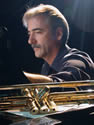 I see that you are currently involved in developing the sound design for the online graphic novel Robota: Reign of the Machines and Down in Front an animated film by former Cyan staffer Steve Ogden. Along with these projects, will you continue to design the sound and create new musical compositions for the ever-growing UruLive?
Yes, definitely. I like to branch out. It gives you fresh perspective, so when you come back to your day to day job, you have new influences to draw upon. Youre anxious to work on that project again. I love doing the extra projects. They become supplemental creative outlets.
What advice can you give to a young composer who wants to break into the world of scoring computer/video games?
There are a lot of musicians trying to do that right now and there are a lot of opportunities. If you want to be ready to break in, be ready. There are a lot of video game composers out there that are good, some that are marginal, and some that are not so good. The not so good ones will score a few, then go away, and then try to get in again with little success. The good ones will stay around forever. Just be ready to walk through that door when it opens to you so you can do the best you can. I think its that way also with any other job like being a stock broker or writer; you have to be ready when your time comes.
For more information on Tim Larkin, his music, and other projects, please visit www.timlarkin.net or http://www.cyan.com/urumusic/default.htm.