Review: Zero Critical — Part 2
|
Zero Critical Developed by: Istvan Pely By Ray Ivey  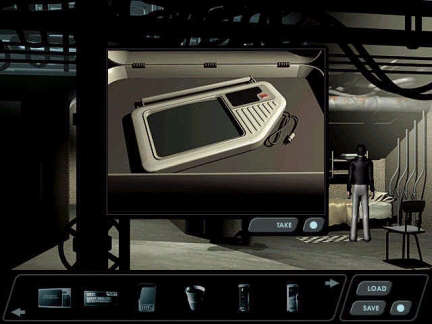 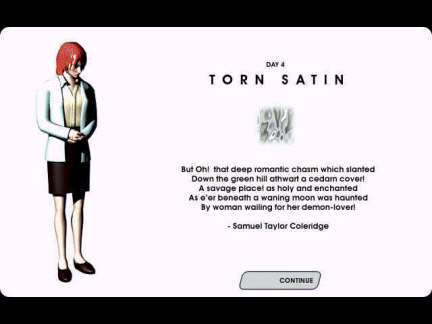 |
Bethesda Softworks has rereleased this Istvan Pely title, which was previously known as Satin Rift. I can’t presume to know their motivations for doing this. Perhaps they’re angry with us.
What did I do to deserve this? I also don’t know if changes, minor or substantial, were made to the original game for this release, not having ever played Satin Rift.
I’m feeling a bit conflicted here, because I like to encourage all games in our beleaguered adventure genre, particularly those that come from independent developers, writers, and designers like Mr. Pely.
But I also have an obligation to you, dear reader, and I’ve got to tell you this game doesn’t have much to recommend it.
The setup of this third-person point and click adventure, admittedly, sounds quite promising. Here it is: You play an interstellar investigator who’s sent to a distant planet outpost to get to the bottom of a killing that occurred in a mysterious experimental station. So far, so good. Does the game live up to this terrific setup? Well, I wish the news was good, but …
Grayscale
First, the design. The graphics are okay, I guess. They’re simple and elegant. But until the very end of the game, there is only one color in the game’s palette: steel gray. Lots and lots of shades of steel gray. Dark steel gray. Pale steel gray. Mottled steel gray. After a while, I felt I was going snowblind. Plus, the game takes place in a very small area, so you’re looking at the same few gray surfaces over and over.
Next, the characters. They have a sort of a cool, 3D computer-animated look, but they are wooden in the extreme. Character movement is awkward and unrealistic. Plus there are very, very few of them.
Next, conversation. This is the first Windows-format game I’ve ever played in which the characters don’t talk! Well, that’s not true exactly. They talk in subtitles. Only. I guess Bethesda just wouldn’t give Istvan a budget for voice actors. This omission added the game’s amateurish, unfinished feel. Hey, maybe I should count my blessings. We so often carp about terrible voice acting in our games. I can say definitely that Zero Critical does not have a problem with bad voice acting! Perhaps Istvan is onto something after all …
Could You Repeat That? I Just Fell Asleep
On to the conversation trees themselves. They’re just not good. No, they’re horrible. Flat, repetitive, and downright nonsensical at points. Characters will repeat entire conversations they’ve had with you, even when they no longer make sense with the plot.
It’s Point-and-Click Challenged
Whatever the game engine Bethesda is using, it’s not a very intelligent one. The gameplay suffers as well, as the mouse control is extremely temperamental, which leads to stupefying misunderstandings when playing the game. In other words, thee were several times when I needed to use an inventory object to accomplish a certain task. I would attempt the task over and over with no result. Then I’d try something arbitrary like leaving the room and reentering, and voila! The inventory object would work! This is a real problem when the action you are trying to accomplish is vital in order to get the game to move forward. This clumsy “point and click” problem literally brings the player to a dead end several times in this tedious game.
I Hate to Be the Bearer of Bad Tidings
What’s sadly ironic about Zero Critical is that it is so strong in an area in which so many games fail: story. The story in this game is intriguing, mysterious, violent, and at moments, even visionary and romantic. What more could you ask from a game? Unfortunately, in these sophisticated days, we generally ask for much more, and Zero Critical simply can’t deliver.
I know, I know, we complain about weak stories in games all the time. I should be thrilled that Zero Critical has a good story. And I am glad, and I would be interested in what future stories Istvan Pely comes up with. I think any big game shop would be lucky to get him as a story developer.
Unfortunately, a good story is simply not enough anymore. This game lacks in graphics, dialog, game engine, and game play.
While playing this game, I felt I had stumbled into amateur hour.
Final Grade: F
System Requirements:
IBM and 100% Compatibles:
Windows 95
Pentium 75 MHz
16 MB RAM
SVGA display (256 color)
4X CD-ROM drive
50 MB of free hard drive space
16-Bit sound cardMacintosh:
68040/Power PC
System 7 or later
16 MB RAM
4X CD-ROM drive
50 MB of free hard drive space