Review: Wild Wild West: The Steel Assassin
|
Wild Wild West: The Steel Assassin Developer/Publisher: SouthPeak Interactive  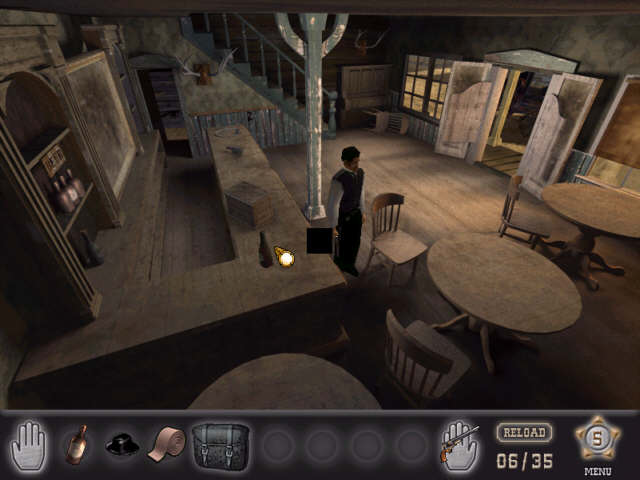 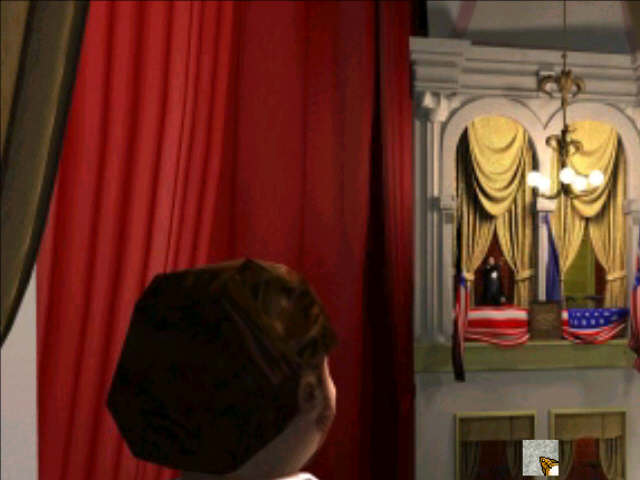 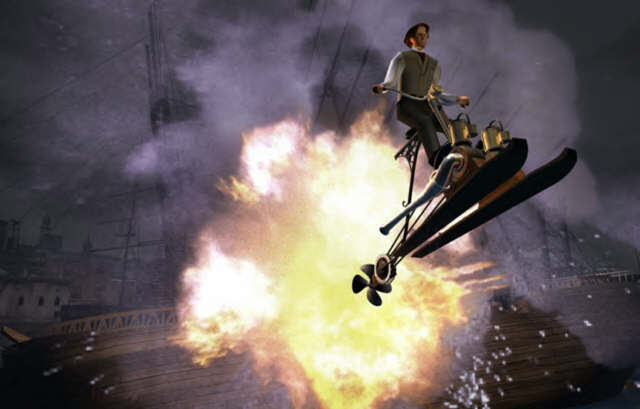 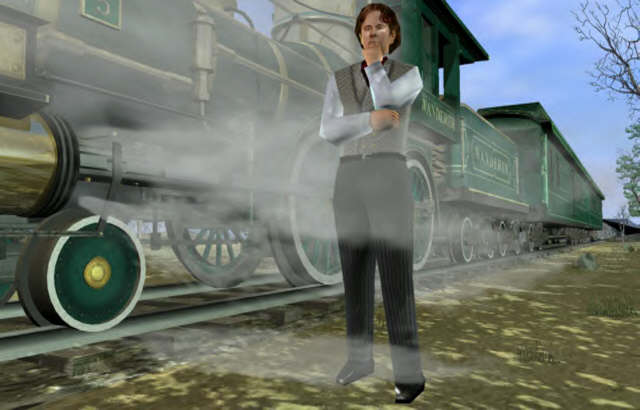 |
How refreshing to play an adventure game that does not take place in outer space or some other make-believe world, does not contain any horror or fantasy elements, and is actually rooted in reality. Not that we do not appreciate all types of adventure settings, but it seems that very few are situated in a real-life atmosphere. Wild Wild West: The Steel Assassin, if you have not already guessed, is based on the 1999 Warner Brothers movie starring Will Smith and Kevin Kline. The movie was in turn a spin-off from the irreverent television series that aired from 1965 to 1970. Now, before you get your dingleberries in an uproar and begin to bellow, “But the movie was a flop!” rest assured that even though the James West and Artemus Gordon characters have been recreated from their movie counterparts, the game is closer in spirit to the original television series. Yet, as dismal sales records have proven, basing a game on any filmed medium is a risky proposition at best (i.e., Men in Black, Congo), and more often than not the game is scorned by the buying public. Can WWW break this trend and score a bull’s-eye, or is it another crossover title shooting blanks?
(A Just Adventure factoid: As everyone knows, before Nintendo became known for Mario and Zelda, it was Japan’s leading manufacturer of playing cards. It seems SouthPeak also has similar roots. Before it became a leading producer of games like Dark Side of the Moon and Temujin, SouthPeak manufactured cork bottle openers in the mid 1800s, but the machines were so convoluted to use and were often missing so many parts that the company soon went bankrupt, only to reemerge a century later as SouthPeak Interactive. For further confirmation, see the front desk in the Surratt House scene.)
The Steel Assassin takes place a few months after the events of the movie. You must take on the role of either James T. West (Will Smith) or Artemus Gordon (Kevin Kline). President Grant has asked for your assistance from an assassination conspiracy set to be staged at the infamous Ford’s Theater–five years to the day from Abraham Lincoln’s murder. The game is broken into 10 segments–four each that can only be played as West or Gordon, and a finale and epilogue in which both characters finally team up. West follows the five-year-old trail of John Wilkes Booth, President Lincoln’s assassin, as he suspects that Booth had a partner (Oliver Stone writing for SouthPeak!), and Gordon slinks about the Baltimore wharf and Ford’s Theater as he searches for clues that will link a suspicious murder to the threat on President Grant’s life. The rousing finale reunites the two Secret Service men in a race against time. SouthPeak’s writers (and designers) have done an excellent job of bringing the 1870s to life and are to be commended for their accurate portrayal of that era. This faithful recreation allowed us to immerse ourselves fully into the game. But the story left me wanting more–there were never any startling revelations or plot twists; it felt like an episode of the television show minus the commercial breaks. Play a chapter as West with a concluding shoot-out, play a chapter as Gordon with a life-threatening puzzle. Some subplots indigenous to the social issues of that period or more than just a reference to the graft and corruption that was rampant in Grant’s term would have been welcome. What story we do have is fine, but seems to be more aperitif than entree. Grade for plot: C+.
WWW is billed as an action/adventure game, but is more of an old-school, point-and-click adventure game than any product currently on the market. Artemus Gordon is the brains of the duo. Die-hard adventure gamers will have a field day as Artemus dons disguises, deciphers messages, and investigates clues. The gameplay is very similar to such classics as Sherlock Holmes & The Rose Tattoo. Conversations with other characters provide hints, and relevant information is automatically recorded in your notebook. The amount of leads provided is dependent upon the game’s difficulty level. In what may be a first, SouthPeak has allowed the gamer the option of changing the difficulty level on the fly. If you are stuck on a particularly hard puzzle or gun battle, you may customize the game to your preference for just one scene or the entire episode. Did I say gun battle? Well, this is, after all, a western, and James West is the quick-on-the-trigger-finger member of the duo. There will be times when gunplay is necessary, but there are also numerous occasions (and SouthPeak is to be congratulated for this) when a shoot-out can be avoided if you are alert and study the surrounding area. Sandbags and oil slicks, if used correctly, can be just as deadly as a bullet. The majority of the puzzles do involve items that are indigenous to the period–cannonballs, spittoons, etc. They are, for the most part, fair in their conception, but there is a chessboard puzzle that should have been left on the cutting board. The action sequences, especially the shoot-outs, are enjoyable, but as is often the case when a game attempts to be everything for everyone, there are two sequences–a water chase and a sword duel–that feel stilted and unwelcome. Overall, highly recommended for puzzle lovers–grade B+.
The graphics for WWW are 3D models against 2D backgrounds rendered in a process SouthPeak calls SoftImage. The result is crisp and often stunning images. This is one of the few games where the animation for the gameplay itself is superior to the cutscenes. The cutscenes are occasionally blocky, especially after playing Outcast and Nocturne, and the lack of lip-synching is frustrating–even more so if you turn on the closed captioning, for then the captions on the screen are always at least three sentences ahead of the actual conversation. The entire game is conveniently mouse-driven, and the characters are very responsive and detailed. Some of the outdoor locations are stunning. The Wanderer, the train that serves as a meeting place between missions for the agents, is extremely detailed. Besides housing weapons and gadgets, Gordon’s disguises and laboratory are on board, and everything is at your disposal. Immersive graphics are always a huge plus: B.
WWW wisely uses the movie’s Elmer Bernstein score in the game. Bernstein is an Oscar winner, and his music is universally acclaimed. It is catchy and toe-tapping to say the least (and, no, before you ask, Will Smith’s rap version of the theme song is not in the game). SouthPeak has implemented DirectMusic technology into the game, whereby the music will change mood, tempo, etc., depending on what’s happening in the game. Movie westerns such as The Good, the Bad and the Ugly have employed this to their advantage, and it is encouraging to see game developers applying these multimedia tactics. Though the main characters strongly resemble their movie counterparts, their voices are done by Andre Ware (West) and Jim Ward (Gordon). Ward has the stronger lines and even had me laughing a few times (as did a memorable tribute to Return to Zork). Sound effects are passable; occasional explosions and gunfights are just not as noisy as they should be. Two sounds in particular are memorable: the jingling of West’s spurs (though this sound should have been toned down when West was in sneak mode) and the leather pouch that West uses to store his supplies. Grade for music and sound effects: B.
In the final analysis, Wild Wild West: The Steel Assassin is fun. It was fun riding a horse, it was fun participating in an Old West shoot-out, and it was fun playing a game that has some historical basis. It ships on two CDs, one for install and one for gameplay, and it also contains a great preview of 20,000 Leagues. Sequels would be welcome but are probably a moot point unless the game is an unqualified success on its own accord. SouthPeak has taken a novel approach to marketing by including a trailer of the game and a rebate coupon with the Wild Wild West video release. Let’s hope this approach succeeds and convinces other companies to utilize unorthodox methods to market their adventure products. Until next time, keep your six-shooter dry, watch out for that tumbleweed, and happy trails.
Final grade: B.
System Requirements: 266 MHz Pentium-class CPU
3D hardware accelerator with 8 MB RAM
Windows 95/98 or Windows NT
DirectX 6.1 (included)
64 MB or more of RAM
200 MB free hard disk space
8x or better CD-ROM drive
DirectX-compatible video card with 4 MB VRAM