Review: Opsys
|
Developer/Publisher: [hyper] media By Ray Ivey 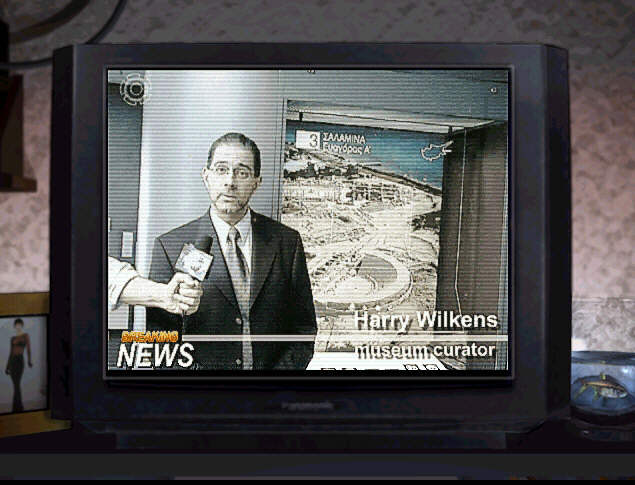 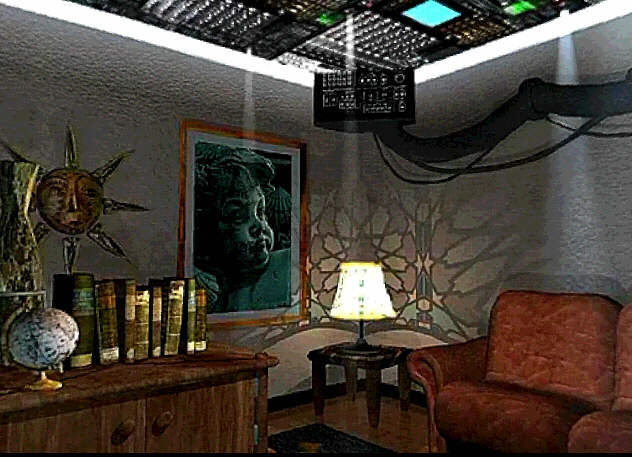 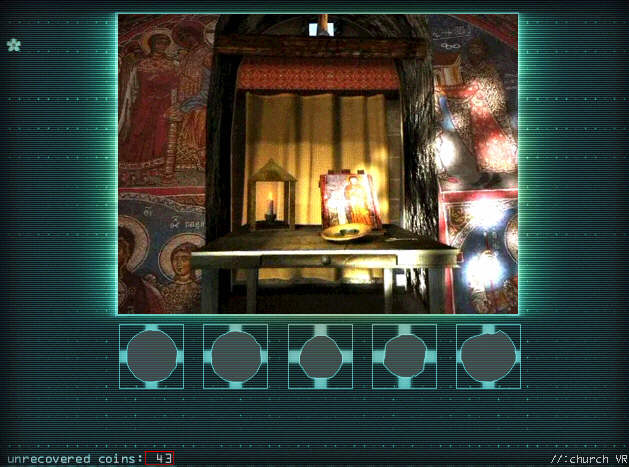 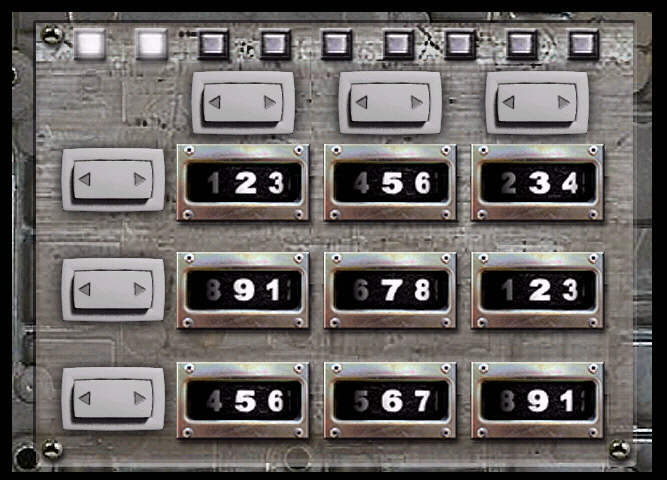 |
In 1983, Bill Adler and Thomas Chastain published the mystery novel Who Killed the Robins Family? It became an instant bestseller and made the authors lots of money. Its success was not, however, due to any literary quality the book had. The reason for all the yummy sales figures was simple: readers were offered a large cash prize for providing the best solution to the mystery.
I read the book out of curiosity, and it was a big mess. Why? In a good mystery novel, the entire plot–even the red herrings–needs to make sense by the end of the story. But in the case of Who Killed the Robins Family? the fact the authors had to thwart hordes of logical mystery solvers reaching for a solution made it necessary for them to do everything possible to obfuscate the truth of the story, making the book convoluted and preposterous. In the end, it was simply a gimmick, not a real mystery novel.
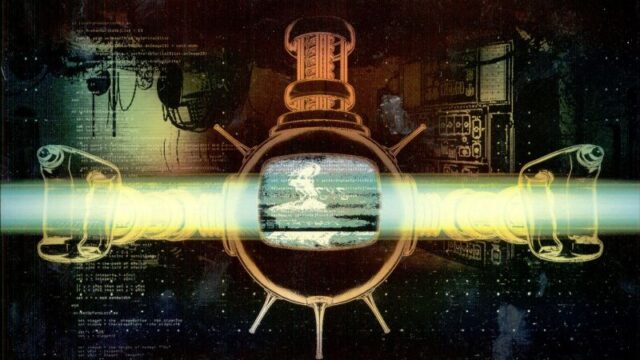
Alas, such is the case with the interesting Greek game Opsys. It’s got a terrific adventure game premise: there’s been a break-in at the Museum of the History of Cypriot Coinage, and it’s up to you, intrepid adventure gamer, to recover them.
Such a set-up could have led to a lively Safecracker-type romp through a pile of puzzles, or even a historical learnfest a là Connections or Crusader.
The problem is this: The cash reward ruins the game. Why? Because instead of focusing on creating interesting and challenging puzzles that were informative and entertaining, the game designers had to focus on designing puzzles that were so obtuse that no one could easily claim the $10,000 prize.
This is a real shame, because the game has some true historical interest. Cyprus is a medium-sized island in the eastern Mediterranean, and it has a long and fascinating history. Through the handy adventure game device of a time machine, you get to visit many different periods of this history, from the city-kingdoms of the Fifth and Sixth Centuries BC to the Helenistic Period, following Alexander the Great to the Byzantine Period, the Ottoman Period, and even the British Period.
At your disposal is a map of the Museum of the History of Cypriot Coinage, and it serves as a sort of encyclopedia of Cypriot history, as well as providing many clues to the difficult puzzles. The history is interesting in and of itself, but you’re going to be straining your brain a bit to find the nuggets of information that will help you on your quest.
The very first puzzle, a sort of cryptogram, is a good example of the problem with the game’s puzzles. I pretty quickly figured out the thrust and goal of the puzzle, which involved translating a name into ancient Cyprosyllabic script (say that five times quickly). The problem was in the execution of the puzzle’s answer, which crossed that fateful line between “fun” and “frustration.”
This is a pity, because the game has an admirable variety of puzzles. There’s a siege schematic worthy of (the infinitely superior) Crusader, a find-the-combination puzzle that might have been at home in Safecracker, and even that rarest of puzzles, an interesting maze! Unfortunately, most of the puzzles in the game are fatally undone by the fact that they are designed to be obtuse. One of the worst, a particularly annoying little chestnut that requires you to tinker with your computer’s clock, actually made me angry.
One of the ways the designers obscure the logic of the puzzles is by employing one of my biggest adventure game pet peeves, the dreaded Hidden Hotspot. I think all hotspots in a game should have some logical reason for being there–a tile that’s a different color, a missing eye in a sculpture, something. But Opsys is full of screens that contain hotspots that exist only to be difficult to find. Meaning you have to “paint the screen” with your cursor or you’ll miss them. This isn’t fun, it’s a chore. And far too many of the game’s puzzles are hiding behind such irritating blinds.
The final puzzle is one of those multiple disk rotator puzzles that is so brutal that you just throw your hands up and sigh and think, “Gee, even I don’t want $10,000 that bad.” I mean, it makes the notorious final puzzle in Reah seem like a cakewalk by comparison. My hat is off to the poor schmuck who solves it, but I’d have to ask him or her, wouldn’t you have easily earned $10,000 at your job in the time you spent on this monstrous puzzle?
The musical score in the game runs the gamut from being a little too “Rivenesque” (in the apartment) to being just plain irritating (especially in the bombed out library). The graphics are mediocre at best. The interface is annoyingly sticky and unreliable. Meaning you have to click madly, hoping that one of your clicks will actually do the action you’re attempting. This was a particular problem at the beginning of the game as I was attempting to get the time machine operational.
Undone by its commercial premise, Opsys isn’t really a game. It’s just a contest.
Final Grade: D
If you liked Opsys:
Watch: Othello (there are several versions, but Orson Welles actually filmed his version on Cyprus)
Read: Gospel by Wilton Barnhardt
Play: Crusader or Safecracker
System Requirements:
Mac:
Power PC or compatible
200 MHz or faster
Mac OS 8.0 or higher
32 MB available RAM
24X CD-ROM or faster
640×480 display, thousands of colors
QuickTime 4.0 (included)PC:
300 MHz Pentium II
Windows 95 or 98
32 MB available RAM
24X CD-ROM or faster
640×480 display, high color (16-bit)
Sound card
QuickTime 4.0 (included)