Review: Myst (Hall of Fame Entry #1)
|
Myst Publisher: Cyan 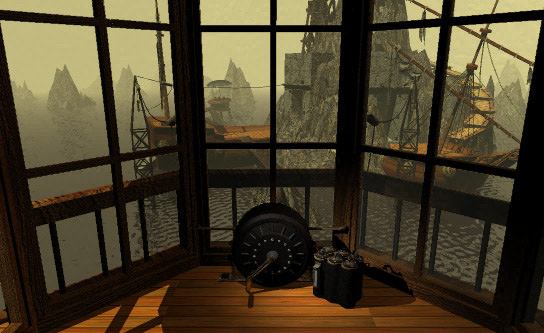 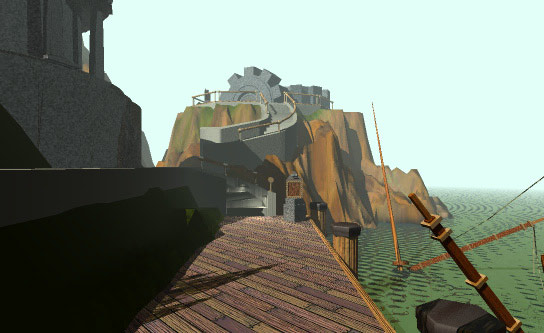 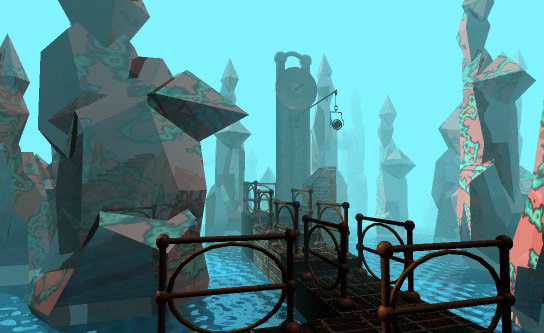 |
Yes, Myst.
Is there any computer gamer in the world who has not seen the cover of this box? Is there any computer gamer in the world who has not loaded Myst onto his or her hard drive at least once? Not only is Myst the best-selling adventure game of all time, but it has also been accused of the rebirth of or, according to who you talk to, the demise of the adventure genre. The term “Myst clone” has become a part of computer jargon on the same order as all copiers being called Xerox and all video games Nintendo by the general public. Whether you love Myst or hate it, one cannot deny the long-lasting impact it has had on the industry.
The Miller brothers, Robyn and Rand, in creating Myst, are responsible for the greatest metaphysical experiment thus far in gaming history. Myst has neither instructions nor rules. There are no other living beings to interact with. There is no reloading of a game due to your character’s death, no dialogue to provide verbal clues, though there are some interesting “living” books. You must explore the environment and the architecture of its unique and varied times and worlds. It is the ultimate immersive experience. It is an adventure without inventory, a nonlinear travelogue full of conundrums that are a visual treat for the eyes but yet will also insist that you use your ears to locate clues to puzzle solutions.
What exactly is the appeal of Myst? Countless articles have been written and web sites created in admiration for this game. I have seen women in their sixties and teenage boys purchasing Myst at local computer chain stores. Cottage industries have sprung up, and then gone bankrupt, attempting to reproduce the appeal of Myst. Yet it seems almost as many people have a negative opinion of Myst and its influence on the adventure genre. Very few understand the meaning behind it and even fewer play it to completion. So what is the secret? No one is sure, but any gamer that generates such interesting and varied discussion among gamers and nongamers alike can’t be all bad.