Review: Juggernaut
|
Juggernaut Developer/Publisher: Jaleco 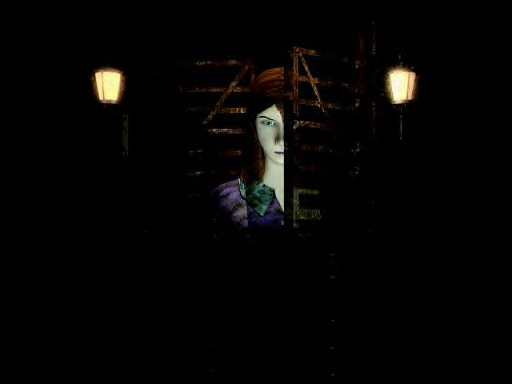     |
Every book, every song, every game needs a hook to succeed. A hook is a catchy phrase or refrain or title that will stick in the consumer’s subconscious. Video games have become quite adept at utilizing one- or two-word phrases to describe not only their newest releases but entire franchises. The flashy, high-speed vortex of video games is constructed around hooks. If I say Sonic, you think hedgehog. If I say Crash, you think Bandicoot. You try it. Think of a popular game and I’ll finish the title. Kong. See, it works–you were thinking Donkey. Now let’s try Juggernaut … hmm. Juggernaut–I think of something immense and unstoppable. Juggernaut–a villain from the X-Men comics. Well, neither is correct, as Jaleco has instead taken the cerebral route. Their definition of Juggernaut is, “A destructive, overpowering Force. (Also, Jaganath–an idol of Krishna, at Puri in Orissa, India, annually drawn on an enormous cart under whose wheels devotees are said to have thrown themselves to be crushed to attain enlightenment. In Hindu it means Lord of the World.)” Not that I dispute this description. In fact, I looked it up in my Funk & Wagnall. While I appreciate their attempt to stimulate my intellect, in today’s fast-paced marketplace, intelligence is the kiss of death.
Juggernaut is a three-CD point-and-click adventure game for the Sony Playstation. I don’t think I have ever before wished for an adventure game to be shorter, but Juggernaut would have benefitted from some tighter editing. The plot is intriguing and unconventional: after viewing a splendid introductory cinematic that evokes memories of The Exorcist, you are entrusted to save your possessed girlfriend’s soul. To do so, you must enter her spiritual being and confront and defeat the evil spirit that has taken up residence. Needless to say, an enormous suspension of disbelief must now occur, as the majority of the game will transpire inside the mansion that encompasses the compartments of your girlfriend’s soul. This is an interesting concept that would seem to appeal more to the average computer adventure gamer than the younger Playstation owner. But as we are about to discover, a nontraditional plot does not necessarily warrant a departure from traditional gameplay, and this is where Juggernaut begins to dismantle. Still the plot is original and deserves its grade of A.
If Juggernaut had been more surrealistic, more dependent on nonconformity, then it may have had a chance. It is an interesting idea that is not fully fleshed out. Our journey into the soul begins on an island. Movement is restricted until we discover a painting that, when placed on the appropriate easel, allows access to the areas represented on the canvas. This and the procedure we must then follow to enter the soul’s “mansion”–we must shed our physical form and cross the threshold spiritually–have a nice otherworldly feel to them. Once inside the mansion though, a great idea is beaten to death. As you are in spirit form, you can only travel through the mansion by passing through keyholes. To facilitate the physical act of opening doors or collecting inventory, switching stations have been placed throughout the mansion. These switching stations house either an adult or child body, or shell, that you must occupy in order to complete certain puzzles. Only certain body types can enter certain areas of the mansion. Doing this switch three or four times would have been sufficient, but overkill registers at about the twentieth switch because every time you make the body switch, you have to return to the nearest switching station. This quickly fosters a tedium that is difficult to overcome for the remainder of the game. Once the first CD is completed and you begin to enter the other Microcosms, the game and the puzzles begin to resemble every other adventure game you have ever played. While the new areas of exploration are interesting–the Forest of Vengeance, Illusion Island–I often wondered what these had to do with someone’s soul. It seems like a struggle to eradicate past sins or a confrontation with people or situations from your past would be more conducive to the overall theme. Not to mention that the game could have then veered away from the traditional point-and-click-at-everything-on-the-screen scenario it soon settles into. The puzzles become a mundane affair often solved by backtracking or by chance. Puzzles grade: C-.
The prerendered graphics are grainy with muted color that seems to have been washed of its vibrancy. The first third of the game, spent wandering the mansion halls, is an endless progression of flowered wallpaper that has that sickly yellowish color found in a smoker’s house. The cut-scenes and full-motion video sequences are passable, but nothing exceptional. The majority of the conversations are related through text, though there are some exceptions, and the sound effects and soundtrack are meager, almost miserly in their limited appearances. It does make you question why this game comprises three full CDs. Graphics, sound effects, and music all get a grade of D.
It is a shame that such an interesting premise soon disintegrates into a case of “been there, done that.” With a little more effort, Juggernaut could have been a game that caused some waves with its original premise; instead it decided to settle for the mundane. I will be interested in seeing what the team that created Juggernaut comes up with next, for their potential seems to be lying dormant waiting to be exploited.
Juggernaut final grade: C-.