Review: Isabelle
|
Isabelle Developer: Le Poisson Volant 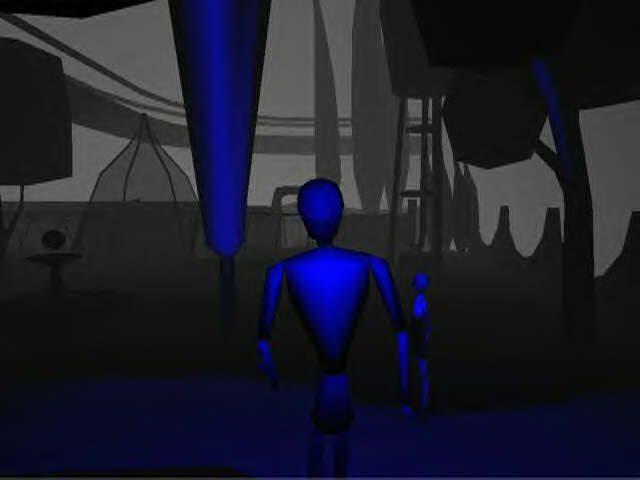 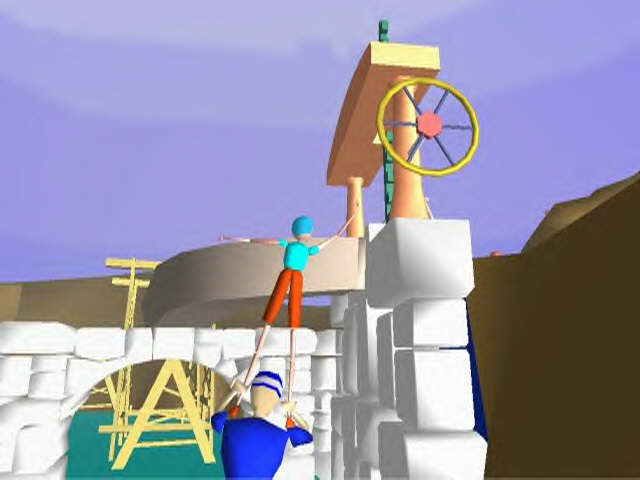 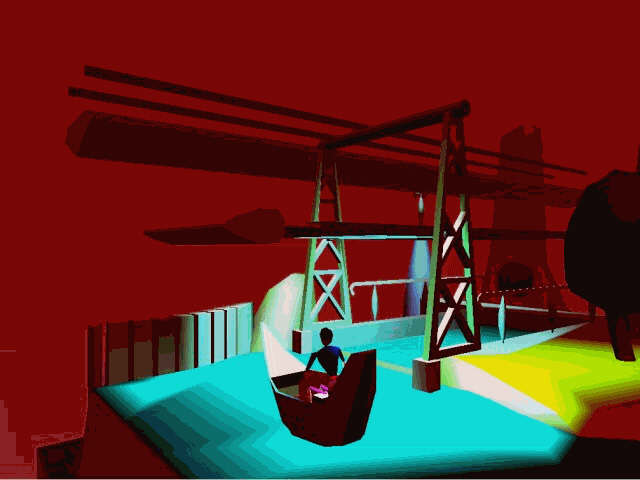 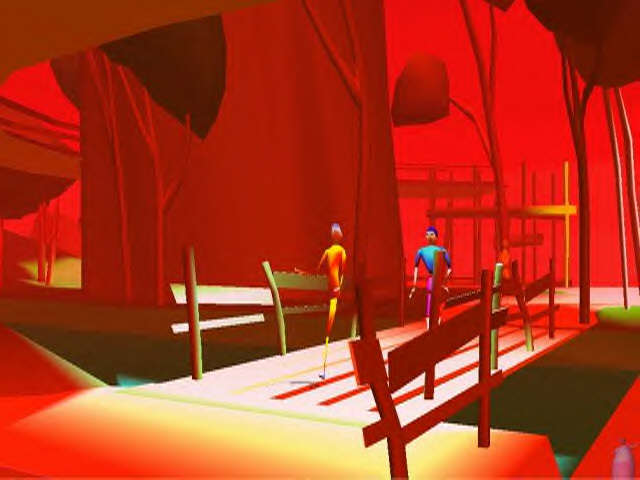 |
The city I am from, Pittsburgh, has the oldest average population of any city in the United States. It is a city where change comes slowly, if ever. The local newspapers look on video and computer games as a passing fad, a tool of the devil, and attempts to convince them that their readers would like weekly game reviews have, until recently, been met with indifference. It is a city where the smokestacks of the steel mills exist only in memory, but the blue collar mindset of the people who shaped the city still flourishes. Games and change are frivolous playthings not to be tolerated. Provincialism is our common bond.
Pittsburgh is also home to the Andy Warhol Museum. Warhol, like many famous people from Pittsburgh, did not achieve international celebrity status until he relocated from an oppressive atmosphere that stifles individualism. He is universally considered to have been an artistic genius whose dynamic vision influenced not only his contemporaries, but to this day still shapes contemporary art and popular culture. While he was living, Pittsburgh wanted nothing to do with this wild-haired oddball whom they did not understand. After his death, we embraced him as a native son; eager to show the world that we always knew he was special, but it would have been in poor taste to say so while he was alive. Local newscasters and reporters love to intone a litany of famous people who are originally from Pittsburgh. The operative word is always “from,” as success is only obtained outside of this restrictive sphere. Those of us who stay here often, unknowingly, find our assessments shackled by a restricted mode of thinking that has been formulated through a daily osmosis with the city’s character.
As I attempted to play Isabelle the first time, I felt like the city of Pittsburgh–stiff and rigid in my beliefs of what constituted an adventure game (similar to some of the smaller, close-minded adventure sites that trumpet their shortsightedness by announcing that they will not recognize a game as adventure unless it is point-and-click). Isabelle was my Andy Warhol–different and odd, it breaks every rule of adventure gaming. How dare they differ from the norm! How dare they experiment! The end result was frustration–until I opened my mind and decided to play the game on its own terms. The experience was akin to my first thoughts upon playing Little Big Adventure or Ecstatica when they were initially released and relatively unknown. Not sure if I liked it, not sure what I was doing, but I grudgingly admitted that maybe it was time to embrace Isabelle before the adventure genre withers and atrophies from banality.
Isabelle was created in France; though the version I have is mostly in English (more on that “mostly” later). While the story centers around the plot, it is more concerned with an Orwellian theme of government control and the ramifications your individual actions may have on others. The entire narrative is a series of flashbacks, a fact that is not immediately obvious. Voice-overs by George, Isabelle’s fiancee, and Isabelle herself serve as commentary upon your actions in the game. Thus, you will often find yourself performing an action on the screen, only to hear a verbal exchange between George and Isabelle discussing the consequences your action had or could have had on the story’s outcome. The plot seems to be more of a fable, presented as reality, meant to push the boundaries of adventure gaming through esoteric visuals and a plot driven by themes and not puzzles.
The plot of Isabelle is only a framework to trumpet such common themes as trust and hope. It is an attempt to show that the sightless often see clearer than the sighted. More–our villain for this tale–has, with the heavy-handed help of his flunkies, taken over the village of Crison. The main commerce of Crison centers on a rock mine at the top of a mountain. Paul protects the village from dangerous rockslides from the mine, but he ends up in the hospital after being attacked by More and his acolytes. George, the hero of our tale, has been blinded in attempting to fight off Paul’s attackers. Only Paul and George know who attacked them, but Paul is now near death and George is blind. The villagers are not aware of More’s dreams of domination and occupation, so when George begins to rant against their benevolent leader, he is castigated by friends and family. He knows he is the village’s only hope, but how? In his sleep, George dreams of the village and upon waking realizes that his actions in the dream world have had an effect on the real world. Using his little brother Raymond as his eyes, George must now travel between both worlds to restore peace to the village of Crison.
You can switch between Raymond and George, as suits the circumstances, simply by pressing your inventory key. There are situations where Raymond will confront an obstacle that will, due to his size and age, deter him, but to George the same obstacle is insignificant. It is here that the game shines, for George is bandaged and blind, and part of the challenge is in guiding him and using his perspective to alter Raymond’s reality. George will walk slowly, hands outstretched, just as a newly blind person would, and he will also trip and fall over unseen obstacles. His world is dim and shadowy, and though switching to an over-the-shoulder camera view is helpful, it is not until we leave the real world and enter George’s dream world that George is able to physically and visually be effective. Your action button allows whatever character you are controlling to hide, jump, sing, row a boat, or whatever action is appropriate at the time. The keyboard can be configured to your liking, but I much preferred using my gamepad as I often felt that the keyboard restricted my movements. Even with the gamepad, there where times when I did not feel in control. Some of this is caused by the herky-jerky motions of the characters. Other scenes, such as a river ride towards the end of the game, just seem to be poorly constructed as you are led to a predetermined destination regardless of the buttons you press.
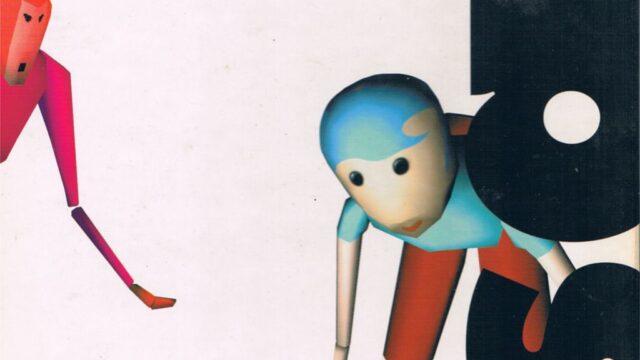
Isabelle’s bizarre surreal graphics are sure to drive many away, but they are also what eventually engage you in the story. They are minimalist with a modicum of detail. Colorful and bright, triangles upon squares, vivid images distorted by blindness. They are similar to a Picasso painting that upon first glance seems disorganized, but upon further study you find that what seemed abstract is actually structured and detailed. At times grotesque, at times disorienting, they have been constructed by someone with an eye for art. Most interesting to me was the loping gait of the acolytes. It bothered me for days until I remembered the evil goonies from the Max Fleischer Popeye cartoons of the late 1930s and their relentless long-strided marches back and forth from the mines. The voice-overs of George and Isabelle can best be described as flawed in delivery and execution. Some of this may be attributable to the translation from French to English. While the entire game is in English, there are wonderful moments when another character will be speaking a language you have never before heard. I soon realized that they were speaking gibberish and were conveying their emotions through their body language and gesticulations. This was a nice touch that added to the surreal atmosphere of the game. What might bother some American players is the violence that is directed towards young Raymond; he is often slapped to the ground by the acolytes. George is beaten by a policeman and thrown in prison. While it is not violence on the order of a Doom or a Quake, it still seemed unsettling in such an otherwise docile atmosphere.
Is Isabelle the perfect game? Far from it, but it is different and worth trying. It is at times frustrating. Playing it requires an open mind. It is one of the few games I have ever played that left me with an overall impression instead of a remembrance of this or that scene. It is not for everyone’s taste. It is for the adventurous, not the traditionalist.
My final grade for Isabelle? There is none. Part of me screams “give it an A because it is different,” and another part screams “give it an F because it is different.” Instead, I will let you make the choice yourself. Let us know what you think.
You may order Isabelle online from the Belisa website.
System Requirements: Pentium 166 or compatible system
32 MB RAM
25 MB free disk space
DirectX compatible sound board
DirectX compatible 3D graphic board
4x CD-ROM drive
DirectX 7
Windows 95 or 98