Review: Faust
|
Faust Developer: Arxel Tribe By Tom Houston 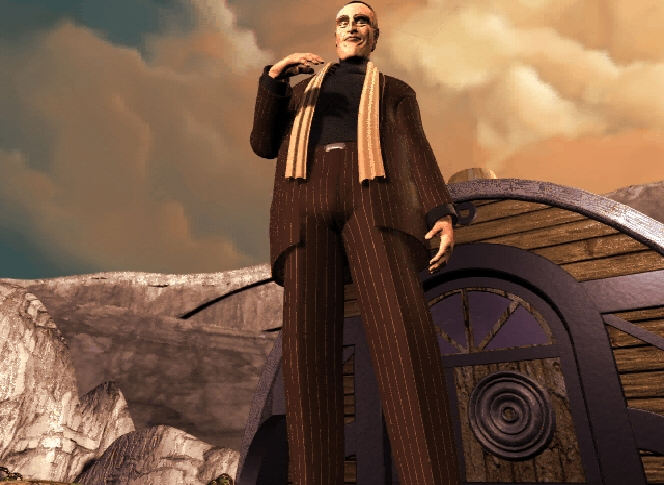 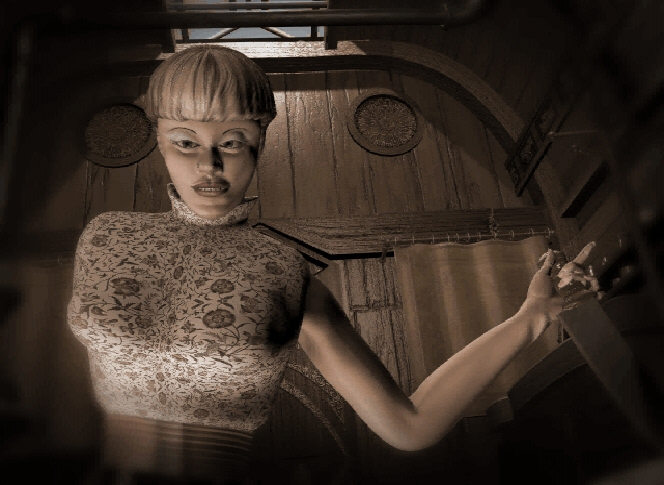 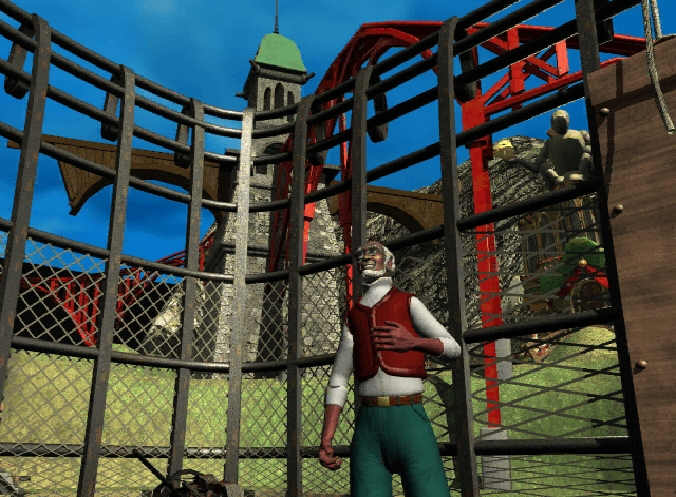 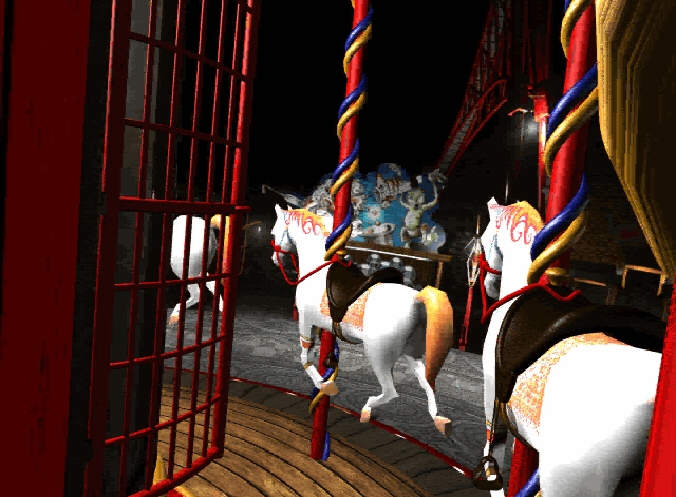 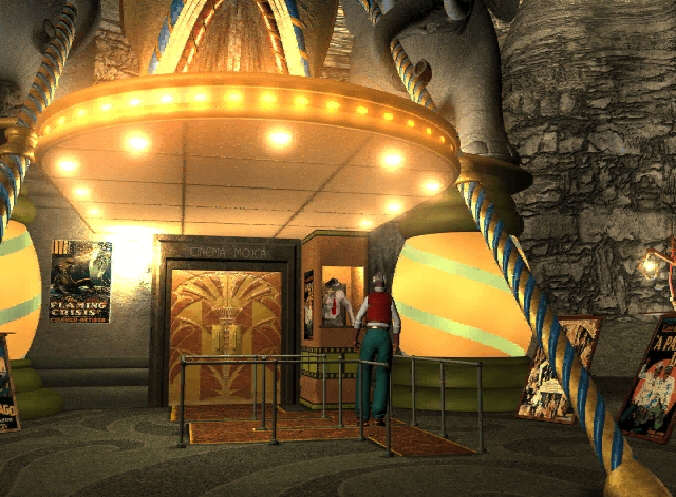 |
The Faust legend apparently originated back in the 1500s, when a fairly well-known German developed a reputation for possessing “magical powers” that were linked to the service of the Devil. As time went by, the legend grew in great measure due to the writings of Marlowe (Doctor Faustus), Goethe (Faust) and Thomas Mann (Doktor Faustus). What resulted from these writings was the evolution of the Faust legend, which was the story of a German necromancer (someone who can communicate with the dead or a sorcerer) and astrologer who sold his soul to the Devil in exchange for knowledge and power.
Along with the legend of Faust, we should reflect on the religious teachings that are associated with the Seven Deadly Sins. If we again go to literature and look for significance in the topic of the Seven Deadly Sins, I think that we might be best served by considering the writings of Dante, who based his works on the view that the Seven Deadly Sins were offenses against love. As such, Dante arranged the Seven Deadly Sins as follows: pride, avarice/greed, and envy were related to perverted love; insufficient love was represented by the sin of wrath/anger; and lust, gluttony, and sloth were the sins that illustrated an excessive love of worldly goods.
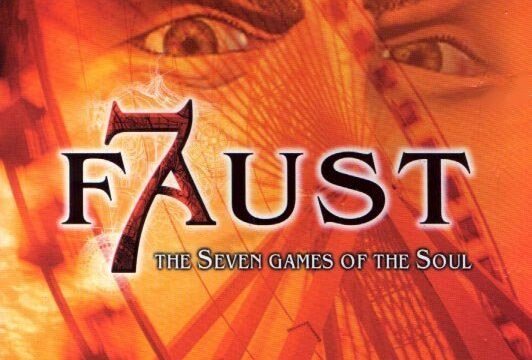
As you are introduced to this game of Faust, you will find that the story is told in seven episodes that relate to the Seven Deadly Sins and that you are charged with the task of saving seven souls.
Developed and produced by the same team that brought us Ring, you will be pleasantly surprised that this time they “got it right.” So load the game up, sit on the edge of your chair, and get ready to travel to Dreamland, where you will enjoy a very well-made adventure story that delivers on all fronts.
The Story’s the Thing
You are now in Dreamland, a very strange and mysterious amusement park that was owned by one Theodore More and flourished in the period from the 1920s until 1960, when Mr. More died and the park was closed. During the park’s prime time, it was inhabited by an unusual collection of residents that can be best characterized as being “problematic.” More on the inhabitants later.
You play the part of Marcellus Faust, an old black man who has been brought to the park by Mephistopheles–“you can call me Mephisto”–and he has no memory of who he is and knows nothing about the activities that have transpired in Dreamland before his arrival. Mephisto will explain to you that he has brought you to Dreamland to help in settling a dispute that Mephisto has with the Boss (God). Mephisto explains that he did his duty very well in dealing with the “problematic” inhabitants of Dreamland, but now the Boss is denying him what he deserves and desires.
The Boss and Mephisto have agreed that they need an arbitrator to settle the matter, someone who will go back to the past, get involved in the lives of the seven souls to save, and observe their deeds and strange, often inhumane, behavior, someone who will check their souls and judge who will go to Heaven and who lands in Hell.
At this point the game really begins, and you, as Marcellus Faust, are ready to undertake your mission by exploring the seven regions of Dreamland that represent the seven episodes of the story and provide you with the challenges of uncovering the salient facts and life experiences of the seven lost souls that will need to be saved.
You will proceed through the seven episodes in order, which is as follows.
- Episode 1: Love Island, where you will meet the Siamese twin sisters, Lily and Jody, whose taste for money is equaled only by their desire to entrap the macho tiger tamer, Hannibal.
- Episode 2: The Great Inventor, where you observe the life of Nathaniel Meister, the park’s designer and architect, who’s a very likable fellow with great knowledge–but he harbors a deep and disturbing secret.
- Episode 3: Visit Us, the world of Frank Barnes, where you learn about the bizarre events that affected his life and brought him to Dreamland as the park’s resident “man in the mask.”
- Episode 4: The Enchanted Island, home to Kalinka Vissotsky, a Russian beauty with a difficult past history, who became a “love target” for the male inhabitants of Dreamland.
- Episode 5: Great Attractions–meet Hannibal Red Narcissus, the tiger tamer, who drinks and gambles a little to excess and has a very mean streak.
- Episode 6: Bootlegging, where you learn about the life of Tod Von Essenbeck, a three-foot-tall dwarf from an aristocratic Austrian family who has an unusual sense of justice and contempt for certain established laws.
- Episode 7: The Bath of Giselle, the park’s Fat Lady, who has a gentle and generous soul that belies the pain that her physical appearance must provide.
The lives of the cast of characters whose stories you will examine in the above episodes are often intertwined, which provides constant “threads” throughout the game that add to the mystery and excitement of your exploration and discovery.
As you progress through the episodes, you will not only gather more information about the life and times in Dreamland, but you will also claim seven evidences that are expected to be used later to “judge” the life of each of the seven souls to be saved.
Now comes the end of the story. Unfortunately, I can’t say much about the ending in this review, because I wouldn’t want to spoil it for you. There are two different endings possible, determined by the choices that you make at the end as Marcellus Faust, and I will say that you will be somewhat surprised when you learn what the “real” purpose of your involvement in Dreamland really was. Mephisto has not been totally forthright with you, as Faust, and you have to deal with the consequences. Try both choices (there are two) and then sit back and be sad because this wonderful game has ended.
I was captivated by the story and the unfolding of the mysteries and strange occurrences that happened in Dreamland, and I must say that the experience and mood was most similar to what I felt when playing Sanitarium, which is one of my favorites from the recent past. The story receives an A+.
The Gameplay
Adventurers should be right at home with the familiar “point and click” interface, where you are required to find the hot spots, and these spots will lead you to the appropriate action to be performed (i.e., pick up, use, examine, walk to the next scene). It was always very comfortable moving about the screen, and the 360-degree rotation, using the mouse, was easy to control.
The main menu is different in that it allows you to make selections and to review aspects of the game in progress. For instance, in addition to the usual choices of Play, Save, Load, Exit, you can call up some “special” sub-menus, including:
- Music: lets you know who composed, sang, and played the wonderful pieces that you are listening to.
- Characters: tells you about the cast that you will meet in each episode.
- Movies: you can watch the video sequences all over again, if you wish.
- Attractions: a chance to experience again the main attractions or rides that you have encountered during your journey through Dreamland.
- Status: provides a measure of your progress in the game.
Also, you have access to Theodore More’s notebook, which appears at the end of Episode 1 and into which he records his observations and opinions on the characters and events that have been concluded at the end of each episode.
The spacebar calls up a friend called Homunculus, a genie in a bottle (once you’ve helped him to be born near the end of Episode 2), who has two helpful functions. He can provide hints, and he can be used at selected places in the game to accomplish feats that are impossible for a full-sized person.
There is also a map of the park that can be accessed, but frankly I never figured out what purpose it could serve, so I never used it.
The gameplay has all of the standard features that you might expect plus a few unique things that you can take advantage of. Since all features seemed to work flawlessly and had value, I will give gameplay a rating of A.
The Graphics
I need say nothing beyond the fact that this game was produced by Cryo Interactive, which is tantamount to saying that the 3D graphics will be excellent … and they are. Beyond the obvious, it might be pointed out that the 3D video sequences, although generally very brief “snippets” of action, are very well done and are important to the comprehension of the story and often the motivation of the characters. I felt that these video sequences provided an important glimpse into the hearts and souls of the various characters and had a powerful influence on my understanding of what these people were suffering and often how sad the environment really was in Dreamland.
There was one instance in which the game scene did not provide a “clean” presentation and that was a “graphic bug” in Episode 4. You need to open a drawer in the bathroom, but its “hot spot” is located on the wall adjacent to the drawer’s cabinet rather than on the drawer itself. Also, in the same scene you will need to exit the room through a curtain, rather than the opening that you came in through. Hopefully, if you obtain a later version of the game or a patch for the game, then you won’t need to deal with these problems. Because of the fact that Faust was released with these “graphic bugs,” the graphics rating is A-.
The Music, Sounds, and Voice Acting
The voice acting and the ambient sounds of Faust are very good, especially the voice of Mephisto (as provided by the English actor Geoffrey Bateman). The presentation of the character Mephisto is obviously central to the game’s ability to draw the player in and keep him/her captivated. The voice of Mephisto is magnificent … riveting, as it should be. For example, just consider the way in which Mephisto’s voice is used to activate the normally mundane load, save, and exit functions: For load, Mephisto says, “Come here pussycat,” in a sultry sort of mood; for save, he says, “Run away while you still can,” and the mood is that which implies disdain for a cowardly act; and exiting is my favorite, where Mephisto says, “Are you afraid of something or just a little tired?” in a sort of condescending tone.
That’s all fun, but … the real power of this category is the music. Jazz vocal stylists Mel Torme, Marvin Gaye, Sarah Vaughn, Margaret Whiting, and John Lee Hooker, the unique blues instrumental offerings of Stan Getz, Clyde McCoy, and Gerry Mulligan, and the compositions of the likes of Franz Liszt (Mephisto Waltz) are included in the wonderful soundtrack that accompanies the various episodes of the story–the music is magnificent. Even today, I can’t get some of these tunes out of my head. I just keep humming Bye, Bye, Baby … Time to Hit the Road to Dreamland, or Why Do I Love You … Why Do You Love Me.
Enough said; you must experience the music for yourself. Not only is the music terrific to listen to and not only does it have the ability to set just the right moods for the different stories and character interactions, but you won’t want to turn it down and often will just sit back and listen for a while. Without reservation and with no hesitation, the music, sounds, and voice acting deserve an A+.
The Puzzles
As I have stated in my previous reviews, it generally takes me longer to finish an adventure game than most reviewers, because I don’t like to use a “walkthrough.” Although there is always the exception to this rule, I do try very hard, as frustrating as it can be sometimes, to get through, even at the risk of enduring some sleepless nights. You would be amazed what “enlightenment” can sometimes come to you at 1:00 a.m. and the joy of realizing that you got “unstuck” when your enlightenment turns out to work.
The puzzles in Faust are very strictly related to the progress of the story line and are therefore, thankfully, very logical. The complexity ranges from moderate to difficult, so I must admit to a few almost sleepless nights and, of course, a nightly revelation or two.
Even when you find yourself on the Ghost Train Ride and have the eerie feeling that you just might be entering a dreaded maze, you find that your fear was premature, because all roads lead to the same place, which happens to be where the game wants you to go.
I think that you will find the puzzles to be logical, thoughtful, and complex enough to keep your gray cells active, which I think is one of the primary reasons for playing an adventure game, so I will give the puzzles a score of A.
Overall Rating
My overall rating for Faust is an A. This game is perhaps the best effort put forth by Cryo, which must be given kudos just for being so devoted to the adventure game genre, when it seems so unfairly fashionable for so many other producers and publishers to abandon us. Besides Cryo, credit must also be given to Arxel Tribe for the development of the theme and plot and the presentation of the story’s fascinating episodes.
If you haven’t ordered Faust yet, put it on your “must have” list. I think that you’ll really enjoy the adventure–as my friend Stuart Yoder would say, “Faust is not only to be enjoyed, but to be savored.” The Devil made me say it.
System Requirements (Minimum): Pentium MMX, 200 MHz (game will only run on MMX)
32 MB RAM
12X CD Drive
290 MB available on hard drive
16-bit color graphics card (3D recommended)
2 MB video memory
SoundBlaster-compatible sound card
Direct X 6.0 or higher (included with game)