Review: Drowned God
|
Drowned God Developer: Inscape By Ray Ivey
|
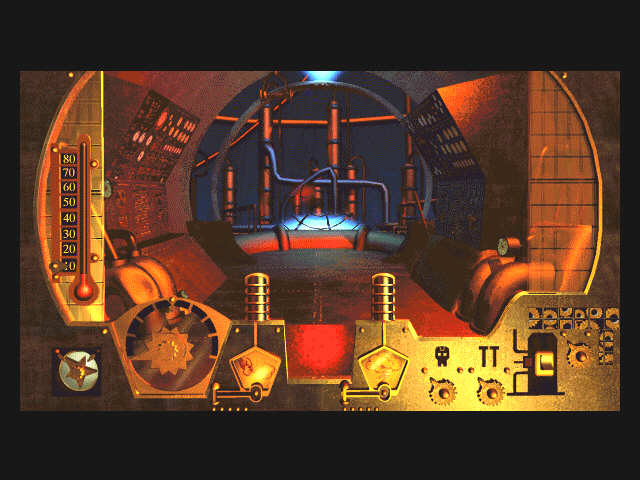
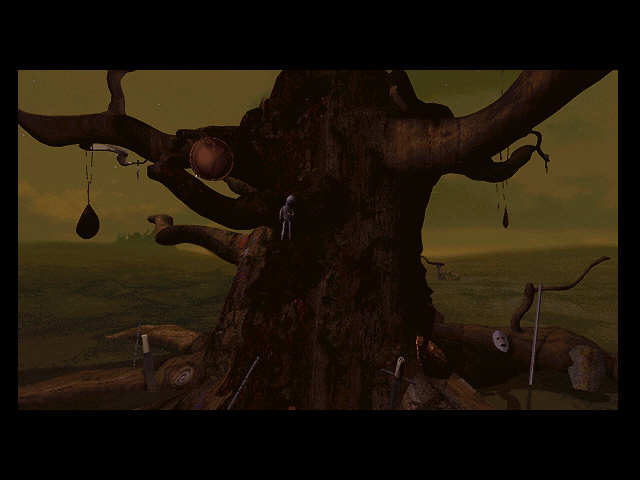
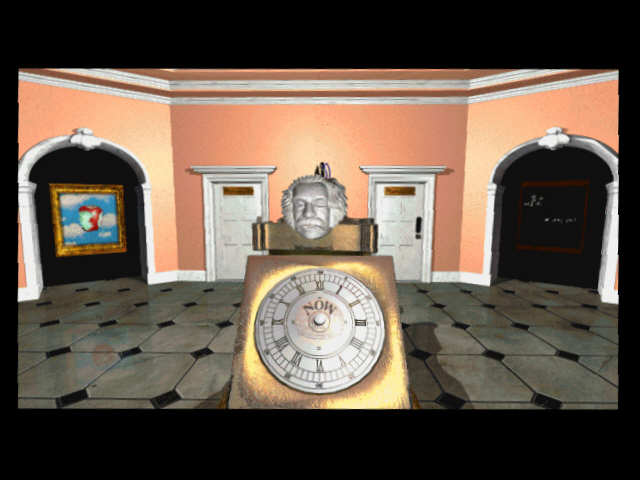
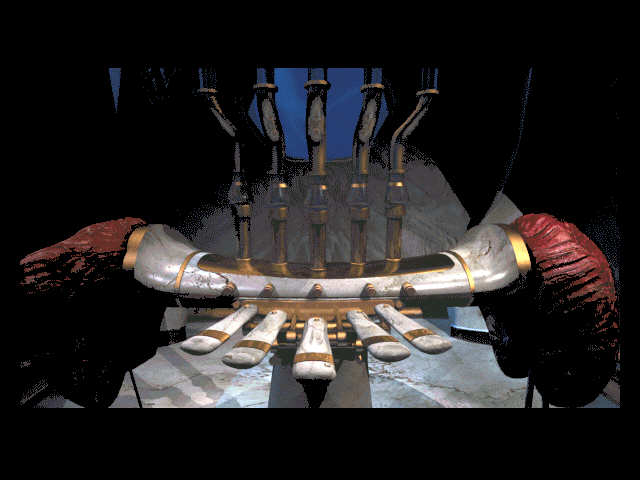
My friend Laurie and I have just finished Drowned God, and I’m not sure what feeling is stronger–our admiration for the game or the need to go get some therapy. This is the strangest, creepiest, most psychedelic adventure game I’ve yet to come across.
The tagline of this ambitious game is “Unlock 40,000 Years of Lies,” and they aren’t exaggerating much. As alien conspiracy stories go, this one makes Special Agent Mulder seem like a cynical amateur.
The game begins as your character, an unnamed special agent yourself, arrives at a mysterious headquarters to receive something called the “Bequest Globe.” This artifact makes it possible for you to travel between various realms of reality, tracking down the aforementioned secrets and lies. The game has a randomizer that allows you to put in a name and receive a number by which your character is known. Throughout the game, this number remains relevant. Before sending you off on your adventures, the computer console in the headquarters reviews for you a whole series of past lives you have lived. It’s a creepy and creative beginning.
Next, in time-honored Myst-clone fashion, you set off to explore four different realms: Binah (Air), Chesed (Water), Din (Earth), and Chokmah (fire).
This is a first-person, point-and-click adventure with that tidy look that comes from games built using programs like Macromedia Director (though in this case it was something called Metagraphics Media!Lab). The graphics are lush and wildly varied, with mountains of imagery laden with symbolism and allegory.
Through your travels, you explore Stonehenge, match wits with Morgan LeFay and a drunken Templar Knight (yet another old dude guarding the Holy Grail), explore mysterious DNA implants, get stuck in bewildering revolving rooms, and much more. Along the way you rub elbows with practically every conspiracy theory in history, from the Templars to the Illuminati to Edgar Cayce to the Philadelphia Experiment to Area 51.
The plot of this long game is given to you in the standard adventure game notes and journals, but even more often from characters you meet along the way. What’s interesting about the plot is that, even though it is utterly incomprehensible, it never put me off. Why? Two reasons. First, the babble spouted by the various spooks I encountered might have been mumbo-jumbo, but it was beautifully written mumbo-jumbo. In fact, Drowned God has some of the most poetic writing of any game I’ve come across (Azrael’s Tear is the only other game that comes close in this regard). My gameplaying buddy and I got to the point where we just enjoyed letting this volcanic torrent of beautiful babble wash over us like ear candy.
The second reason the incomprehensible plot didn’t anger me was the feeling all through the game that, even if it didn’t make sense to me, it made sense to the game’s characters and creators. In other words, the malarkey was done with such well-researched conviction that I bought it.
A large factor helping this baffling plot hold together is the continued resonation of various themes and images all throughout the game. While one of the main strengths of the game is the wild variety of locations and settings, throughout the game certain images, names, and concepts keep recurring in ingenious new ways. It gives this varied game a real sense of unity.
There’s a lot of music in the game (by “Miasma”), and it’s a rich and varied score.
For puzzle lovers, Drowned God is a treasure trove. Everything from challenging AI games to Myst-y mechanical puzzles to circuit connectors to inventory plug-ins. This collection of tricky puzzlers are challenging and frequently innovative. One early puzzle in particular, which deals with a dialog between Einstein and Newton, was just brilliant.
Final Grade: B+
If you liked Drowned God:
Watch: The Parallax View
Read: The Sirens of Titan by Kurt Vonnegut
Play: Azrael’s Tear
System Requirements: Windows 95
P75
2x CD-ROM drive
16-bit sound card