Interview With Post Mortem Development Team Interview
Interviews
INTERVIEW WITH POST MORTEM DEVELOPMENT TEAM
Post Mortem is the newest release from The Adventure Company. Already a success in Europe, Post Mortem is a new breed of adventure game that offers unlimited opportunities of exploration for the adventurous gamer. There are truly no two games alike in the world of Post Mortem.
(Caution: if you have not played Post Mortem, this interview does contain spoilers and could ruin your gaming experience!)
Post Mortem has been available for a few months in parts of Europe & Canada. What kind of feedback have you received so far?
The feedback has been really good so far and I believe that the sales have pretty much followed. The strange thing is that some people seemed surprised that this was a traditional adventure game.
Some seemed to believe that it was a shooter…
If there is a sequel to Post Mortem, are there any improvements you would like to incorporate?
There are a few things that the next adventure game will improve upon, mostly centering around the dialog engine and the amount of dialog used in the game.
One thing is sure; you should be able to skip the spoken dialog…
Also, the technology of the next game should be closer to what is being used for Syberia, meaning mostly no more 360º environments.
 At the beginning of the game, it is hinted at that Gus MacPherson has a mysterious and possibly shady background in law enforcement, yet this subject is never again broached. Can you elaborate more on Mac’s previous life, or is this to be a plot thread for a sequel?
Actually, this is referring to an adventure game project that was never done. Who knows, with the success of Post Mortem, it might be possible that it will come to be.
The game was to be called A New York Ghost Story and revolved around MacPherson, who was then working for the Pinkerton Agency. He was investigating a case involving the theft of many ancient artifacts in and around various New York City museums. One of the interesting twists was that you started the game as a different character and then, when he was killed by one of the baddies, played Gus as he interacted with the ghost of the first character.
It was quite an ambitious proposal and we opted to go for a slightly more conservative approach, but who knows, maybe one day…
About a third of the way through the game, the gamer suddenly has to play as a different character. Where did the inspiration for this ingenious character switch originate?
Partly from the above-mentioned game idea and mostly from movies like To Live and Die in LA and The Usual Suspects, partly from literature. There are a lot of books which switch back and forth between characters and was wondering how this would play out in a game.
At one point, we were thinking of making Hellouin the bad guy, instead of Kaufner. De Allepin would have taken over his body when he hired him, and everything Hellouin tells Mac (the whole second act) would have been a lie. In the end, we decided against it, simply because we weren’t sure how people would perceive this switch. We though it was important to keep the protagonists sympathetic, instead of making one of them a villain. Still…
Post Mortem obviously shows the influence of both Chandler and Lovecraft. Are there any movies that inspired the structure of the game?
As I stated above, yes. The whole detective story genre, with movies like Memento, The Usual Suspects and some of the more recent horror films like The Other, play on narrative structure and expectations. I find that fascinating and I personally like to play with narrative structure a lot. Why keep things linear simply because you are in a game?
Post Mortem can be played many different ways and I think each player comes away with a different experience. What experience do you hope the gamer comes away with?
A fun filled one!
Honestly, we tried as much as possible to have a game where the starting point and the ending would be the same for every one, but the road taken would vary. We really wanted to have gamers talking to each other and say “What? I never saw that!” Post Mortem was a step in the right direction, and hopefully the next game will be a bigger step…
Would you rather the gamer replay portions of the game in order to undergo the various endings or be satisfied with the ending they receive as a result of their choices?
That’s a tough one. Hopefully the ending they get the first time is satisfying in and of itself. On the other hand, if they can experience more of the game, that would also be great…
 Classic detective film noir is historically noted as beginning in the 1930’s with Fritz Lang’s classic M and in the French sound films of that era. Post Mortem is set in 1920’s Paris yet one of the main characters, Nicolas the bartender, claims that he is a big fan of the detective movies. Is this a bit of foreshadowing on your part or was there a period of silent film detective movies in the 1920’s?
That was a bit of foreshadowing… meaning we screwed up :-)… What we should have said was that he was a big fan of adventure novels, which were pretty well established by then…
Post Mortem does an excellent job of providing alternate storylines, based on the gamer’s choices, that dovetail towards the end until the gamer is then faced with multiple endings. Considering that most adventure games are usually linear in nature, how difficult was it to write what is essentially a new type of adventure game?
It wasn’t actually that hard. There were a number of people on the team that had a lot of experience with traditional (face-to-face) roleplaying game and having to think on the spot.
We just came up with a very linear scenario at first and then added the elements that could be done differently, based on how we would have reacted to the problem if we had played the game as a traditional roleplaying game. Of course, we had to keep things in check, since we could have easily gone crazy.
Yes, that means that the parts where you sneak in the police station at night to steal the files or where you beat up Petit had to be cut out… 🙂
Almost every obstacle in Post Mortem has two solutions (i.e. choosing how to open a locked door, the manner in which Mac can get to the second floor of the hotel, etc.). Can you describe some of the difficulties this presented when you were scripting the game?
Most of the difficulties stemmed from making sure that the player could always do something, that he was never stuck. Take the traveling safebox key for example: that key could have been in four different places, depending on what the player had done before.
Depending on whether or not the player went into the murder scene before finding Hellouin, the key could have been present at the murder scene or not. We had to constantly look at whether or not there were holes and make sure that we caught them all.
The fact that there is no dead-end in the game right now is a testament to how good the Integrators and the Testers were. Yes, they made me swear and bitch many times, but heck, they did a really good job.
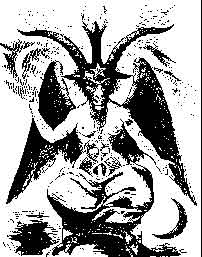
 There are two schools of thought on the Head of Baphomet. Those who believe it was first found by the Knights Templar and those who believe that possession of the Head of Baphomet was actually a trumped-up charge against the Knights Templar by King Philip IV of France in order to discredit them. To which school of thought do you subscribe?
Ah… the eternal question on whether the Templars were heretics or not. I personally think that Philip set them up to take their treasures and get rid of his debts, but on the other hand, it makes for a rather dry reading of history, does it not? Of course, there are others in the team that don’t agree with me. Made for some lively discussions and some really interesting reading.
BTW, for a really cool look at the Templars and more precisely De Molay, I encourage you to read The Second Messiah by Christopher Knight and Robert Lomas. Neat stuff…
Why have the Knights Templar been the subject of so many adventure games?
If you take a look at the web or at your local bookstore, you’ll quickly notice that there is a huge interest in the Templars. I honestly believe that there is at least 5 to 10 new books being published each and every year on the subject! Why? Because they are shrouded in so much mystery, there are so many interesting, crazy, juicy legends about them that it just sends the brain running. I think the first time I came across the Templars was when I was about 12, and it was in a bad Italian horror film (I’m not really sure, but I believe that it was the second movie in the Blind Dead series). It affected me pretty deeply and because of that movie, I must have read about 10 books that year alone about their history. You know, even if it is a “serious” historical text about the Templars, there will always be a little bit of texts that hints at something and if you look carefully enough, there will be 10 different theories about what that little bit is all about.
But, to sort of answer your question, apart from Broken Sword and Gabriel Knight III, I can’t really recall any other adventure game that has explored that territory. At the same time, the game is not really about the Templars, but rather about someone who exploited the Templars to gain power.
Are there any practicing Freemasons or Illuminati in your group of developers?
That would be telling…