In Cold Blood
|
In Cold Blood Developer: Revolution By Ray Ivey 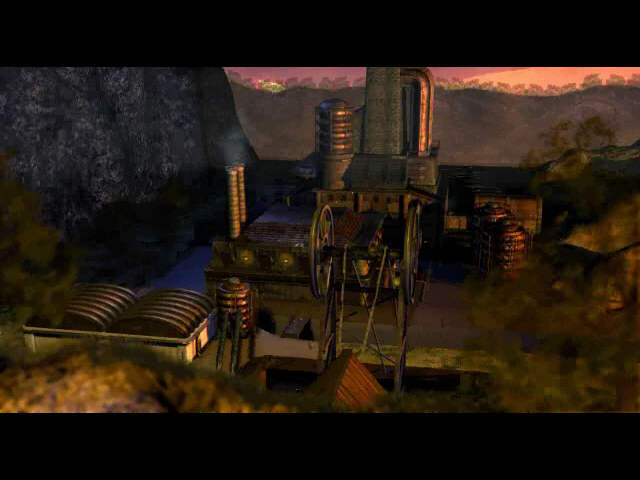 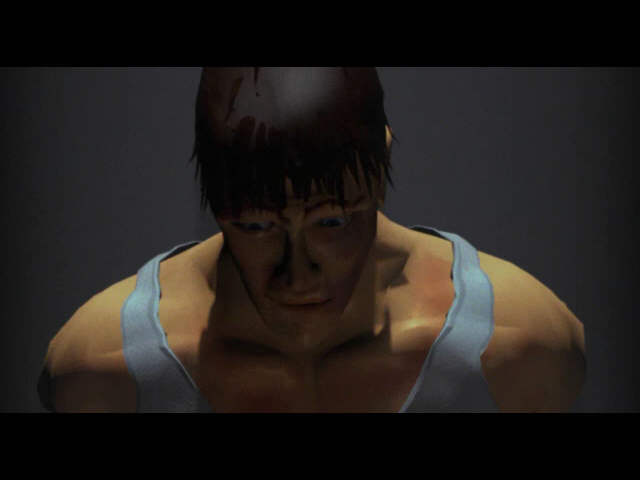 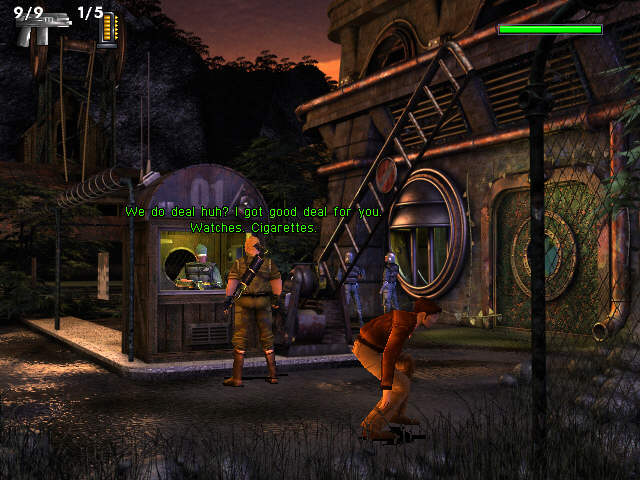 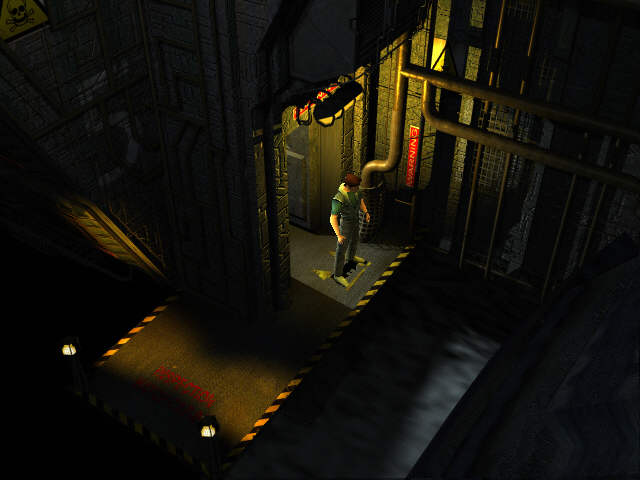 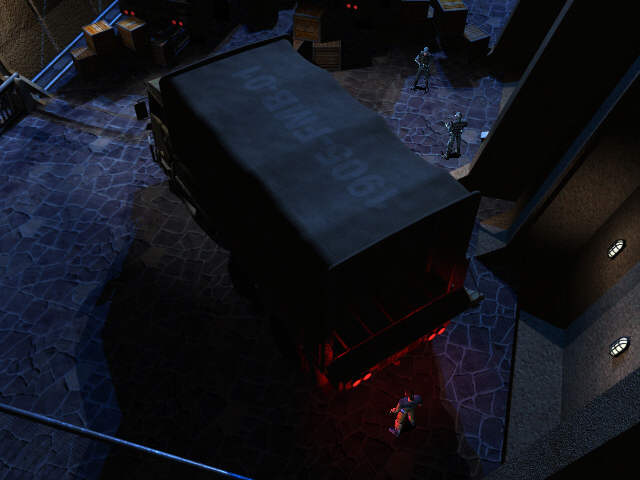 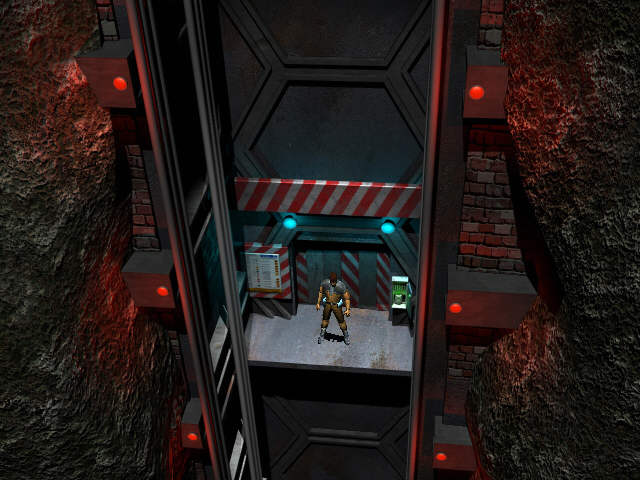 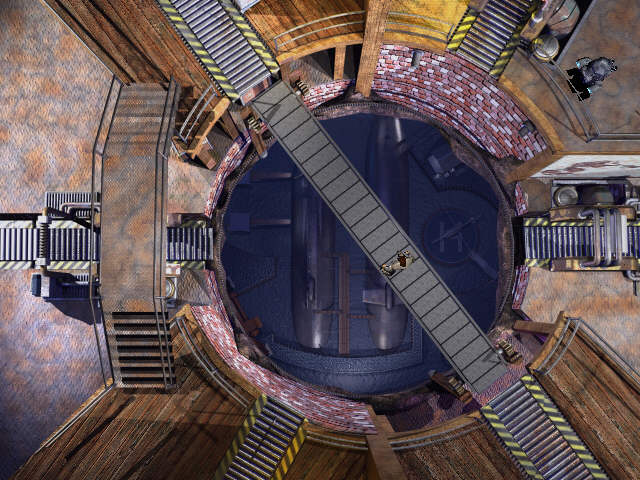 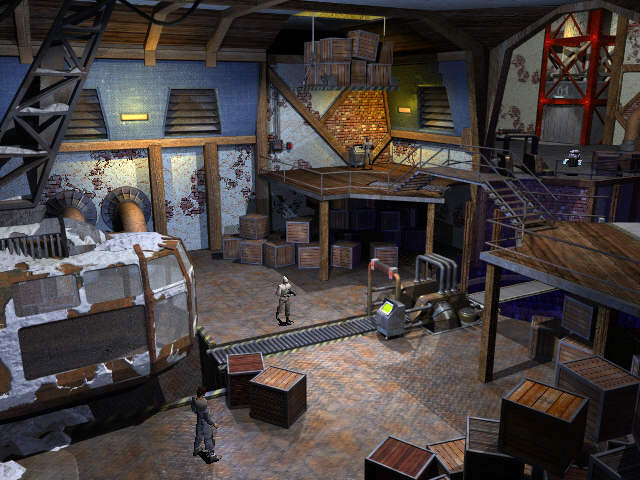 |
In Cold Blood is a good, but haunted, game. Gentle Reader, I’ll warn you right up front, this is probably going to be the most schizophrenic review I’ve ever written.
No new game exists in a vacuum. We struggle for purity and objectivity when we play, but it’s impossible. No matter how clearly we try to stare into the heart of a game, our vision is partially blinded by the glare of the current gaming world at large. In Cold Blood is a game that possesses admirable qualities but suffers with comparisons to two different standards of gaming.
The first is the standard set by Revolution itself. Their game Broken Sword: Shadow of the Templar (inexplicably renamed Circle of Blood in the US) is widely considered one of the best games in the adventure genre. In fact, it’s my own personal favorite game, despite the fact that it’s in third person and I’m famously biased toward first-person games. Broken Sword had a completeness to it, a sense of beauty and mystery and humor and variety that made it an unusually satisfying game to play.
The second front that damages my reaction to the game is the remarkable wave of genre hybrids and genre crossovers from the last couple of years, games that have challenged our complacent ideas about genre definitions and what a gaming experience can be. I’m referring to games like Thief, Thief II, and System Shock 2 from Looking Glass Studios; Appeal’s Outcast; Quantic’s Omikron, and Ion Storm’s Deus Ex. These games have done wonders with the ideas of stealth and creative mission-solving. More on this to come.
Let’s get to the game. In Cold Blood is a James Bond type of story, an exciting third-person adventure with a little action thrown in. Actually, that’s an important thing I want to make clear. This game is going to be referred to as an Action/Adventure, which will scare some people off. While it’s true that the game has some action elements (a little shooting and knocking people out, as well as several timed elements), at its heart the game is very definitely an adventure. I’d propose a new hybrid title for the game: Adventure/Action.
Like the Broken Sword games, the format of the game is gorgeous 2D animation, with a stunning pile of artwork filling your screen. The graphics are superb, and there are a lot of them. Unfortunately, like the gameplay itself, the graphics suffer from a lack of variety. Whereas in the first Broken Sword game you got to travel all over Paris, with excursions to Spain, Ireland, and Syria, in ICB you spend most of your time in ugly factories, mines, and sinister office buildings. They all look great, but with such talent creating the images, I longed to look at a broader spectrum of environments.
The gameplay is a mixed bag as well, Yes, it’s fun to sneak up behind a careless guard and knock him out–but not nearly as fun as it is in Thief. Yes, there is a bit of gunplay, but it’s generally not difficult and not very interesting.
There are many challenging puzzles to solve in the game, and I’m happy to report that few of them suffer from the Monkey Island Mind-Read the Game Designers Syndrome. They’re all pretty rational.
But the rigidity of the game becomes frustrating after a while–again, it’s impossible not to think of other recent games that give you far more freedom in how you solve each quest. I know it’s an adventure game, not an action game, but the setting of the story somehow begs the comparison.
I’m probably the last reviewer in the galaxy to ever complain about that proverbial boogeyman Linearity in an adventure game. Well, there’s a first time for everything. In playing this game, I didn’t feel like I was figuring out how to get around obstacles and solve problems, I felt like I was having to read my character’s mind and guess how he would solve the problems.
The story also suffers from a lack of logic in several key areas. It’s puzzling how shooting or knocking out a guard never seems to provoke suspicion among any other guards. You can leave bodies strewn about like discarded cigarette butts and it never gets you into trouble. Again, after having to be very careful with my “body storage” in Thief, this felt a bit lame.
Even worse is the fact that you can consistently pull your gun on unarmed “techie” characters, intimidate them into helping you, and never have to worry about them sounding a guard-rousing alarm the nanosecond after you leave the room. This makes no sense at all, and it seriously undermines the “willing suspension of disbelief” that can make a great game a truly immersive experience.
The characters, alas, also suffer in comparison to those in the Broken Sword games. Your hero, John Cord, is studly, gruff, and tough, but he’s pretty humorless and flat as well, and the other characters aren’t much better. I longed for the deeper interaction of George Stobbart and Nicole.
Ditto the story. Broken Sword, being a mystery, has tons of story. The tale gets deeper and more compelling the farther in the game you reach. I could describe ICB’s story to you, in detail, in one medium-sized paragraph. Sorry, Revolution, if you’re going to make an adventure game and not an action game, you shouldn’t leave out the story.
I imagine I’m going to get reamed for criticizing this game on the basis of comparing it to other games, particularly games out of the adventure genre. It’s true that if ICB was the only game I’d played in the last three years, I might be more positive about it. But I do think all games exist within the context of the gaming world at large. I think Revolution Software didn’t believe another Broken Sword game would be marketable, and they consciously attempted to make a game that would reflect the trends and directions in the game world. Unfortunately, that very effort makes the game suffer in comparison to those very games.
My wish is that Revolution would put down their pistols, go back to the drawing boards, and do what they do best–create another stunning chapter in the Broken Sword series.
Here’s where this review gets even more twisted: despite the above criticisms, I can honestly recommend this game. Just force yourself not to think about Thief, Deus Ex, or No One Lives Forever as you play. With its dark, edgy setting, great graphics, and multiple missions, you can have a good time–provided you don’t mind wearing blinders as you play it.
Final Grade: C+
If you liked In Cold Blood:
Watch: The Peacemaker
Read: Shibumi by Trevanian
Play: Deus Ex
System Requirements:Windows 95/98
Pentium 233 MMX (266 MMX recommended)
8 MB or better 2D graphics card capable of 640×480 and 32-bit color (16 MB recommended)
100% DirectX 7 compatible sound card
32 MB RAM (64 MB recommended)
400 MB free hard disk space (1.4 GB recommended)
4X CD-ROM drive
DirectX 7