Everything You Ever Wanted to Know About Gabriel Knight …
Everything You Ever Wanted to Know About Gabriel Knight but Were Afraid to Ask
By Amit Shah
Guest writer Amit Shah discusses what has made the Gabriel Knight series so successful. Be warned, though–this article contains spoilers for the first two GK games.
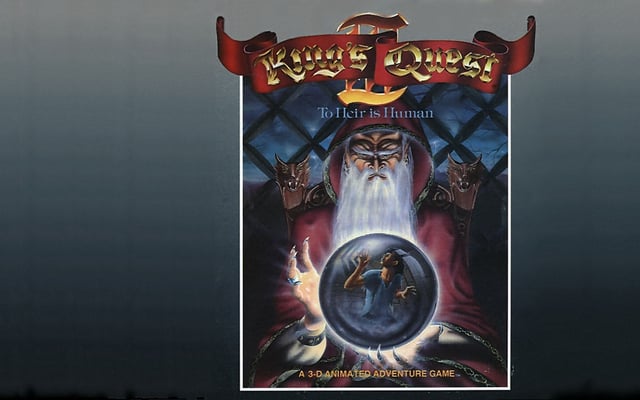
What makes a great adventure game? Sierra was known for its adventure titles, but were they all good? In the beginning, Sierra was at the forefront of adventure gaming by becoming one of the most prolific producers of adventure games in the 80s. The first adventure title that put them on the map was King’s Quest I, which was followed by other King’s Quest games, evolving into a best-selling adventure series. Striving to repeat that success, Sierra made other adventure games with the word “quest” in the title such as Police Quest, Quest for Glory, and Space Quest. It turned out that Sierra was fairly successful in repeating the success it had made with King’s Quest, and each series garnered a large following of adventure-gaming fans. Most, if not all, of their games during those days combined humor and fantasy to provide kids of all ages with immense enjoyment.
The key word here is kids. Adults looked down upon computer games and thought they were merely for children who could pass their time in front of a computer screen. Another series produced by Sierra, called Leisure Suit Larry, changed all that. Al Lowe, the Leisure Suit Larry series’ game designer, created a game that was targeted for only adults. Al Lowe made a significant contribution to the gaming industry by igniting a new trend in computer gaming–one in which computer games would be targeted toward the adult audience specifically. Although the Leisure Suit Larry series was targeted toward adults, the games featured irreverent humor about sex and did not touch upon themes that would be considered for the intelligent and tasteful computer gamer.
In fact, not too many games were targeted towards that particular demographic until 1994. In that year, a new game was to be introduced to the computer gaming audience that yelled out it was new and different from the other computer games. Gabriel Knight: Sins of the Fathers was that game. Packaged in a purple, trapezoidal box that was different from any and all other boxes, it was able to grab the attention of many an adventure gamer. The game was touted as a “dark, psychological mystery,” and it lived up to its name by providing a dark atmosphere along with one of the most compelling plots ever in a computer game. The music, composed by Robert Holmes, was chillingly effective at evoking emotions of the computer gamer. Instead of focusing on fancy cut-scenes, the designer of the game, Jane Jensen, decided upon a more comic-book kind of feel, with dark, graphic images serving to depict the events that occurred in transition between settings in the game.
Gabriel Knight is the owner of a bookstore named St. George’s Books. In Sins of the Fathers, he is working on a new novel based on the recent murders in New Orleans that are connected to voodoo. For some reason, Gabriel can’t sleep peacefully at night due to being tormented by a recurring nightmare.
In the nightmare, an old man gazes at a fire in horror. In the fire is a woman who is screaming with agony. Suddenly, the woman morphs into a leopard, and a talisman is soaked with blood. At the end of the dream sequence, a silhouette of a man hung on a tree is shown. There is a crack of lightning which illuminates the face of the man. It is none other than … Gabriel Knight.
The nightmare occurred more frequently when Gabriel started to investigate the Voodoo Murders for his new book. He doesn’t know why the nightmares occur, but as the game progresses, he learns that he is one of the last heirs to an old lineage of “Shadow Hunters,” or Schattenjagers, an order of knights who seek out evil and destroy it. Gabriel also discovers his family’s shameful secrets, and he has to destroy the evil forces behind the voodoo murders as well as recover what was lost from his family.
What makes Gabriel Knight so likable is that many game players can identify with him. After all, how many people feel pressured into following their parents’ line of work? Gabriel Knight is confronted with the same situation in which he must learn to accept the responsibility of hunting down evil as generations of his family had done before him. Unlike many of us, however, he doesn’t have much of a choice in following in his family’s line of work.
Due to the success of Gabriel Knight: Sins of the Fathers, and the critical acclaim it garnered, with magazines such as Computer Gaming World declaring it “Adventure Game of the Year,” a sequel was imminent. Instead of the 2D-animated format that was used in Gabriel Knight: Sins of the Fathers, however, the sequel, Gabriel Knight: The Beast Within, used full motion video with professional actors. It was one of the few adventure games that used full motion video in an effective manner, although it was somewhat limited in interaction with the environment. The sequel avoided most of the pitfalls that made other FMV games so poor in quality. A great story, professional acting, and terrific music were featured in the sequel, which made it an entertaining and successful interactive movie. In fact, the FMV game was produced so well that it garnered critical acclaim as well, in magazines ranging from Computer Gaming World to PC Gamer. It was awarded the coveted title “Game of the Year” by Computer Gaming World, and it showed that an FMV adventure game has the potential to be magnificent if done properly. Today, the sequel and its predecessor rank among PC Gamer’s top 50 games of all time.
In Gabriel Knight: The Beast Within, Gabriel is confronted by a group of villagers at his ancestral castle, Schloss Ritter. He is asked by the villagers to investigate the murder of a young girl. The villagers suspect the culprit is a werewolf, and Gabriel is given the task to hunt the werewolf down and kill him. Gabriel accepts the case and writes a letter to his assistant, Grace, who is tending the bookstore in Gabriel’s absence. When Grace hears about Gabriel’s case, she rushes to Germany and does some investigating herself. Both characters have dreams with wolves in them, but Grace also dreams of a man named King Ludwig. Grace does some research on Ludwig and finds an interesting connection with King Ludwig and the wolf that Gabriel is trying to find. The player gets to play as both Gabriel and Grace in order to find out who is the Black Wolf that is mentioned in numerous letters, what the connection of the Black Wolf is to Gabriel’s case, and how to find and kill the werewolf Gabriel is tracking.
Each game in the Gabriel Knight series features a story that blends history and fact together to provide an extremely realistic experience. Gabriel Knight: Sins of the Fathers pioneered this new kind of storytelling in computer games. However, Gabriel Knight 2: The Beast Within went even further in terms of blending history with the fictional supernatural elements by trying to explain King Ludwig’s eccentric behavior and the mysterious circumstances surrounding his death. Both games also feature believable characters and puzzles that are realistic to the environment, unlike other adventure games that use wacky puzzles that do not fit too well within the game’s story. The series also enters different mediums and uses the latest technology in the game without sacrificing a good story. Other games merely stick to one medium, which can tend to bore the player with how ordinary each game in a series looks or plays. So far, the Gabriel Knight series has made the transition from 2D-animated adventure to full motion video adventure rather well. In the next game, Gabriel Knight 3: Blood of the Sacred, Blood of the Damned, a 3D engine is used in order to present the player with a new mystery.
The Gabriel Knight series is pretty consistent in themes for each game. In both Sins of the Fathers and The Beast Within, the theme of duality and good versus evil comes up. Gabriel, unlike most other protagonists of adventure games, is flawed. He is ultimately a good man, but there are certain traits that he possesses which can be considered “evil.” He manipulates his friends and loved ones to get through his investigations. He is deceitful as well. Gabriel can deceive others into thinking he’s just another bumbling Southerner from the U.S. in order to get their guard down so he could find out what he needs to know.
In Sins of the Fathers, the issue of Gabriel’s flaws is addressed through a dream that he has after completing the sacred rites to become a Schattenjager. A dragon appears in his dream and tells him he’s sinned and in order to purge himself of his sins, he must destroy all that is evil in his heart or something to that effect. Gabriel then sees a clone of himself, laughing maniacally at him. Gabriel realizes this is his evil half and he strikes the clone down, purging himself of his sins to become a Schattenjager.
In The Beast Within, duality is an even more central theme in the game. Gabriel is confronted with the choice to live a pure existence as a Schattenjager or give in to his primal instincts as a werewolf when he is bitten by one. Gabriel obviously chooses to stay as the Schattenjager, but the theme of duality in the game is the actual manifestation of the werewolf instead of the evil clone in his nightmare from Sins of the Fathers.
Good wins over evil in both games. The theme of good versus evil is somewhat clichéd in computer games, but the Gabriel Knight series takes a rather bold approach in addressing the issue. In Sins of the Fathers and The Beast Within, the villains turned out to be tragic characters caught up in their own past. Gabriel had to kill both of them in order to get rid of the evil, but he felt sorry in doing so. The villains were portrayed as human characters that had no choice in being good or evil, and many adventure gamers were genuinely sorry and moved by their deaths. Other adventure games feature villains that people love to hate, and the division between good and evil is apparent. However, in the Gabriel Knight series, good is always accompanied with evil and vice versa, making it a much more realistic and enjoyable experience.