Blackstone Chronicles Review
|
Blackstone Chronicles Developer: Legend Entertainment |
|
Search Game Trading Zone for this game More information about this game at the JAVE! |
Over the years, I’ve waded through my share of “spooky-type” adventures, but The Blackstone Chronicles is, perhaps, the most horrible game I’ve ever played. Not horrible in the sense of design or play, mind you, but in terms of its factual basis. More on that a little later.
The story is adapted from John Saul’s Blackstone series of books, and centers around the trials and tribulations of Oliver Metcalfe. Oliver is the son of Malcolm Metcalfe, deceased, formerly supervisor of the Blackstone Asylum.
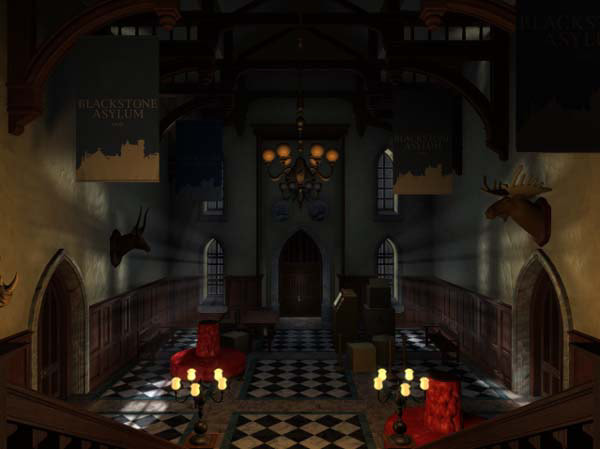
The Asylum stood abandoned since the 50’s, but has now been restored by an historical society as a sort of “museum of mental therapies through the decades”. When the game begins, Oliver is having a conversation with his father, and that is one of the unsettling points.
Is Oliver crazy, or is he really conversing with Malcolm? Are the conversations he has with other lingering spirits actual, or is he hallucinating? Does he have a death wish that propels him into certain life-threatening situations, or is he at the mercy of Malcolm’s malign manipulations? Has Malcolm really kidnapped Oliver’s son Josh, or is it some sort of delusion?
That last question in particular can cause great uneasiness. After all, if this is real, everyone else Oliver talks to is dead, and you begin to fear reaching the end, for what you might find. If it isn’t real, then he’s imagining conversations with dead people, which might be even worse.
This uncertainty is bad enough. The real gut-wrencher, however, is reading the exhibits set up in several rooms. These detail the various “therapies” practiced on the hapless inmates of asylums and sanitariums everywhere over the years, and they aren’t made up. The designers did their homework here; all the “treatments” are factual, not fake – and some of them are still in use today. If this doesn’t send shivers down your spine, nothing will.
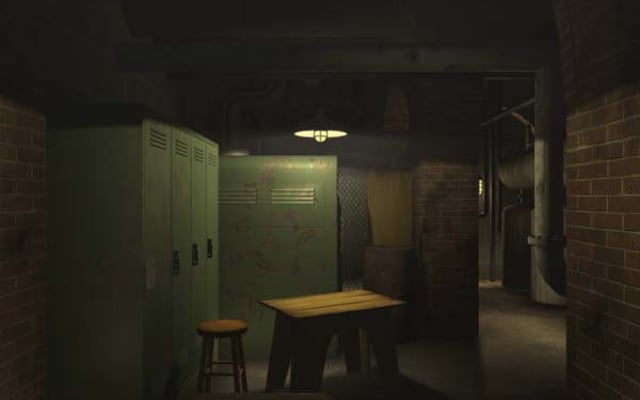
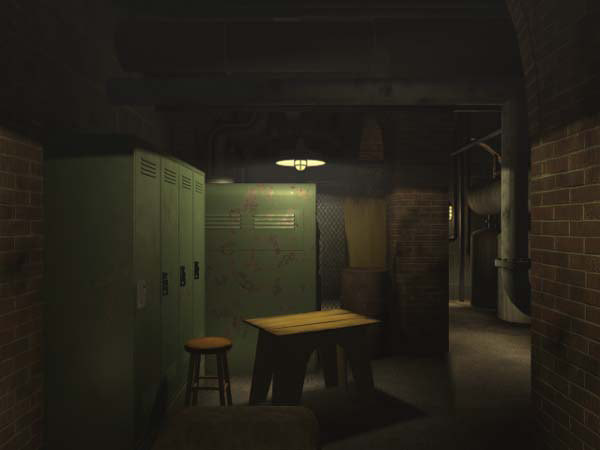
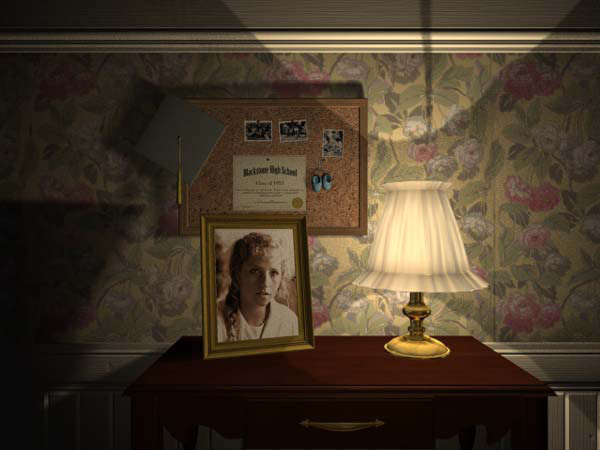
So, between the exhibits, treatment rooms, conversations, and various documents, an atmosphere of horror and disquietude is well-maintained – all without the usual sham trappings of bodies falling out of closets, monsters roaming the halls, or revolting close-ups of maimed corpses.
The puzzles generally are sensible, and of the traditional object-oriented variety, though conversations are also very important here. It is often only by speaking with the spirits of former inmates that you learn enough to solve a particular problem, even if you may have figured out the answer on your own. For all that, there is nothing obscure or requiring leaps of illogic for the solution.
One particular type of puzzle deserves special mention: the timed sequences. These are life-threatening situations, and you have only a short period in which to come up with the solution. If you can’t, or you’re too slow, Oliver dies.
However, you never go into one of these unless and until you have everything you need to come out alive. Also, if you should bite the dust, the game will give you the choice of simply restoring to before the sequence began, obtaining a hint to the answer, or learning the answer outright.
This is an amazing feature, and an important one. Blackstone is a very linear adventure, where the story advances in steps, almost chapters. Should you become stuck anywhere, you could be stumped for awhile, and have nowhere else to go, nothing else to work on. By providing answers for the truly frustrated, the game allows you to survive the dangerous situations without the need for endless restores and experimentation.
The interface is a simple one, controlled via mouse. Directional cursors indicate where you can move. A hand cursor highlights objects of interest; clicking the left mouse button opens an on-screen box with the actions that can be performed on or with the item: looking, moving, operating, or picking up.
Using items from inventory is equally simple. The object is put on the cursor, and run over the spot onscreen where you want to do something with it: unlock a door with a key, for instance. If the item has no use in that situation, nothing happens. If it can be used, a text box opens on the screen with the action available, in this case, “unlock door”. Clicking the mouse performs the operation.
Blackstone comes on two CD’s, but only one is needed for play. The first CD has the install procedure, and “low-res” movies; the second disk has hi-res movies. Both hold the complete game, so it’s just a matter of which resolution you want; unless your system is very slow, I recommend the hi-res, which is much better (though there is no effect in the actual game; the graphics are the same there whichever disk you use).
While Blackstone ran smoothly enough, I did experience one technical glitch with it. After the first installation, the game did not operate properly: the mouse cursor would vanish, or the game would crash, or other odd things would happen. This was cured by first uninstalling the game, then reinstalling it and allowing it to put up DirectX 6 (I already had DX6, and so had skipped that the first time). That worked, and the game played fine.
Unfortunately, for the hearing-impaired or deaf, this will not be a very playable product: there are no text subtitles. While conversation topics are visible text on the screen, everything is spoken. If you can’t hear, or hear well, you will miss important information. This is an amazing omission, especially considering the game is from Legend.
I was also not pleased with the ending, which is a little too neat, a little too pat, and left several matters unresolved. After the terrific buildup of horror and anxiety through most of the game, this was definitely a letdown.
Overall, Blackstone Chronicles is an above-average adventure game, in spite of its faults. Well-researched, frightening, with intelligent puzzles and an interesting story, only the lack of subtitles and the weak ending keep it from being really superior. While not especially difficult, it should give anyone looking for “adult horror” a good(?) time.
Just Adventure + Assigned Grade: B+
System Requirements:
Pentium 166
180 MB free HD space
8X CD-ROM Drive
24-bit PCI Video Card with 2MB RAM
DirectX 6 compatible sound card
DirectX 6 compatible mouse and keyboard