Black Dahlia: An Occult Mystery
|
Black Dahlia: An Occult Mystery Developer: Take 2 Interactive Software, Inc. By Audrey Wells 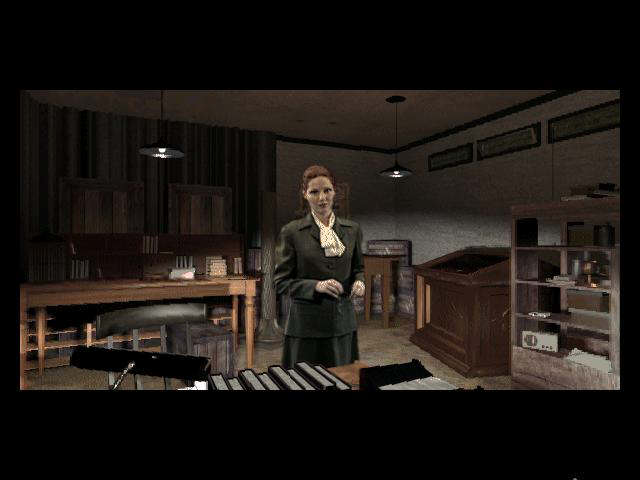  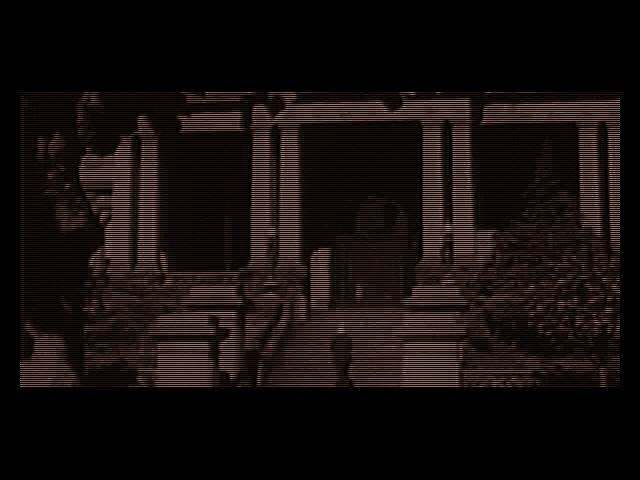 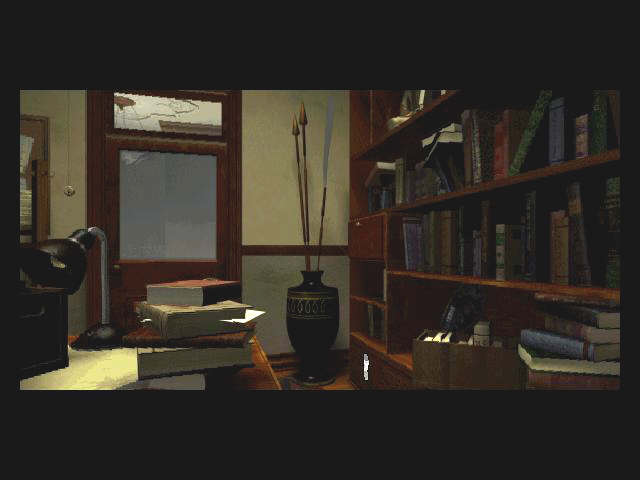 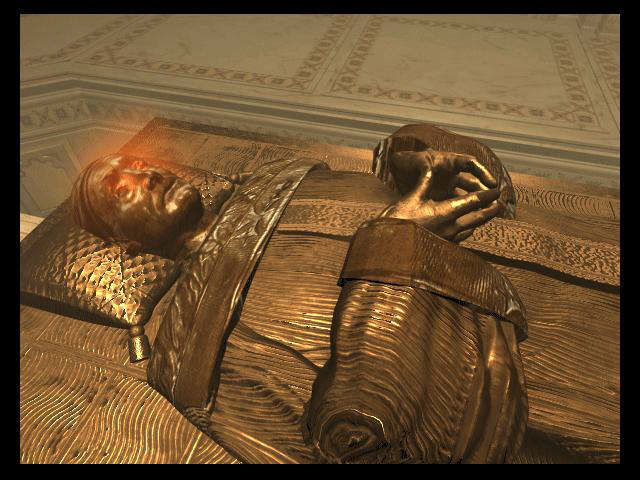 |
This review has also been submitted, in slightly different format, to The Adventure Collective.
Black Dahlia begins its somber and mysterious tale in 1941. The United States is plagued by a serial killer known as the “Torso Murderer” in Cleveland and the grisly killing of an aspiring but aggrieved young actress named Elizabeth Short in Los Angeles, who is dubbed “Black Dahlia” because of her propensity for wearing black. Meanwhile, the Nazis’ regime and their obsession with occult mysticism trouble pre-war Europe and make the U.S. very apprehensive. These actual, real-life events have been woven together and fictionalized for Take 2’s dark adventure game, Black Dahlia. The story, atmosphere, and graphics are excellent–but some laborious puzzles and the potential bugs and crashes may leave you somewhat disheartened.
It all begins when President FDR created the Office of the Coordinator of Information (COI) to keep an eye on potential Nazi spies, traitors, and saboteurs in the United States. You are rookie COI agent Jim Pearson, who has just been given his first assignment: investigate alleged subversive Nazi propaganda being passed around in Cleveland. However, the case is not as boring as it appears to be at first, and you’ll soon find that there is something much more sinister looming behind it. As you unravel the mystery, you’ll find links to Nazi occultism and the Torso killings. Eventually, you will meet the young Elizabeth Short, who has an engraved stone known as the “Black Dahlia” in her possession. This Nazi-coveted stone, as your investigations reveal, is the center of a horrific occult ritual and the source of ultimate power to control the world. Over the course of six years, you’ll pursue this stone around the world and discover things best left undiscovered–but once Jim is embroiled in this web of mystery, deceit, and evil, it is up to you to get him out alive … and uncorrupted. Black Dahlia’s story is nearly unrivaled by any other adventure game, and the plot receives a well-deserved A+.
Black Dahlia, with its million-dollar budget, has extremely high production values. The game is a technological improvement over Take 2’s previous adventure game, Ripper, though the engine is similar. Hundreds of hours of extensive research ensure complete and accurate graphical immersion in the 1940s period. These graphics are phenomenal 3D-rendered, realistic environments, which have digitized actors seamlessly incorporated into them. The graphics, beautiful as they are, receive an A.
Black Dahlia’s video sequences smoothly incorporate live actors into computer-generated backgrounds, resulting in cinematic and absorbing gameplay. Atmospheric brown and white video clips greet you as you travel between locales. The acting ranges from good to, well, bad. Unfortunately, Black Dahlia has its fair share of acting flaws. Darren Eliker, the best of all the actors, gives a commendable performance as the hero, Jim Pearson. Take 2 has also splashed the famous names of Teri Garr and Dennis Hopper on the box, though they play merely small parts. Hopper’s performance is mediocre, and Garr’s is pathetic at best. The rest of the actors, for the most part, do satisfactory jobs. The video and acting receive a C+.
The music and sound effects of Black Dahlia are usually not intrusive. I say “usually,” because there is a particular dream sequence where the incessant voices get to you. Unfortunately, you have to pay attention since these voices are the clues for a puzzle. Most of the music is fitting to the atmosphere and succeeds in enhancing gameplay, however. The music and sound effects receive a B+.
Black Dahlia features some sixty or seventy puzzles dispersed over nearly as many locales. Some of the puzzles seem a bit far-fetched but remain admissible. (It is just a game, after all!) Most, unfortunately, are of the trial-and-error sort, while the rest are more logical. You’ll face jigsaw, manipulation, code breaking, object puzzles, mazes, and more. These puzzles range from simple to simply aggravating. Thankfully, the puzzles you find too troublesome can be bypassed by codes. Even though I resorted to a walkthrough a few times for some confounding puzzles, I generally enjoyed solving them. I am a very patient person, however, and those who are not may find themselves banging their heads against walls in frustration. The puzzles receive a C.
The interface is simple and mostly comprehensible. The 360-degree horizontal and limited vertical navigation allow the player to scan the environment using the mouse. Objects accessible to further interaction may be acted upon by either clicking or dragging. The only qualm I have here is that there is no cursor indication that you should drag an object or part of an object–this can be hard to get used to. The main menu, accessed by right-clicking with the mouse or pressing the Esc key, gives simple access to options, inventory, Jim’s notebook, saving, restoring, etc. Each of the sub-menus can also be accessed by programmable hotkeys if preferred. The Esc key also allows you to skip repetitive transitions or video sequences.
Though many people experienced few or no problems running Black Dahlia, I was not one of those lucky souls. Installation and early gameplay was fine, but toward the end of the game I was enduring frequent crashes, graphical glitches, and other errors. A patch that is supposed to fix these problems did little to help. However, I was still able to successfully complete the game without assassinating my computer. (Maybe I just have a high tolerance level.) The patch also offers the option of adding subtitles. However, I found that they could rarely keep up with the actual dialogue and may have only succeeded in slowing the game down.
Other features enhance Black Dahlia. For instance, Jim carries a notebook, which you are free to type into at your whim. The game makes automatic additions to it when crucial information is seen. Also, disk swapping is kept to an absolute minimum. This is wonderful, since the game ships on a whopping eight CDs. The save-and-restore function, resembling a photo album, allows the player to select a slot for the thumbnail of current location and enter a brief description. This is a excellent system; however, it is difficult to distinguish between different players unless they use their names or use separate pages of the “album.” I would have preferred a system in which each player gets his or her own “album.” The interface receives a B.
Black Dahlia is not a flawless game. However, its excellent storyline, with superb reproduction of the 1940s atmosphere and beautiful, well-integrated graphics and video, coupled with minimal disk swapping, are highlights. Though I encountered technical problems during Black Dahlia, it is clear that most people have not. Illogical, tedious puzzles and potential technical difficulties are the only obvious pitfalls of the game. The puzzles can be difficult at times, but it is not impossible to get past them in some way or another (even that means skipping them all together with a code). Therefore, for those of you who thoroughly enjoy mystery, intrigue, and an excellent story, I sincerely extend my recommendation of Black Dahlia to you.
Overall grade: B.
System Requirements: Minimum Pentium 90 (Pentium 120 recommended)
Windows 95 or DOS (with 16 MB memory)
4X CD-ROM drive
20 MB free hard drive space
Sound card
VGA card with 512K memory (DirectX compatible for Win 95 or VESA compatible for DOS)
Mouse