DISASTER REPORT Review
|
Review Disaster Report Irem Review by Ray Ivey |
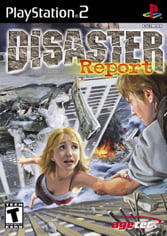 |
Okay, adventure game fans, we can no longer complain that there are no adventure games on consoles. Why? Disaster Report is here.
Right off the bat, I’m going to compare this game to another console adventure, Prisoner of War for the X-Box. Both start with great ideas, and both use a real-time 3D world that looks like an action game, but is an adventure game instead.
Prisoner of War had you attempting to escape from a series of German interrment camps during WWII. Very good, solid idea. Unfortunately, that game was done in by many factors, from bad graphics to puzzling objectives to tedious trial-and-error gameplay that stopped being fun real quick.
Disaster Report fares much better. Its killer idea is simple: what if you were in a major city which was experiencing aftershocks from a cataclysmic earthquake? This is such a great idea I can’t believe it hasn’t been done before.
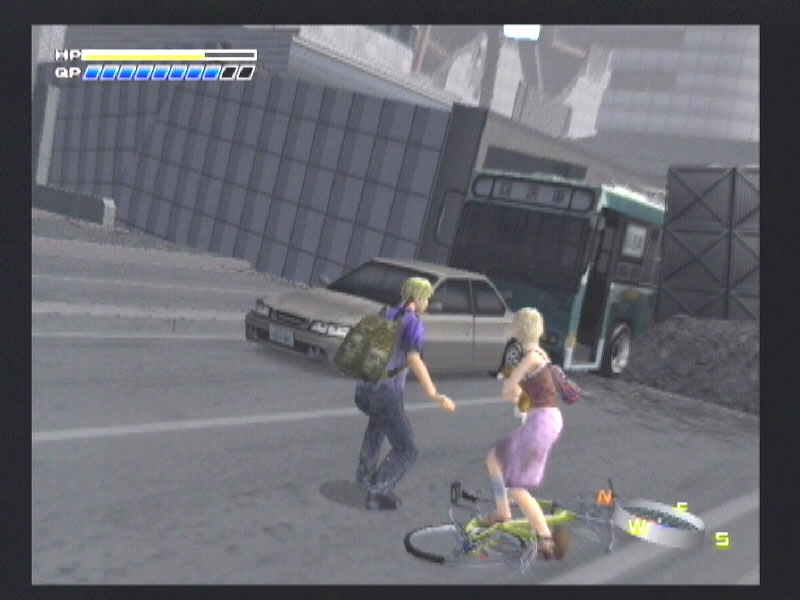
The story takes place in Capital City, which is a man-made island in the Pacific Ocean. You play Keith Helm, budding young reporter who’s on the commuter train heading in to report for his new job as reporter for the Capital City Town Crier newspaper. Unfortunately, right as he’s crossing the enormous bridge connecting Airport Island with the main city island, The Big One happens. Buildings crumble, urban services fail, and Keith is suddenly on his own!
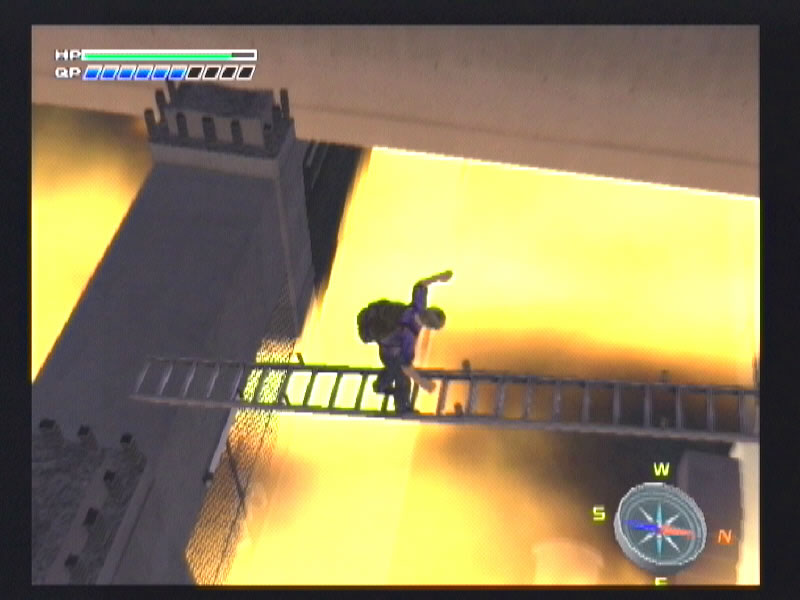
The game is simply Keith’s endeavors to reach safe ground. The exciting opening takes place on the huge bridge (which is quite reminiscent of San Francisco’s Bay Bridge). The commuter train is totaled and Keith has to make his way across the teetering remains of the vast bridge. Maddingly, he sees a rescue helicopter close by, but it cannot reach him. At least it drops a backpack of supplies for him – and this backpack becomes your inventory. (Nicely done!)
What follows is basically Bad Mojo in 3D. Through a series of scenarios connected by cutscenes, you must navigate the treacherous , crippled landscape of the city without getting caught under a falling overpass or dying of dehydration.
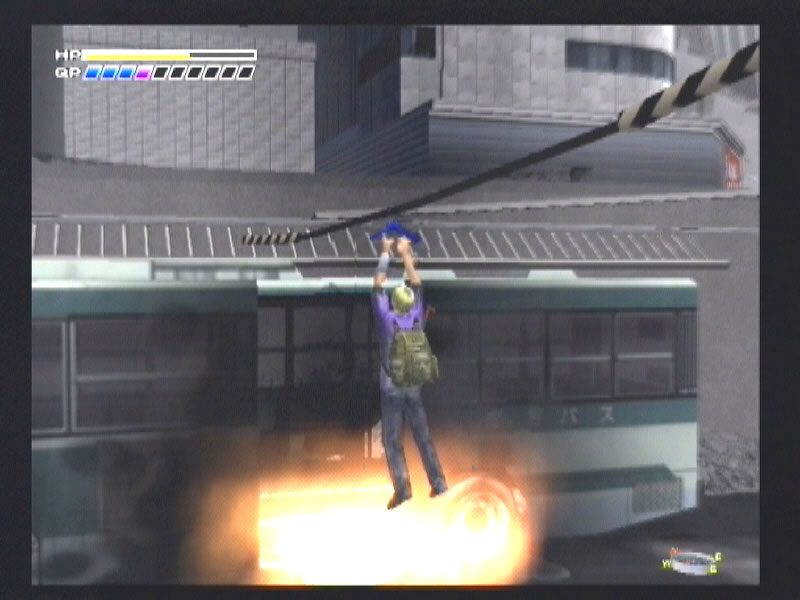
Dying of dehydration? Oh, I haven’t mentioned that? Well, in this game you’ve got to keep yourself hydrated. In what seems like an astonishing stroke of luck, nearly every exposed outdoor public water fountain in the city is still functional! It’s vital that you have Keith drink every chance he gets. He’s actually got a hydration meter that goes down as you exert yourself. Let the meter get too low and it starts sucking up your life energy, and if you’re not careful, Keith will drop dead.
The water fountains are also the only places where you can save the game. Okay, everyone, calm down. Like you, I hate the convention of limited save spots as much as any red-blooded adventure gamer. Trust me on this, however, there are many, many water fountains in this game. It’s not that big a problem. Plus you can fill up bottles of water as well, to help extend Keith’s endurance until the next fountain. I actually found the limitation of ten save slots more of a hindrance than the “save only at water fountains” feature.
For the most part, the controls in the game work pretty well. There are a few points when something Keith needs to do is pretty tricky, and requires several tries. This can get a bit frustrating at times, as a failed jump or grab can cost you health points. But health, like water, is pretty easy to replenish, so this isn’t a huge problem.
Another challenge is the fact that you have a limited inventory. Frequently you’ll have to make an agonizing decision: extra water bottle or more health-replenishing gauze bandages? A crowbar or a can of beans? Flares or Fritos? Who knows what you’ll need?
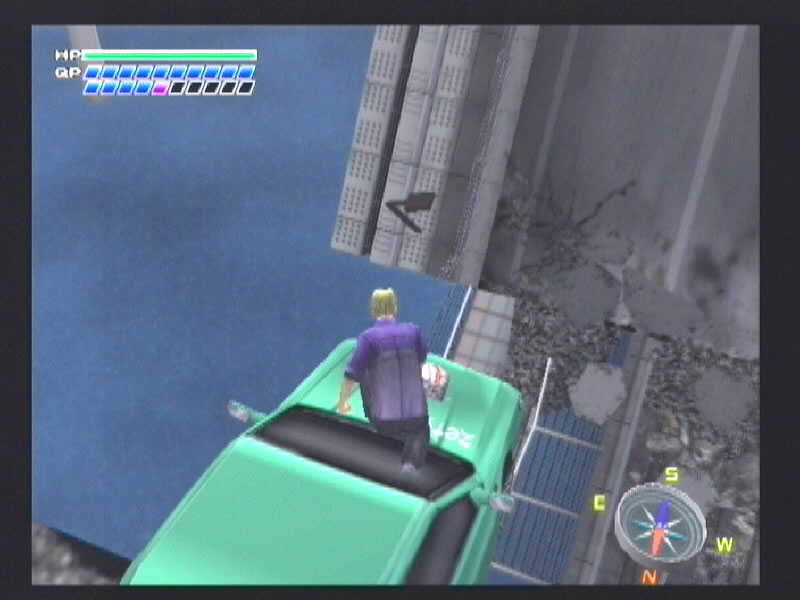
There’s also interesting character interaction in the game. Early on, you meet a girl named Karen, who joins forces with you. You interact with other characters along the way, and are frequently given choices (share precious water or not? slow down your progress to help or not?) that actually affect the game’s story.
There’s even a point in the game when you have to choose between Karen and another character, resulting in a significant game branch.
Which brings us to that magic word, REPLAYABILITY. How many times have we heard the criticism of adventure games that they have no replay value? Well, Disaster Report is the rare exception.
I have only two major criticisms of the game. First of all, there are times when it’s just not very clear where you should go or what you should do next. This can be a problem for an impatient sort (like me), but if you’re an assiduous explorer, this probably won’t be a problem for you.
Secondly, the game is just not attractive. These days the bar for game graphics is set extremely high, an on a next-generation console like the Playstation 2, there’s no real excuse for the blah visuals that make up the world of Disaster Report.
Still, that shouldn’t keep you from giving this unusual and intriguing adventure a try.
Final Grade: B
System Requirements:
- PS2
- memory card
This review is copyright Ray Ivey and Just Adventure and may not be republished elsewhere without the express written consent of the author. Republication of said review must also contain a link back to Just Adventure.