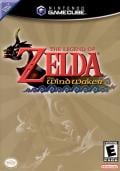
The Legend of Zelda: The Windwaker Review
|
Review The Legend of Zelda: The Windwaker Nintendo Review by Ray Ivey |
|
Ray’s Cranky Zelda Review
No, no, don’t panic. I’m not giving The Legend of Zelda: The Windwaker a bad review. But I do have a few things I need to get off my chest.
When The Legend of Zelda: The Windwaker hit the store shelves in April, it became the fastest-selling title in Nintendo’s history. Now let’s think about that for a moment. Nintendo’s history. That means it’s beating every Mario title, every Donkey Kong title, not to mention every prior Zelda title. Quite an impressive feat. And along the way, it’s garnering some of the most ecstatic reviews of any game since . . . well, since The Legend of Zelda: Ocarina of Time was released for the Nintendo 64 in 1998.
My first complaint is about all of those long-time Zelda fans who were appalled last year when Nintendo first began showing visuals from the new game. Zelda creator and overall uber-game guru Shigeru Miyamoto and his team decided to go with the trendy cell-shaded look, and many Zelda fans began squawking. The game was even dubbed “The Legend of Celda” by industry wags.
My complaint? Why in the world would you object to a Zelda game looking cartoony? This strikes me as an odd, if not idiotic, objection for a game series which has felt cartoony since its NES days sixteen years ago. The hero of these games is a young boy named Link who dresses like Robin Hood and who spends a great deal of his time talking to, and about, fairies. Honestly, what did people want The Wind Waker to look like? Splinter Cell? These anti-cell shading people are very, very silly and everyone should stop talking to them right now.
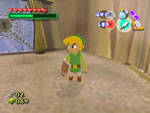
On to the game itself. Miyamoto and his talented team obviously have the last laugh on the cell-shading naysayers because the game is absolutely, fall-down-on-the-floor-and-roll-around-like-you-were-just-set-on-fire gorgeous. If you are a fan of cartoons, especially the classic Warner Brothers theatrical shorts from the 30s, 40s and 50s, you’ll be in absolute heaven with The Legend of Zelda: The Windwaker, The colors have the retina-burning intensity of the palette used in Dumbo and the lines and movement have the jazzy quality of a classic 1952 Chuck Jones short. Yep, if you’ve always wanted to know what it’s like to walk around in one of those gorgeous, color-washed cartoons, this game is your chance.
As in all Zelda games, the craftsmanship is beyond reproach. The controls work perfectly, every element of the design complements the overall whole, and the game manages to feel at once both cinematic and open-ended.
Any game in their right mind will have a great time playing this game. Me included (and I may not even be in my right mind). If you don’t own a Nintendo GameCube, here’s the reason for you to buy one (as if Metroid Prime and Animal Crossing weren’t prior reason enough).
So what in the name of the sacred Deku tree am I cranky about?
It may seem like a real stretch when dealing with such a polished title, but I’m taking points off of Zelda for lack of gameplay innovation. Yes, the game is magnificent to look at, and it’s superbly crafted. However, the game mechanics haven’t essentially changed since the conventions established in the series by the third game in the series, A Link to the Past, over a decade ago. The same bad guy is wreaking the same havoc, and Link must gather the same artifacts (sword, shield, bomb bag, boomerang, etc.) after rifling through the same types of dungeons.
Now, I realize that many game series stick to tried-and-true gameplay formulas. But let me make my point by comparing Zelda to another much-venerated long-running series: Heroes of Might and Magic. These fantasy-themed turned-based strategy games, like the Zelda games, have had many editions and sequels through the years. The core gameplay of resource gathering, hero developing and town conquest has remained the same through its four editions and countless add-ons. However, unlike Zelda, new editions of the series actually introduce important new game elements. In Heroes III, for example, a hero’s experience carried forward through different scenarios of a campaign, so you could enjoy creating a very advanced character. Heroes IV took this idea even further by introducing RPG-like elements into hero building, giving the player even more stake in the characters he was developing. Other key gameplay changes have been introduced through the series’ life as well.
By any conceivable standard, Nintendo’s Shigeru Miyamoto is one of the most creative game gods in the industry. This one guy is this one genius is behind Donkey Kong, Mario, Metroid, and Zelda. That’s quite a resume.
What I wish is that the next time Miyamoto and his team decide to trot out Link with another Zelda adventure, that he applies some of his awesome creative power into evolving the gameplay of the series as well as just its technical design.
Do I have specific directions I’d like to see Zelda gameplay go? Not especially. Hey, I’m not Miyamoto! I’m just a guy who plays his games.
I have lots of faith in his talent, and I know that, if he wanted to, he could make the next Zelda game even greater than this one.
In the meantime, what are you waiting for? Go buy this spectacular (if familiar) game and start playing it right now.
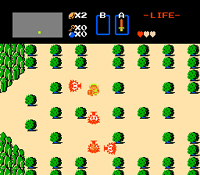
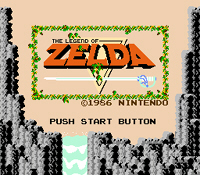
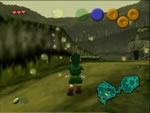
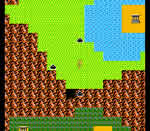
Screenshots from several of the Zelda series:
Final Grade:
System Requirements: A Cranky A
- Gamecube
This review is copyright Ray Ivey and Just Adventure and may not be republished elsewhere without the express written consent of the author. Republication of said review must also contain a link back to Just Adventure.