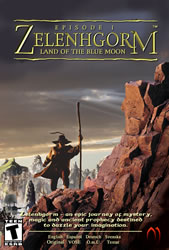
Zelenhgorm Review — Part 3
|
Review Zelenhgorm: Moloto Review by Agustin Cordes |
|
Man, I was really excited about this game. It’s always nice to welcome something different these days. Different in terms of ideas: and trust me — there hasn’t been an adventure game with the premise of Zelenhgorm before. The setting, the characters, the huge story about prophecies, faraway lands, legendary civilizations and mythical mumbo-jumbo — everything is very original.
Also, this is the first attempt ever to release an adventure in episodes. I mean, of course, planned episodic releases, as there have been long sagas of adventure games before this. In Zelenhgorm, Moloto has deliberately divided the story into at least 12 episodes (though this number has yet to be officially confirmed). One may wonder about the convenience of this format.
But let’s start right from the beginning.
“Please, for its safety, lock your brain inside a box before playing”
Or else it might get hurt.
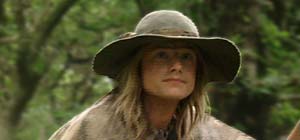
After watching the introduction sequence, I told myself, “this seems truly interesting”. We play the role of Arrikk Vaheirr, a villager on the small island of Seneva. He is a tall guy, with long blond hair who dresses like a peasant and has fluffy eyebrows. You probably never played a character like him before. One interesting thing about Arrikk is that he is left-handed. This information might seem useless, but you’ll soon see why I mentioned it.
The game starts with a dream of Arrikk’s about a ship, apparently sent by the gods, traveling a long way through immense seas and encountering people wearing funny foam-rubber dresses (yes, foam-rubber dresses) who break vases. It appears as if these people are attacking a civilization and destroying their possessions. During these flashbacks, a woman (or goddess?) tells Arrikk in a cryptic message that he “must follow the path of the water”. Then he awakens and realizes that the ship he just dreamed of has landed next to his house. That’s what I call a nice way of starting an adventure game. It’s weird but it catches your attention.
Arrikk seems to be quite a creative person since his home is filled with all kinds of gizmos that we’ll need to make use of during the game. This is one of the reasons that the rest of the villagers don’t like him. Encounters around the neighborhood will reveal hostile feelings towards Arrikk. It turns out that the villagers are very superstitious and eventually accuse him of “left-handed witchcraft”. He will be suspected through the entire game.
It’s apparent that Arrikk is very different from the rest of the villagers. He seems much more intelligent than most of them. Actually, he doesn’t look like them either; while they look definitely Oriental, Arrikk’s facial features are somewhat Scandinavian. This adds even more to the mysterious atmosphere that surrounds the story.
FMV, remember that?
Technically speaking, Zelenhgorm is, to say the least, just fine. It doesn’t stand out in any particular area but, as a whole, it gets the job done well.
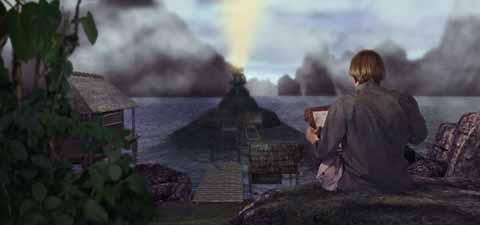
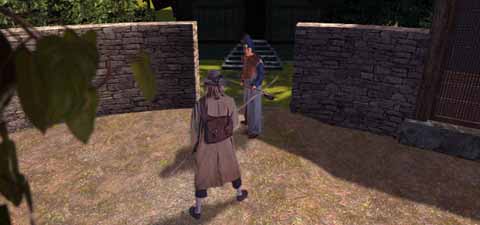
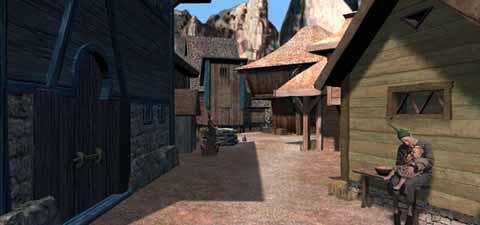
The graphics are good although there are some very pixelated scenes at points in the game; it doesn’t look awful but it’s just as if some sections were in VGA. This isn’t so bad but it gives the game a dated look.
Animations are very nice. You get to see a nice cutscene (luckily, skippable) each time you walk. Also, the interactions with many objects are nicely animated.
Music is sparse but effective; you get a nice orchestrated tune here and there but mostly only in situations of danger. The music in the introductory sequence is marvelous – it sounds inspired and truly epic; it makes you feel that something big is coming.
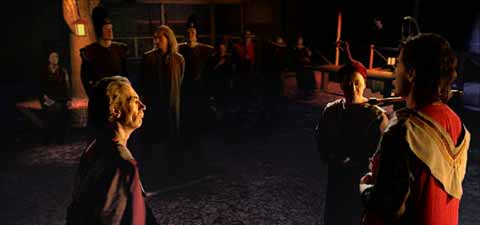
FMV hasn’t been too successful with adventures and it’s nice to see a game that does it right. The real actors are the best part of the technical area. They’re perfectly integrated within the gameworld and the videos have a good quality. Thankfully, they’re not overused and there’s actually gameplay. The acting is a tad corny in many cases but it’s bearable because all the characters are interesting except for Arrikk, who has very little personality. When he speaks, his lines are given in a monotone. This is not good in the main character, but possibly there’s a reason for his acting and talking this way.
One thing of interest is that several of the actors worked in the Star Wars series. None of them appear in the first episode, however, so don’t expect to recognize anyone yet.
I had mixed feelings regarding the interface. The game is presented in a 360° panoramic view similar to that used in Cryo games like Atlantis. The only difference is that there isn’t a fixed cursor, that is, the cursor appears on screen only if you’re looking at an object of interest. It takes a little while getting used to this but it’s nothing serious.
There is a downside of the technical aspect, though: there’s a lot of disc swapping, although it’s avoidable by doing a full install of the game (less than 2 gigs).. This is a critical issue since there’s an important amount of roaming around through the village
All in all, the game flow is excellent (provided you do a full install) and gives you the feeling of actually being in Zelenhgorm.
Hey that does sound nice! So what’s there to do in Zelenhgorm?
Sadly, not much. The game does give the feeling of being big: there’s a large market where you can buy a lot of stuff, you can skin dive in the sea for pearls (the currency used in the village) and there are plenty of interesting characters to meet. You will pass the night in the stocks if you pester the guards or the townsfolk, and you may even die if you push things too far.
So, while there’s plenty to do, the problem is that there aren’t many puzzles. This reminds me of games like BAT II or Dreamweb where you had an expansive world with many things to try but actually not many important things to do. However, Zelenhgorm isn’t even very big. While it’s not linear, and several tasks can be completed in no special order, one of the biggest frustrations in the game is that, when you reach an important point in the story, there’s actually nothing to do there!
All of this makes the game terribly short; once you know what to do, it can be solved in less than half an hour. It’s really that short.
There are some tricky puzzles but they’re not “honest”. You can miss important items because they’re not a hotspot. For example, at a given point, I knew I had to do something that was fairly obvious but I didn’t even try it because the object of interest wasn’t “hotspotted”.
Final comments
The idea of an episodic game is very attractive but it makes me sad to say that, as a standalone product, Zelenhgorm: The Great Ship is seriously lacking. Maybe if Moloto would’ve shortened the number of episodes so they could put more content in each one, it would’ve been a more satisfying experience. After all, there have been games over 6 discs long and, provided that each episode takes 3 discs, Zelenhgorm could easily have been twice as long by having the content of two episodes shipped in 6 discs.
By the end of the game, I’d met Arrikk, explored his native village, learned a bit of history about his family and had gotten just a glimpse of his destiny. That’s when I realized that nothing actually happened!
Now, this may work in a TV show where the first episode sets up the mood and introduces the characters, but it doesn’t in a game where you are supposed to want to buy each episode. I do want to know how the story continues — I really liked it — but, frankly, if each installment of Zelenhgorm has this content, I’m not sure if I want to go further into the storyline. This is sad because the initial premise was great and I really liked the overall idea but I cannot say that Zelenhgorm: The Great Ship is a great game. It’s lacking too much and my final impression was that it is quite a letdown.
Final Grade: C+
System Requirements:
- Pentium II 266MHz processor
- Windows 95, 98, 98 SE, 98 ME
- 64MB RAM
- 650MB free hard disk space
- DirectX 7.0 compatible 3D graphics card with 8MB VRAM
- DirectX 7.0 compatible 16-bit sound card
- 16X CD ROM Drive
Screenshots