Unfinished Games – Welcome to Just Adventure + – Articles
Articles
|
by Agustín Cordes |
What Could Have Been (unfinished adventures)… |
We adventurers are the underdogs of the gaming community. Too many times we have seen our favorite titles delayed, released in a poor and buggy state or even canceled, which is the focus of this article. Due to todays gaming trends, developers have almost unlimited resources at hand and its more profitable to make a cheap action game filled with eye candy knowing beforehand that it will be a bestseller or, at the very least, have relative market success. To put it another way: creative minds need not apply and, of course, creativity isnt cheap. Designing adventure games is no easy task. But thats another story.
The games we’re going to discuss were cancelled for many different reasons but they all have something in common: someone decided that the project was no longer feasible. Obviously, there have been a lot of excellent games that never saw daylight, but these are the ones that were the most anticipated. Even worse, they held promise that they were going to be great and innovative.
Try to not shed a tear.
Secret Of Vulcan Fury by Interplay
Deceased 1999
It is still beyond all logic (Vulcan logic that is) why Interplay cancelled this game. Star Trek: 25th Anniversary and The Judgment Rites were arguably the best games based on the popular series and both of them were modest hits.
For this third chapter, the designers made a job beyond comparison with the incredibly realistic characters modeled after the real actors whom also provided their voices (also present in the first chapters). The graphics were the best ever seen in an adventure game up to that date and there was even more with a truly epic story directed by John-Meredith Lucas from the original series. It was also written by one of the original scriptwriters, D.C. Fontana: when a Romulan ambassador is found murdered on board the Enterprise on his way to Vulcan in a diplomatic mission of reunification, the Enterprise crew must set things right as this mission is endangered. Apparent connections to an ancient Vulcan weapon called Vulcan Fury makes the mystery even more compelling. The game was divided in six chapters each one starring a different member of the crew: Captain Kirk, Spock, McCoy, Sulu, Chekov and Scotty.
There was no doubt that this was going to be a great game. And then, when it was almost finished, Interplay inexplicably canceled it. Its not very clear why; maybe it was due to the huge success of their action games line based on the Star Trek universe. Be that as it may, they still have a whole legion of fans dying in agony.
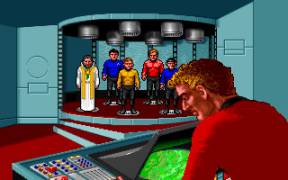
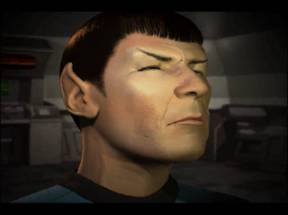
Star Trek: 25th Anniversary Secret Of Vulcan Fury
Sukiya by Lankhor
Deceased 1992
Theres nothing worse than an incomplete trilogy.
The adventures of Jérôme Lange started with Mortville Manor and continued with Maupiti Island. The later was one of the most unjustly forgotten adventure games and some great innovations it introduced to the genre were overlooked at the time. First, it took place in a “pseudo real-time” gameworld (predating The Last Express and Blade Runner by several years) where events happened around the player even if he stood still. The characters had their own agenda and changed their attitude according to how they were treated. It also had an excellent interrogation system. The gripping plot was very well written: due to a storm, the boat in which Jérôme was traveling must stop at Maupiti island for repairs. As pretty as the island appears, dark secrets begin to emerge and Jérôme is asked to investigate the disappearance of the daughter of Maguy, one of the island natives. As the story progresses, it seems that the arrival of the boat to the island wasnt random at all.
All of this made Maupiti Island a truly atmospheric game.
Sukiya was kind of going to continue the story: after finishing the investigation at Maupiti Island, Jérôme is invited by a friend, Max, to spend a few days in Japan in a great Buddha monastery for a well deserved rest. At first, everything seems peaceful and calm in the monastery, similar to Maupiti Island, until the uncle of Max is found assassinated one morning. Now, its up to Jérôme to discover the identity of the killer and find out what is really going on under the peaceful look of the monastery.
Sukiya was canceled for the following reason: taking advantage of the modest success Maupiti Island had in Europe, Lankhor made a very uninspired adventure game with the same engine – Black Sect – and it was a total failure in the market. Due to this, the company decided to not continue with Sukiya development. The game was almost in a beta testing stage.
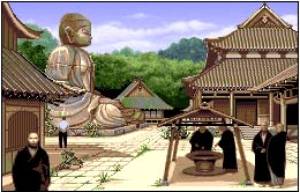
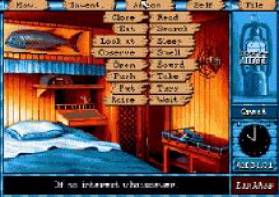
Sukiya Maupiti Island
Meantime by Interplay
Deceased 199?
Around 1988 was the Golden Age of RPG’s. Excellent titles based on AD&D filled the shelves but one stood out from the rest: Wasteland. It made a 180 degrees turn from other fantasy RPG games by taking the storyline to a post-apocalyptic future. The merely functional graphics didn’t turn away a lot of people who were captivated by this game for months. The innovations it contributed to the genre are countless but, in particular, the character creation system was copied in many other games. It is to this day one of the most respected RPG games ever. It would be a full ten years before a sequel in spirit only was released: Fallout. But the real sequel, a very promising one, got lost in time.
Meantime became a kind of a myth among Wasteland fans. There was lots of speculation about how the story would continue, what new ideas it would present, the new engine, etc. But the popular consensus was that Meantime was going to be a great game; a great game that no one would ever see.
Over the course of the years, small glimpses of the Meantime premise were revealed: it would involve time travel and some exciting figures would join the party like Cyrano de Bergerac, Werner von Braun and, possibly, Albert Einstein. This party would then fix glitches found through History caused by other historical bad guys.
After the project was discontinued, Electronic Arts, who owned the rights to Wasteland, released a semi-official sequel – utilizing the same engine – by the name of Fountain Of Dreams. It was a complete fiasco.
Why was Meantime cancelled? It was being developed in Apple II and a beta was in progress when the 8-bit game market started to decline rapidly. The official excuse was that there weren’t enough resources to port the game to DOS. This is actually the only information available for this game and there aren’t existing screenshots. We’ll probably never know anything else.
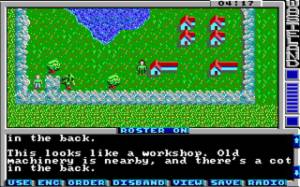
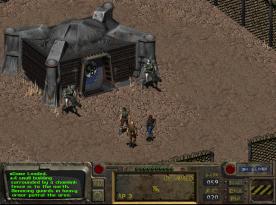
Wasteland Fallout
Leisure Suit Larry 4 by Sierra
Deceased 199?
LSL4 was done with its beta stage when the US Government confiscated the disks because it showed some of its employees doing nasty things.
No, wait, thats not entirely true. Actually, there are more theories surrounding LSL4 than there are the true identity of Jack The Ripper. The truth is that Al Lowe was so tired after LSL3 that he said that there wasnt going to be a LSL4. And he meant it!
Eventually the series was continued, but with Leisure Suit Larry 5.

20,000 Leagues Under The Sea by Southpeak Interactive
Deceased 2000
Sometimes, a game isnt cancelled due to the whims of the market but the incompetence of some people.
20,000 Leagues Under The Sea wasnt an adaptation of Jules Vernes book, instead, it would take place many years later: hunger in the world has become a major problem so research teams are studying sites on the sea floor for potential undersea farming. One of these groups stumbles upon what seems to be the long lost captain Nemos vessel: the Nautilus. Suddenly, they become stuck in it as theyre being chased by pirates interested in some very valuable technology contained onboard.
20,000 Leagues Under The Sea was designed and written by critically acclaimed Lee Sheldon who was the mastermind behind the classic Ripleys Believe It Or Not! The Riddle Of Master Lu and was actively involved in Temüjin and Dark Side Of The Moon, both also from Southpeak Interactive. It would make use of Southpeaks proprietary engine, Virtual Reality, mixing real actors with rendered scenes.
Beginning as a Sanctuary Woods project, Lee putted a lot of effort into 20,000 Leagues devising a fascinating storyline filled with terrifying monsters, secrets and complicated puzzles. When Sanctuary Woods went out of business, Lee offered the design to Southpeak to begin its development.
This was probably going to be Lees masterpiece but, sadly, all his efforts were torn apart by Southpeak. It seems that the original design was completely rewritten and Lees vision of his game was turned upside down. At the end, the final product was in a very poor state and unmarketable. After this episode, Lee left Southpeak and has not worked on an adventure game since.
There were rumors that another company was interested in picking up the scrapped project and turning it into a marketable game, but it was in such a shambles that it would have been like starting a new game and was not financially feasible.
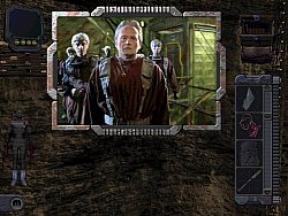
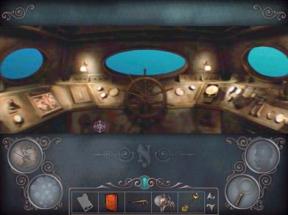
Dark Side Of The Moon 20,000 Leagues Under The Sea
Warcraft Adventures by Blizzard
Deceased 1998
There was huge rejoice among adventure fans when they heard the news that the next installment of Warcraft was to be an adventure game. Could it be? The Adventure genre was going to win a battle against the ever popular RTS genre? No, it wasnt.
The Wacraft series had become very popular and still to this day is considered too some of the best RTS games ever released, but Blizzard wanted to tell a story of the Warcraft universe in a different way and they chose the best vehicle to tell it: an adventure game. As the developers were die-hard adventures fans, Warcraft Adventures was designed as a pure traditional, point-n-click adventure with compelling story and characters. At first, it might have seemed a bit odd that a firm that usually specialized in RTS suddenly tried their luck at another genre and fans were surely reluctant but, as the development slowly progressed, the looks of this new Blizzard game made several gamers drool in anxiety.
The story would start where Warcraft II ended: after the Human victory in the long battle against the Orcs, the portal that was the passageway between Azeroth, the Human world, and Draenor, the Orc world, is permanently shut leaving several Orcs stranded in Azeroth. One of these Orcs, Thrall, learns over the course of the game that his race has been enslaved by the humans and he must free them and reunite the clan so the Orcs may have a worthy life.
The scope of Warcraft Adventures was truly epic and it was the high quality demanded by Blizzard that lead to its demise. Although it was announced later than Warcraft Adventures, the third chapter of the Monkey Island series that Lucasarts was developing was already looking better than Blizzards project. Because at the moment there actually werent other mainstream adventure games in the market, The Curse Of Monkey Island was the direct competitor of Warcraft Adventures and, put simply, it was more polished than the latter. The designers felt that their masterpiece didnt have the quality they expected and it would pale in comparison to the new adventures of Guybrush so they grudgingly stopped development. Warcraft Adventures was nearly finished; only some new puzzles and areas were needed for completion.
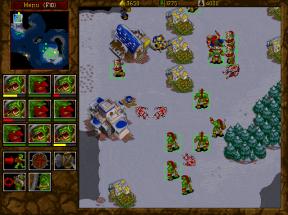
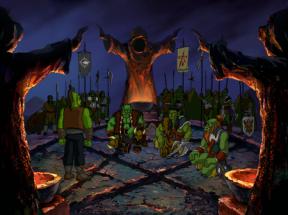
Warcraft II Warcraft Adventures
These games are among a plethora of unfinished adventures, to name a few: Dark Crystal, Leisure Suit Larry 8, Planetfall (the remake), Space Quest 7 and the list goes on and on.
You might be asking yourself by now “Why did I read this? Its too depressing!” But you can use this to your advantage: most of the cancelled adventures named here were either sequels or they continued a design structure or idea and in all cases (with the exception of Warcraft Adventures) were preceded by great games that have yet to played by many newer gamers. So, as you can see, this article wasn’t that useless after all. Grab one of those old titles, enjoy it and you’ll have a glimpse of what could have been.
Now, let’s have a moment of silence.