Versailles II: Testimony of the King
|
Review Versailles II: Testimony of the King Developer: Cryo, La Reunion Des Musees Nationaux, Le Chateau De Versailles |
|

The consequences of the Thirty Years War had taken a heavy toll on many of the political institutions in Europe during the latter part of the 17th Century and now with the treaties of Ryswick in 1697, it was thought that peace and stability would be sustainable for the future. The treaties had presumably assured the sovereigns of Europe that the balance of power throughout Europe would be maintained, thus preventing the preponderance of any single state. Crucial to maintaining a balance of power system is a commitment by members of the treaties to change alliances as the situation demands in order to uphold the balance.
 As the calendar turned over into the 18th Century, in the year 1700, the stability of the balance of power once again was threatened. This time the concern was triggered by the illness and probability of death of Charles II, King of Spain, Naples and Sicily. Charles II, the last of the Spanish Hapsburgs, was physically crippled and mentally retarded, so it was pretty much of a foregone conclusion that he did not have the strength to survive his current illness.
Charles II did not have an heir, so the question of succession and influence became a matter of significant political concern for the European countries, particularly France, England, Holland and the German states. From the Court of Versailles, all of the arts and influence of French diplomacy were assembled to persuade Charles II to designate Duke Philip of Anjou, grandson of Louis XIV, as his successor to the Spanish throne. Meanwhile, pressures were being brought to Charles II by England, Holland and the German states to choose Archduke Charles of Austria, nephew of the Queen of Spain (Mariana of Newburg) and son of the Austrian Emperor Leopold I.
The game, Versailles II, takes the player to the Court of Versailles under King Louis XIV, which has become a central arena of political passions, power and influence at the time of the imminent death of Charles II. The stakes are high. The intrigue is building as the concerned European countries actively position themselves to have a direct influence on what will be a changing political map.
Which of the two proposed successors will inherit the Spanish throne? Will the outcome result in war between France and Austria? If so, it might be “politically correct” to refer to this potential war as the War of Succession!
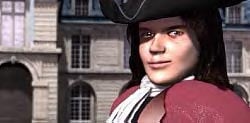
The Heir is Not Apparent: As the game begins, you play the part of Charles-Louis de Faverolles, a young nobleman and former page at the Versailles Grande Ecurie (the stables). You arrive at the Court one morning in 1699 with only a letter of recommendation addressed to your former master at the stable and your meager monetary savings. Your immediate objective is to find lodging and a job. Your ultimate goal is to improve your standing at Court by gaining influence and favor that will open up an opportunity for a diplomatic assignment that will send you to Spain and satisfy a fervent desire to be reunited with your childhood sweetheart, the maiden Elvira.
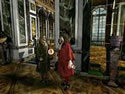 The key to fulfilling your ambition rests with your ability to reach and gain the confidence and favor of the Marquis de Torcy, Minister of Foreign Affairs. But the road to reaching your goal will not be an easy one. You will need to blend in at Court, listen carefully and weigh the political consequences of discussions that you overhear, decide who to trust and who are potential enemies and be ready to perform innumerable services (some of them dangerous), while discovering and foiling treacherous plots that threaten to undermine the political interests of France…all in order to improve your standing at Court.
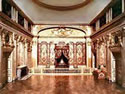
Your first job is as an Assistant Building Inspector, which is awarded to you as a result of your ability to organize various craftsmen in a precise work sequence that is required to perform a reconstruction project on the King’s bedroom. This project is the first of many unusual and diverse puzzles that you will encounter during the game and actually is pretty easy, as well as educational, because there is only one order for the craftsmen’s tasks that will work.
Once you have established your first position at Court, you are directed/guided by the unfolding story of the game to many interesting locations at Versailles (i.e. the Pelican Inn, the gardens, the Minister’s Wing, the Grand Commun, the War Room, the Queen’s Staircase and the water system tunnels).
Your journey will be marked by challenges and trials that will progressively improve your standing at Court, but will be full of surprises and political affairs. You will converse with many different characters at Versailles and knowing who are your allies and who are your enemies will be important to your survival and your success.
 How will you gain the favor of the Spanish Ambassador? Should you get involved to save the reputation and life of your boss (Lhuillier) who has been accused of theft? What about the wisdom or consequences of helping the scientist (de Bandols) to find the secrets of how the underground water system works? What should you do with the mysterious and somewhat disturbing letter received from the enigmatic and flirtatious Prosperine? How do you maintain your devotion and commitment to Elvira without disappointing Prosperine and eliciting the politically devastating disfavor of her influential god-grandmother Madame de Maintenon? Can you save d’Arqueil from his gambling addiction? What covert intentions does the strange Englishman have and what danger does your involvement present? What terrible thing has befallen Elvira and can you “make a deal” with the German Count Sinzendorf that will save her?
These are just a few of the questions that you will face as you progress through this game. Let the fun begin and it continues almost non-stop, as you navigate your way through the palace and gardens of Versailles in an exciting attempt to fulfill your destiny.
An Edutainment Tour of Versailles: I’m sure that you’ve already guessed that this game is pure edutainment. Right from the beginning you are given the choice of experiencing three (3) different “consultation modes”: a cursor-guided tour around the town of Versailles (circa 1699), the chateau and the gardens; a thought-provoking trip through history by exploring the documentation/reference section; the adventure game itself.
Versailles II is a very linear, very historical game that is heavy on educational content but still manages to provide an interesting and challenging adventure game for the player. You will travel to locations by use of a Map feature that will normally give you only one or a minimum number of choices at each juncture in the game, thus, maintaining the linearity of movement throughout the game.
The game is played from the 1st person perspective and you will use the mouse cursor, which can take various forms, to move, take action, take items and converse with characters.
A right-click of the mouse will bring up the Inventory Bar, where you will store and use inventory items. This area also provides the player with access to the following special features: your “memory” in the form of a Logbook that automatically records information about decisive stages in the course of the developing story; a dress/costume icon that allows Faverolles to change clothes and appearance according to the story’s circumstances or needs and a See icon for use in consulting clues that you have previously collected.
Another use of right-clicking is to activate the Documentation, which is provided as a historical encyclopedia and chronicle of the year 1700. It illustrates and provides information about the culture, people and daily life at the Court of Louis XIV with files grouped under five (5) main topics: A Town Within a Town; The Court Within Its Garden; Princes and Subjects; Public and Private Histories; and Life at Court.
 Of course, the interface allows the player to access the Main Menu and select from starting a New Game, Loading a stored game, Returning to a game in progress, Quitting a game and Saving a game by selecting either an Automatic Save mode or a Manual Save mode.
All in all, everyone should be familiar and comfortable with the Versailles II game interface and playability.
A Marquis Presentation: The graphics and animations used throughout Versailles II are vintage Cryo, utilizing a new, improved 3D photo-realistic modeling engine that creates magnificent, colorful images and enhances the player’s ability to become visually immersed in the scenes and the story. Although there are not frequent or spectacular animations, they are well-done and offer additional visual appeal to playing Versailles II.
Real characters from the Court, including Louis XIV himself, are encountered and the voice acting is generally good…acceptable, but not outstanding.
The music is excellent and unusual, in that, it uses an orchestra of 25 musicians, featuring harpsichordist, Skip Sempe, to present specially recorded excerpts from the compositions of several music masters. The result is that the music provides a nice complement to the expansion of the story and fits comfortably with the period of history being portrayed.
Would you know how to play a game of “lansquenet” and win? How about trying a winner-take-all, high-stakes game of “teetotum”? Well…I know that you all would be very accomplished when we try a game of “blind-man’s bluff”? These are real games that were actually practiced during the 17th and 18th centuries. So…here’s your chance to have fun and experience a little history at the same time. Go for it!
The rest of the puzzles in Versailles II are going to be probably quite familiar, in terms of concepts, but they are unique to the times and they are integrated into the story. A couple of the puzzles are tied very tightly to the historical/educational fulfillment of the game (i.e. saddling/outfitting a horse and renovating the King’s bedroom). These puzzles involve performing tasks in a particular sequence and the game will provide a “guide” for your efforts that only permits you to progress in an order that the game has pre-selected…so, you can’t go wrong. Not a lot of challenge, but interesting anyway.
There are many inventory-based puzzles, which involve collecting and using items and some more complex puzzles, which require research in the documentation base (i.e. determining the order of succession from the royal families, decoding a secret letter and operating the underground water system).
 Then…the game manages to include a “hated” tunnel maze puzzle and makes certain that you might become doubly distressed by adding a “timed” escape sequence caused by a catastrophe from which you will die, unless you move very quickly to escape. Wow…I’m tired just thinking about it!
Conclusion: If you enjoy “edutainment” games, you will enjoy Versailles II. It won’t be the best edutainment game that you have ever played, but most probably, at least for me, will rank somewhere in the middle.
If you’re interested in the historical times of Louis XIV and the Court of Versailles and enjoy stories of political intrigue, then you will find Versailles II to be worthwhile.
The graphics and animations are excellent, the music is very complementary to what is happening on the screen and the puzzles provide a lot of variations by offering historical insights into popular games of the time and challenging the player to perform skills and answer quizzes that are appropriate for the unveiling and progression of the story.
I enjoyed Versailles II, but then I especially like “edutainment” games, so I’m relatively easy to please. Having said that, I feel obligated to say that it didn’t “captivate” me the way many other “edutainment” games have done and I visited Versailles last June, 2001, so…I was looking forward to the return trip by way of this game.
So…exactly who came out as the “winner” in this high-stakes game of succession to the Spanish throne? What role did Faverolles play in the political intrigue that played out at the Court of Versailles and did his role make any difference in the outcome of the succession? Was Faverolles successful in reuniting with his childhood sweetheart, the lovely Elvira?
My Rating for Versailles II: B
Minimum PC System Requirements:
Pentium II, 350 Mhz Processor
32Mb RAM
8X CD-ROM
Windows 95/98
Video card: thousands of colors
16 bit Soundblaster compatible card