Review: Liath
|
Liath Developer: Exortus By Ray Ivey |
Liath is definitely one of those good news/bad news titles. Whether or not it’s for you will depend on how important the areas of strengths and weakness are.

First things first. Liath is (superficially at least) a fairly traditional third-person point and click adventure. The most unusual thing about it is that it was developed in Russia. Cool, right? Well …
The story is a lot of hooey about magic spells, ancient curses, sleeping spirits, and enchanted lands. You play a pretty young man who has to sort all of this out and put everything right. If this sounds extremely familiar … well, that’s because it’s extremely familiar. I’ve just described the plot of many, many adventure titles, and it’s either your thing or it’s not.

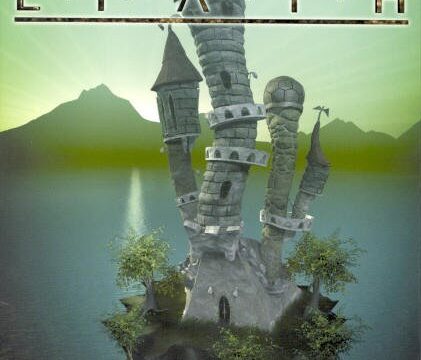
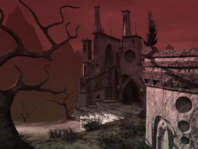
The best thing about the game is the visuals. Designed and illustrated by Timon Shi and Alex Cheprackov, the game has some of the most arresting images I’ve seen in a long time. Weirdly, it’s the first game I’ve ever seen in which the gameplay screens are actually more attractive than the cutscenes. That’s because in Liath the cutscenes are muddy collages of still images, not real animation at all. Very strange indeed.
The gameplay screens, however, are a series of small masterpieces. The game takes place in a highly idiosyncratic and playfully imagined world that’s a real pleasure to look at.

An extremely Way Cool (yes, that’s a technical reviewer’s term) addition to Liath’s visual delights is the way the camera moves between screens. In most third-person games, when you “leave” the scene, the screen cuts to the new frame, into which your character walks. In Liath, here’s what frequently happens instead: when you click to move to the new location, the camera literally changes position and swoops over to the new perspective as your character moves. This dizzying effect adds a great sense of reality to the “sets” in the game, and I found myself going through these movements over and over just to watch this fun effect. Unfortunately, these soaring camera movements were more compelling than the story.
This is a game about magic, in the old-fashioned hocus-pocus, double double toil and trouble sense of the word. I thought that would be a real problem for me; it’s just not my cup of tea. Surprisingly, though, I found the magic-building to be, for the most part, entertaining and fun.

However, this game has a lot of problems. It’s translated into several languages, and the English translation is just not good. The manual and the game are rife with misspellings and mispronunciations. I know, I know, I’m an ignorant American monolingual boor, but if I was having a game translated I would give high priority to getting it translated impeccably. You could argue that this is a minor problem. I disagree. Why? Because every time I saw a misused or misspelled word, it pulled me out of the reality of the game.
Even worse, the story and puzzles seemed very illogical and arbitrary to me. I admit I find this to be true of a lot of third-person games. They frequently simply degenerate into random inventory hunting and manipulating. Liath suffers greatly in this department. Without hints I don’t think I could have finished the game at all. Lots and lots of wandering around and looking at pretty pictures.
Fortunately, there is a pretty nifty hint feature built right into the game. Thank goodness.
Conclusion
Liath is very pretty, with fun gameplay involving magic spells. The translations are terrible, the puzzles and plot are arbitrary, and the dialogue is wooden. Liath is a game for adventure completists, those curious about a Russian game, and those who can’t get enough of magic. Others beware!
Final Grade: C
System Requirements:
IBM or compatible PC
Pentium 133 MHz or faster (166 MHz recommended)
16 MB RAM
CD-ROM drive
SVGA 2 MB RAM video card
40 MB free space on the hard drive
Windows 95
DirectX driver
Any Windows 95-compatible sound card