Project Eden
|
Review Project Eden Developer: Core Design |
  |
From Eidos, the makers of the infamous Tomb Raider series, comes Project Eden, a futuristic third-person adventure game. The game is based sometime in the far future, in a towering city that continued to build upwards and onwards, leaving the lower levels of the city to the dregs of humanity. You control a team of four “officers,” each of which have separate and distinct roles within the group. The team is sent into the lower depths of the city to rescue some workers who have disappeared. The game is broken into a series of levels, with each level having specific tasks or goals that need to be accomplished. The goals can often change mid level, depending on the actions of the team, and the storyline of the game.
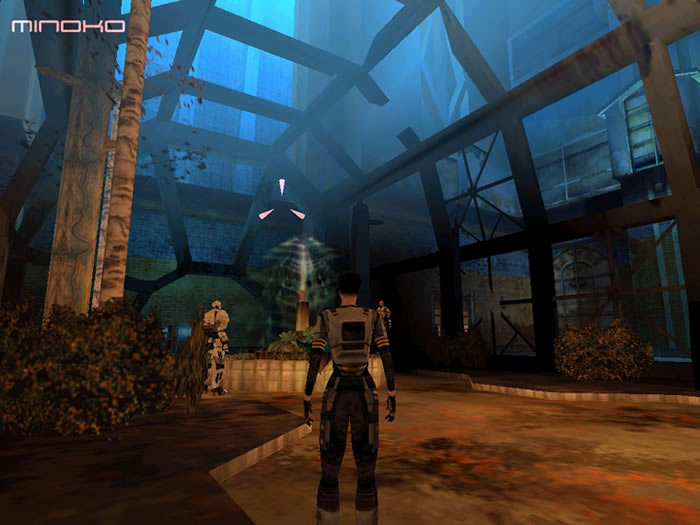
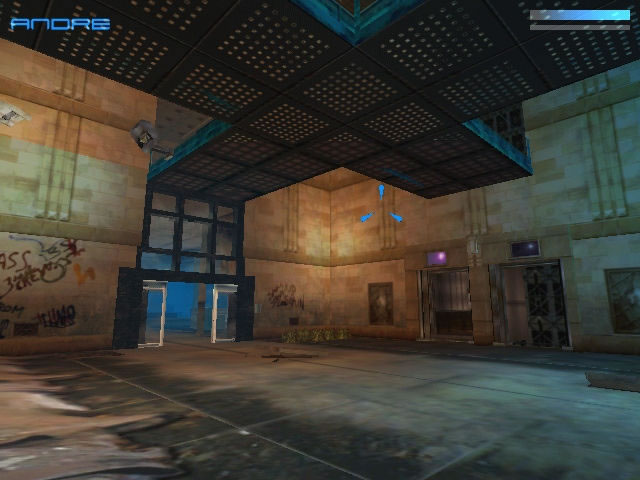
As I stated earlier, the team has four members, each with a separate and specific role. First is Carter, his role is team leader. As team leader he is the only team member that is capable of opening certain doors or switches. Second is Monoko, who is able to hack into any of the operable computer systems to gain access to automated guns or open select doors. Next is Andre. He is the team’s repairman. He fixes stuck or broken machines found within the game. Lastly is Amber, who is a robot, and is able to enter hazardous areas that would normal kill the average human being. Most of your playtime will be spent as either Andre or Monoko, as they are the most useful of the team.
The puzzles within the game are based on the team members and their specific skills. For example, Carter may open a door, only to find an automated turret sitting behind it, and noxious fumes throughout the room. Monoko needs to gain control of the turret, but cannot because it is broken. In comes Andre to fix the control panel. Then Monoke takes over the turret, which allows Amber to enter the room without getting blasted. (Before I get blasted for printing spoilers in a review, this is not an actual puzzle in the game, just something I made up to show the roles of the team.) Sometimes the whole team contributes to solving the puzzle, and at other times, its only one or two members that actually have something to do.
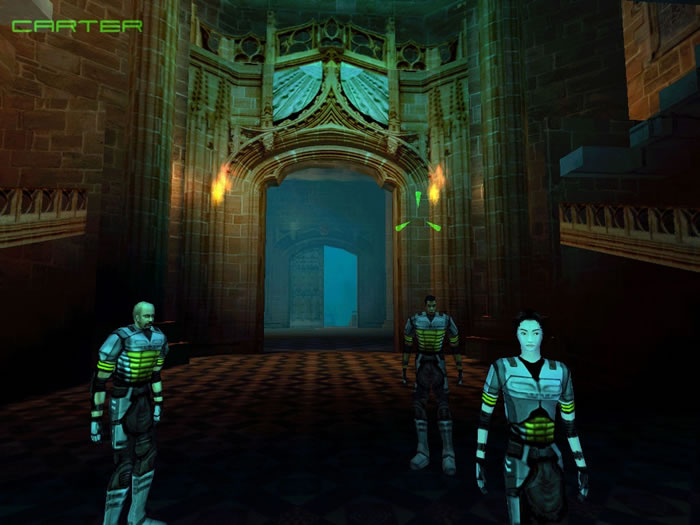
Now, for those of you who are bloodthirsty, kill-‘em-all, trigger happy fanatics, there are some bad guys for you to blast your way through. However, if you are looking for a shooter, this is not the game for you. This game is a puzzler through and through. Each level has more and more complex puzzles requiring the correct series of actions from your team members before you can complete the level. Even getting past some of the mounted turrets is more of a puzzle problem than a “blow them up and move on to the next one” problem. Gameplay comes with a single-player and multiplayer mode. In single-player mode, you control all four team members, with only one active member at a time. The rest of team can either follow you or stay put. multiplayer mode is a co-op version of the single-player mode.
Up to four players can play as each of the team members. I have played the game in both modes and found things to go quicker and smoother in the multiplayer co-op setting. Having an extra set of eyes and ears in an adventure game is always a plus. When Fireflash and I played, we each took two of the team members, and worked through the game that way. When we entered a new area, we would spread out, looking for the pieces of the next puzzle. The other benefit of having a second person playing is that one person could be working on one piece of the puzzle, while the other is searching or working on another piece. Although this game allows for more than two players, I don’t know that having 3 or 4 players would make the game any more fun, as there would be a bit of down time between actions for the players. While single player allows you to do everything, and control your entire team, you wind up spending more time on the puzzles because of that.
Along with the team members, you have the ability to control mini-robots, such as the mini-tank and a flying camera, which can get into areas that your team cannot. They can be used to pick up items, activate switches, or even kill low-end baddies.
There are the assortment of weapons that the team members may use, varying from the average laser pistol to pipe bombs and homing missiles. There is even the portable turret that you can set up in a hallway and let it take out the bad guys for you.
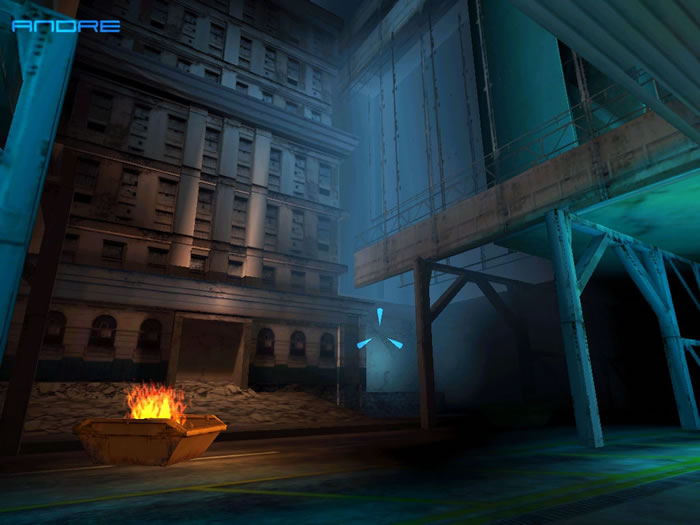
Graphics are pretty good in this game. There are the harrowing heights that we saw in the Tomb Raider series. However, on the downside, there were also the buttons that seem to be hidden or obscured, and not readily identifiable as “buttons.” One instance comes to mind where Fireflash and I hunted 30 minutes for a switch to start a conveyor belt. When we finally found it, we realized we had looked at it at least a dozen times, and did not recognize it as a switch, button, or anything else but environmental graphics.
Overall, I enjoyed this game very much. The storyline and gameplay were enough to keep me interested and even compelled to play. Thank God the game was separated into “levels.” Without these convenient stopping points, I could have easily found myself going into the wee hours of the morning saying, “just one more puzzle.” Not that that never happened at all, mind you. This is one of the better action/adventure/puzzler games out there, and definitely worth a look.
System Requirements:
300 Mhz Pentium II or equivalent
Windows 98/ME
64 MB RAM
DirectX 8 compliant 3D accelerator card w/ 12MB VRAM
DirectX 8 compliant sound card
DirectX 8 or higher (included)
8X CD-ROM DRIVE
10 MB uncompressed hard drive space
Keyboard and Mouse
